 Μake us preferred on Google
A diverse selection of films arrives in Greek theaters this week, offering audiences everything from major Hollywood productions to documentaries and intimate international dramas.
Among the highlights are The Hunger Games: Sunrise on the Reaping, the latest installment in the popular franchise; I Play Rocky, a biographical drama about Sylvester Stallone’s struggle to bring his iconic boxing character to the screen; and You Can See Everything, a documentary about convicted Theranos founder Elizabeth Holmes.
The lineup also includes the French-Tunisian drama A Voix Basse, the animated children’s film The Crystal Planet and a rare documentary portrait of Russian filmmaker Andrei Tarkovsky.
‘I Play Rocky’
Drama, United States, 2026
Directed by Peter Farrelly, starring Anthony Ippolito, AnnaSophia Robb, P.J. Byrne, Toby Kebbell, Jay Duplass, Tracy Letts, Matt Dillon and others.
Anthony Ippolito bears a striking resemblance to a young Sylvester Stallone. His voice, too, captures the actor’s distinctive delivery, making the casting alone a compelling reason to watch Peter Farrelly’s biographical drama.
Farrelly, who spent years directing broad comedies such as Dumb and Dumber, surprised audiences in 2018 when his film Green Book won the Academy Awards for Best Picture and Best Original Screenplay, which he co-wrote.
His latest film takes viewers back to the mid-1970s, when Stallone was struggling to find work as an actor. Facing repeated rejections, the young performer wrote the screenplay for Rocky in just a few days, determined to play the lead himself.
Although the story centers on a young boxer, the screenplay also reflected Stallone’s own life as a young Italian American and the determination of an underdog to succeed. It ultimately became a story about the American Dream, a promise that had inspired countless people before Stallone and many more afterward.
The film follows an aspiring actor living in New York’s Hell’s Kitchen neighborhood. Despite repeated setbacks, he takes various jobs, working as a valet and later as a movie theater ticket taker, where he meets the woman who will become his wife. He refuses to abandon his ambitions.
His inspiration comes after watching a televised boxing match between Muhammad Ali and underdog Chuck Wepner. Impressed by the challenger’s performance, he begins writing a screenplay about a young boxer whose life changes through his fights.
Producers are enthusiastic about the script, but they and the financier insist that a star must play the lead. Stallone eventually persuades them to let him take the role, despite the financial risks and the possibility that he could remain unknown and penniless.
Farrelly does not attempt to explore the full depth of Stallone’s struggles before fame. Instead, he focuses on the triumph of the underdog, the romance with Stallone’s first wife, Sasha, and a series of comic situations involving the young actor’s efforts to secure the film.
These include his negotiations with producers, the financier’s almost cannibalistic portrayal and his efforts to buy back his beloved dog. The film also touches on the idea that, under capitalism, everything has a price.
Although the screenplay takes several liberties with the real story and occasionally relies on melodrama to heighten the emotional impact, Farrelly balances sentiment with humor and maintains a steady pace. Ippolito sometimes appears to imitate Stallone’s later performances, but he is convincing as a fearless, determined second-generation Italian American.
Matt Dillon, playing Stallone’s father, makes a more limited impression, while P.J. Byrne and Toby Kebbell stand out as the two producers. AnnaSophia Robb also delivers a strong performance as Sasha, Stallone’s devoted wife.
The result is an entertaining two-hour film that largely meets expectations without taking itself too seriously.
‘The Hunger Games: Sunrise on the Reaping’
Fantasy adventure, United States, 2026
Directed by Francis Lawrence, starring Elle Fanning, Joseph Zada, Glenn Close, Jesse Plemons, Kieran Culkin, Maya Hawke, Ralph Fiennes, Lili Taylor and Ben Wang.
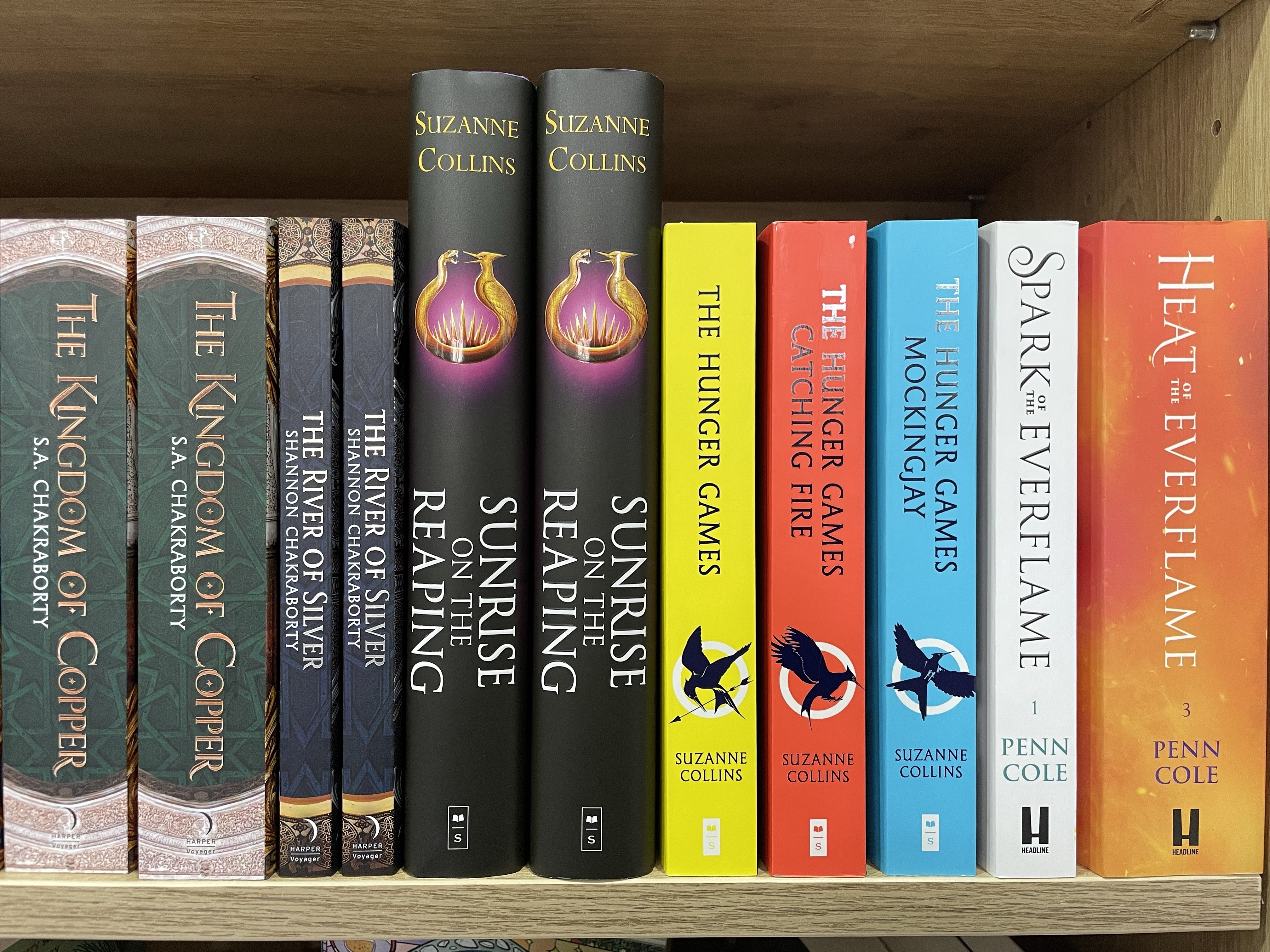
One of the most successful film franchises of the 21st century returns three years after The Hunger Games: The Ballad of Songbirds and Snakes, bringing another chapter to fans around the world.
Francis Lawrence returns to direct the latest adaptation of a novel by Suzanne Collins. The film continues the series’ allegorical exploration of authoritarian power, social inequality and the manipulation of the masses, with its dystopian society of Panem increasingly reflecting contemporary American concerns.
The story is set 24 years before the events of the first film, during the 50th Hunger Games, also known as the Second Quarter Quell. This anniversary edition introduces a more brutal competition in which each district must send twice the usual number of tributes.
Among those selected is young Haymitch Abernathy from District 12. Inside the arena, he forms an unexpected alliance with Maysilee, another tribute from his district, and joins a group determined to challenge the authority of the Capitol and President Snow.
As the fight for survival intensifies and Haymitch realizes that the competition appears to be rigged against him, he risks everything to undermine the Games from within. His actions help ignite a rebellion that will change Panem forever.
Lawrence confidently brings the post-apocalyptic world back to the screen, combining familiar characters with new faces. The film retains the franchise’s recognizable elements, including romance, suspense, fast-paced action, survival battles and the reality-show spectacle surrounding the Games.
The director follows the established formula closely, occasionally appearing reluctant to move beyond it. Nevertheless, the result is a well-structured Hollywood blockbuster with a reliable narrative and plenty of action.
Running for two and a half hours, the film is likely to satisfy longtime fans while offering newcomers an accessible introduction to the series.
‘You Can See Everything’
Documentary, United States, 2026
Directed by Nathan Fielder and Lance Oppenheim, featuring Elizabeth Holmes, Nathan Fielder, Billy Evans, Amanda Seyfried and Christopher Abbott.
An unusual and compelling documentary explores the boundaries between reality and performance by following convicted Theranos founder Elizabeth Holmes and her husband, Billy Evans, during the final 34 days they spend at home before leaving to serve their prison sentences.
The film is directed by American comedian and documentary filmmaker Nathan Fielder, alongside Lance Oppenheim, whose recent work includes Primetime. The couple faces a 12-year prison sentence following a massive fraud involving investors who poured billions of dollars into Holmes’ supposedly revolutionary company.
Holmes founded Real-Time Cures at the age of 19, promising to make health care more accessible through a new method of analyzing biological samples. Her proposed technology would require only a drop of blood and a few minutes to produce test results.
Despite doubts expressed by her professors at Stanford University, Holmes pressed ahead. She renamed the company Theranos, raised millions of dollars and quickly became a prominent figure in the biotechnology industry.
In 2015, she appeared on Time magazine’s list of the 100 most influential people, celebrated as a college dropout whose ambition was to make health care a fundamental human right.
However, later that year, a Wall Street Journal investigation revealed that Theranos’ machines had been manufactured by third-party companies and produced inaccurate results. An inspection by the relevant U.S. Department of Health agency confirmed the reporting, and sanctions followed. Theranos collapsed, and Holmes and her husband were convicted of fraud.
The documentary’s origins are unusual. Rather than being initiated by the filmmakers, the project came about after Holmes and Evans approached production company A24 and expressed their desire to have their everyday lives documented.
The resulting film combines documentary footage with an unconventional dramatized sequence featuring Amanda Seyfried. As it progresses, it gradually moves away from conventional documentary storytelling and into a more complex exploration of reenactment and the nature of cinematic reality.
Despite its three-hour running time, the film maintains the viewer’s interest. It becomes a contest between the filmmakers and the convicted couple, particularly Holmes, as they attempt to establish their own versions of the truth.
Holmes remains composed and smiling, even when Fielder asks difficult questions, presenting an almost disarmingly innocent appearance. The film’s carefully constructed framing, editing and narrative keep audiences engaged while raising questions about the way deception can be packaged and sold.
Beyond the story of Theranos, the documentary invites reflection on the culture of supposedly innovative startups, the investors who believed in them and the hundreds of thousands of people who provided blood samples, sometimes just a drop, only to be sidelined as collateral damage.
‘A Voix Basse’ (Secrets and Whispers)
Drama, France and Tunisia, 2026
Directed by Leyla Bouzid, starring Eya Bouteraa, Hiam Abbass, Marion Barbeau, Salma Baccar and Feryel Chammari.
A restrained, atmospheric drama uses a family mystery to explore the social conventions, silences and pressures shaping women’s lives in Tunisia.
In her third feature film, French-raised Tunisian director Leyla Bouzid, daughter of prominent Tunisian filmmaker Nouri Bouzid, returns to her childhood experiences and the coastal city of Sousse. Through a female perspective, she examines the secrets buried within a family and the fear, misunderstandings and obstacles that shape its members’ decisions.
The story follows 32-year-old Lilia, a successful engineer living in France with her partner, Alice. After the sudden and suspicious death of her uncle, Daly, she returns to her hometown of Sousse in Tunisia.
As she investigates the circumstances surrounding his death, Lilia discovers that her uncle was gay, a fact her family had kept hidden. At the same time, she finds herself concealing her own identity and relationship from her mother, aunt and grandmother.
Against the bright sunlight of the Tunisian coastal city, Bouzid uses sharp contrasts of light and shadow to explore what remains visible and what is buried beneath the surface. The film also examines the tension between Western society and deeply rooted North African traditions.
For Bouzid, the central problem is not only Tunisia’s criminal code, which treats homosexuality as a crime, but also the social customs and beliefs that sustain silence around same-sex relationships. These include traditional expectations about family structure, pressure on women to marry and have children, and the stigma surrounding homosexuality.
The performances, particularly those of the older actresses, help bring out the distance between three generations of women and the sadness underlying their marriages. Much of the drama unfolds through looks, silences and subtle emotional shifts rather than lengthy dialogue or overtly melodramatic scenes.
However, the film’s more explicit didactic moments occasionally weaken its impact. It competed at the Berlin Film Festival.
Also in theaters
‘Andrei Tarkovsky: The Genius, the Man, the Legend’
The documentary Directed by Andrei Tarkovsky, directed by Michal Leszczylowski, will receive its first screening at the Studio cinema.
Produced in 1988, the rare archival film offers both an introduction to the celebrated Russian director’s filmmaking methods and an intimate portrait of the man behind the camera.
Leszczylowski, who edited Tarkovsky’s final film, The Sacrifice, follows the director’s creative process and artistic philosophy during its production. He combines footage by cinematographer Arne Carlsson with interviews and excerpts from Tarkovsky’s theoretical book Sculpting in Time.
The documentary captures Tarkovsky’s meticulous attention to detail while also revealing a more human side of the filmmaker. It features his wife, Larisa Tarkovskaya, cinematographer Sven Nykvist and actor Erland Josephson.
The result is a valuable cinematic document for film enthusiasts and anyone interested in discovering the artist and the person behind his work.
‘The Crystal Planet’
The Croatian animated children’s film, directed by Arsen Ostojic and based on an original idea by Oscar-winning filmmaker Dušan Vukotić, follows 11-year-old Rea as she befriends a small dinosaur-like creature that has lost its mother.
Together, they face a ruthless ruler. The digitally animated film will be screened with Greek dubbing.