One of Greece’s leading marine conservation initiatives has entered a new chapter, with the Vodafone Posidonia program rebranded as the Posidonia Project and its implementation taken over by the Athanasios C. Laskaridis Charitable Foundation.
The transition marks the continuation of a long-running effort to protect Posidonia oceanica, a seagrass species that plays a vital role in Mediterranean marine ecosystems, while expanding the project’s scientific scope, geographical reach and public awareness activities.
Protecting a vital marine ecosystem
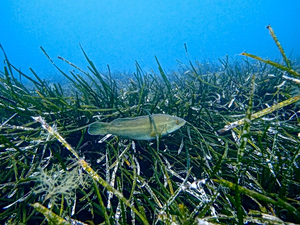
The Posidonia Project aims to systematically map, monitor and protect Posidonia seagrass meadows, which are essential for marine biodiversity, coastal protection, water quality and carbon storage.
Often described as the “underwater forests” of the Mediterranean, Posidonia meadows provide habitat for thousands of marine species, help prevent coastal erosion and absorb significant amounts of carbon dioxide, making them an important natural ally in addressing climate change.
The program forms part of the Athanasios C. Laskaridis Charitable Foundation’s broader marine conservation strategy, alongside its Typhoon Project, Cyclone Project and Saronicos Project. Its approach combines scientific research, fieldwork, innovation and environmental education.
Scientific research to continue
The Oceanus Lab at the University of Patras will remain the project’s scientific partner under the direction of Professor George Papatheodorou, ensuring continuity in the research program.
According to the foundation’s president, Evi Lazou-Laskaridis, maintaining long-term environmental initiatives is as important as launching them, with the goal of building on previous achievements while strengthening the project’s scientific impact and effectiveness.
Professor Papatheodorou emphasized that sustained, long-term research is essential for effective marine conservation, rather than relying on isolated interventions.
Mapping Greece’s seagrass meadows
Since its launch, the program has mapped 830 square kilometers of seabed in the Cyclades and the Saronic Gulf, including detailed surveys of around 250 square kilometers of Posidonia meadows—roughly 10% of Greece’s total Posidonia coverage.
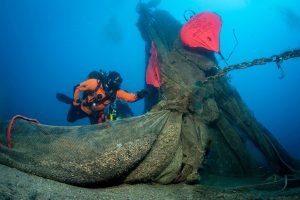
Researchers have also identified and assessed the main human pressures affecting these ecosystems, creating a valuable scientific foundation for future conservation policies and sustainable management.
With its expanded structure, the Posidonia Project aims to become a key tool in preserving the health of Greece’s seas and protecting one of the country’s most important natural resources.