 Μake us preferred on Google
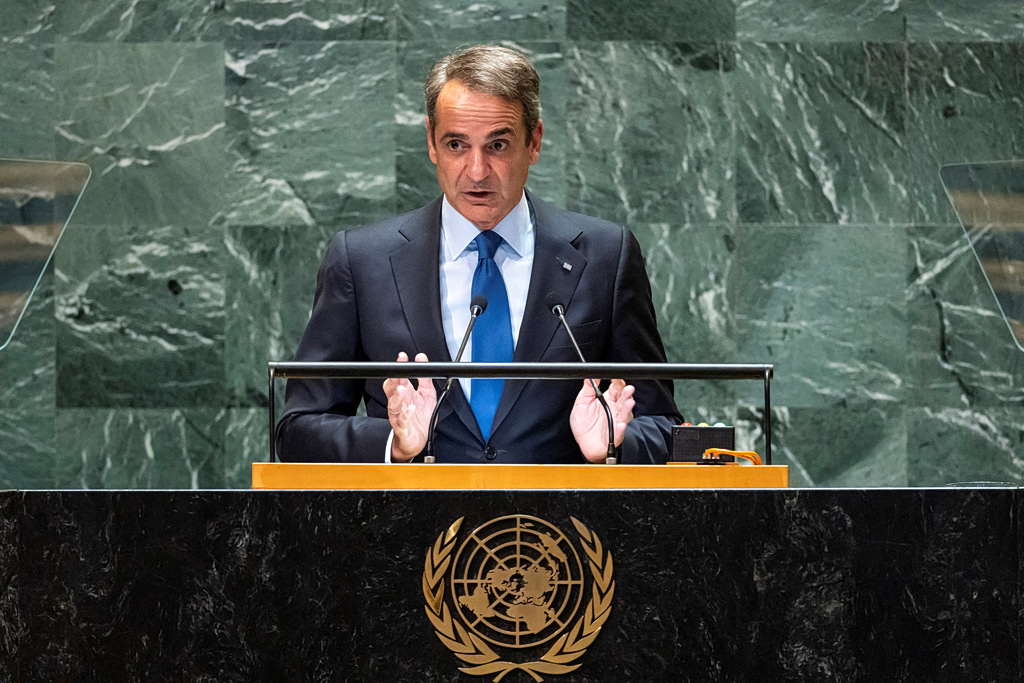
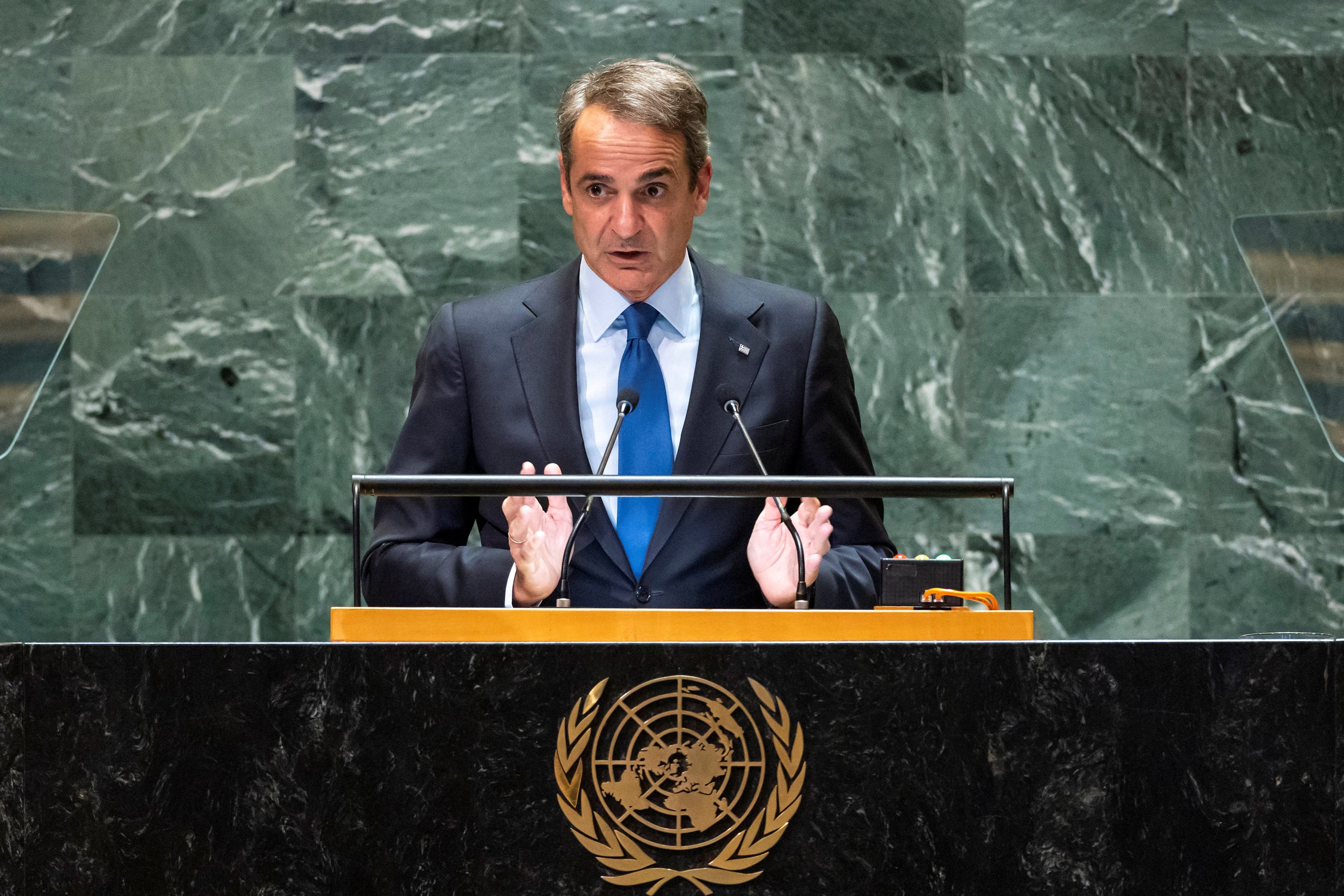
Speaking in New York, Prime Minister Kyriakos Mitsotakis addressed the Turkey-Libya memorandum, calling it illegal and arbitrary and stressing that it contradicts geography itself.
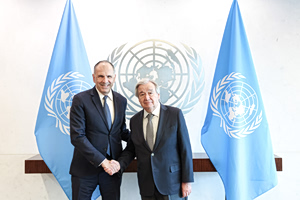
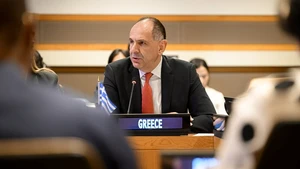
The prime minister is at UN headquarters to chair a high-level meeting of the Security Council, held under Greece’s presidency, on the topic “Maintenance of international peace and security: Emerging technologies and maritime security.”
Mitsotakis also called for a global maritime truce after a drone attack sank the Greek-managed container ship Contship Jet off Bulgaria, the latest in a series of strikes on vessels in the western Black Sea this month. He said commercial ships must be able to sail safely and freely even in times of conflict. “Targeting civilian commercial shipping is completely unacceptable. It is yet another reminder of the urgent need for a global maritime truce,” he said, adding that disruptions to freedom of navigation push up shipping and insurance costs and, ultimately, prices for consumers. “We cannot allow our seas to become a jungle,” he warned.
“International law cannot be applied selectively, and the rules that govern our seas cannot be rewritten to serve the ambitions of individual states,” Mitsotakis said. As he noted, “the so-called Turkey-Libya memorandum on the delimitation of maritime zones is a blatant violation of the fundamental principles of the international law of the sea. It is illegal, it is arbitrary and it contradicts geography itself.” The accord has been condemned by Greece, Cyprus and three Arab states.
To show how unreasonable the memorandum is, he used the example of a hypothetical maritime delimitation agreement between Greece and Tunisia that would ignore Sicily and Malta. Such an agreement, he explained, could not be accepted, as it would violate the rights of Italy and Malta.
“Ankara-Tripoli Maritime Border Is Artificial and Absurd”
The prime minister also stressed that “Greece and Libya are natural neighbors at sea, with opposite coasts, and have the right under international law to delimit their maritime zones through an agreement.”
“In contrast, Turkey and Libya have neither opposite nor adjacent coasts. Yet they have tried to establish an artificial maritime border between them. This is absurd. There is no precedent for such a diagonal delimitation,” he added.
“Our Islands Are Not Uninhabited Rocks”
Mitsotakis also said that “Turkey and Libya have tried to draw a maritime border between them as if the Greek islands lying between their coasts did not exist. These are not uninhabited rocks in the middle of the sea. They are thriving communities with centuries of history and dynamic economies, where hundreds of thousands of people live. Geography cannot be rewritten. And sovereign rights cannot be erased by drawing arbitrary lines on a map.”
He stressed that “international law is absolutely clear: islands are entitled to maritime zones, including a continental shelf and an Exclusive Economic Zone, under the United Nations Convention on the Law of the Sea, whose relevant provisions reflect, I repeat, customary law that is binding on all states. No agreement between two states can deprive a third state of its sovereign rights. And no bilateral agreement can override international law.”
Concluding his remarks, Mitsotakis emphasized that the sea can unite us, but it can also divide us. Which path we take, he noted, is our own choice and depends on our stance toward international law.