 Μake us preferred on Google
 The reading public expresses its trust in in.gr, according to the Reuters Institute’s survey on Greek media. Based on responses regarding trust in Greek media outlets, 42% of respondents said they trust the news and information they receive from in.gr, placing it among the highest-ranked outlets in terms of public confidence across all media categories included in the survey.
This is clear in the table below. The table includes all types of news media (newspapers, television networks, and news websites). In.gr is followed by news247 with 41%, while newsbomb ranks third with 39%.
Among television stations, Mega also holds a high position in terms of credibility, with 45%, just a few percentage points below OPEN (48%) and ERT (46%). Among print publications, Ta Nea is also ranked highly, with 42%, slightly below Kathimerini (46%).
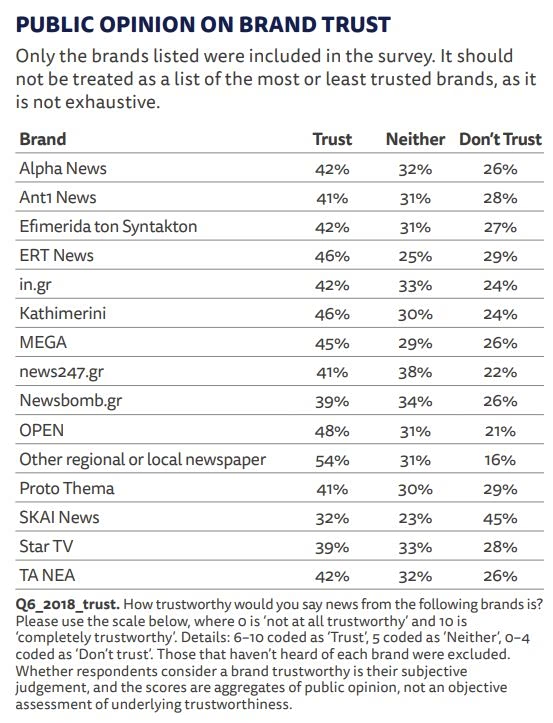
The overall list of media outlets in Greece whose credibility was evaluated by the public
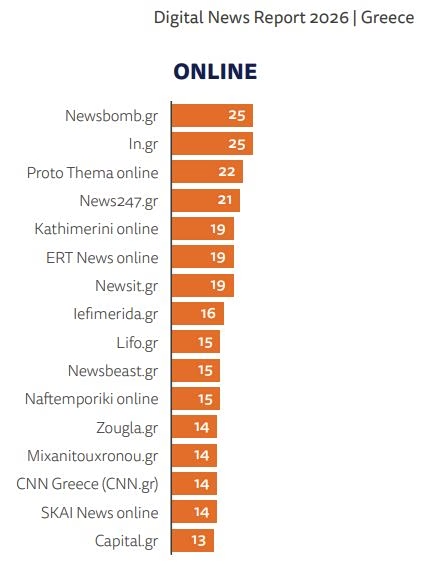
The weekly readership/visitation of news websites
First place for Mega’s news bulletin
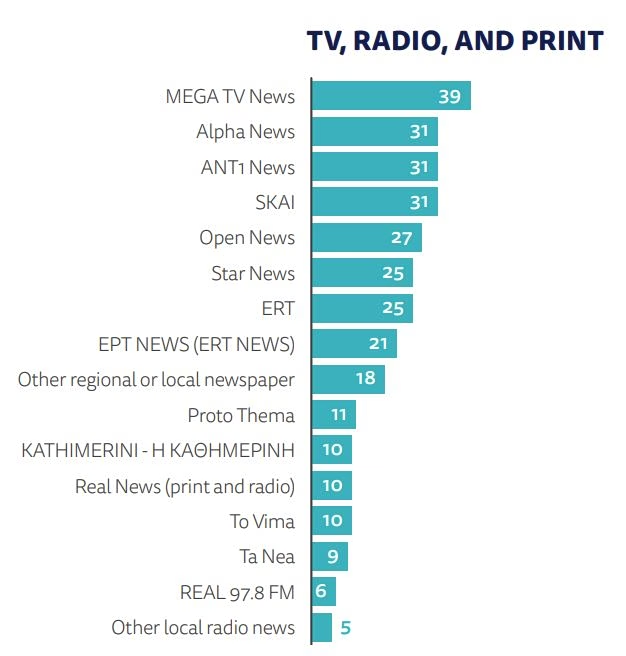
Mega’s news bulletin also ranks first in public preference among all television stations, radio stations, and newspapers on a weekly basis, with 39%. It is followed by the news programs of Alpha and ANT1, each with 31%. Among newspapers, To Vima appears among the top positions in terms of circulation, tied with Kathimerini at 10%. Ta Nea is recorded at 9%.
Public trust is declining
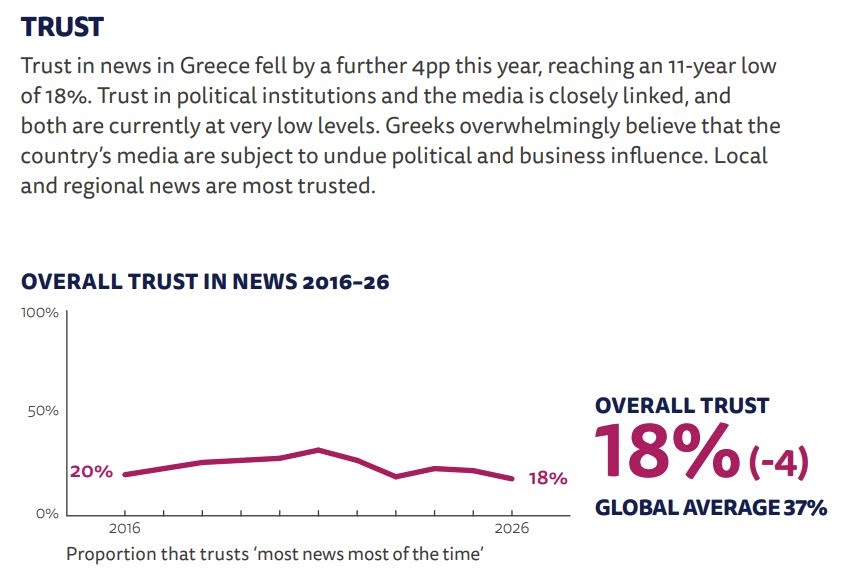
For another year, the Reuters Institute report finds that the credibility of Greek media remains low, despite the fact that “news consumption” has increased. According to the report, the Greek media market has one of the lowest levels of trust in news among the 48 markets included in the survey. Trust has fallen to a historic low of 18% (-4%), compared with a global average of 37%.
Furthermore, 60% say that they sometimes choose not to receive news at all.
Greek media and artificial intelligence
The report identifies violations of the ESIEA code of ethics regarding the use of artificial intelligence by Greek media organizations. It highlights that the new code of ethics places emphasis on transparency regarding AI use, strict verification of AI-generated material, protection of sources and personal data, and respect for intellectual property rights.
Nevertheless, disclosure of AI involvement remains the exception. There have also already been cases in which unverified or incorrect AI-generated content has appeared in published articles.
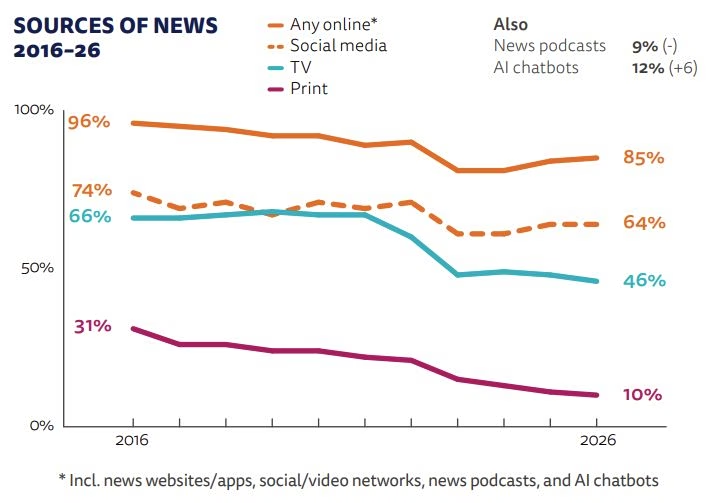
Regarding users, the use of AI chatbots for news consumption among Greeks has risen to 12%, double the percentage recorded one year earlier.
Resilient investigative journalism
The Reuters Institute report also finds that Greek investigative journalism remains resilient despite the challenges. As an example, it highlights the work of journalists who exposed the wiretapping scandal.
It also expresses concern about the safety of journalists and the broader climate surrounding press freedom. As examples, it cites verbal and physical attacks against Greek journalists, online attacks aimed at damaging journalists’ reputations before they have even published reports, as well as attacks or “admonitions” from politicians and government officials directed at journalists.