 Μake us preferred on Google
 At the 14th session of the Tempi rail disaster trial on Wednesday, a lawyer for two of the victims’ families pressed the court to amend the charges against two senior Hellenic Train executives, arguing that their failure to act on known safety deficiencies amounted to more than negligence.
Larissa-based attorney Damianos Balasoulis requested that the charge against the company’s CEO and its technical director be changed from negligent homicide to homicide with possible intent. Balasoulis represents the families of victims Agapi Tsaklidou (23 y.o.) and Elisavet Chatzivasileiou (26 y.o.).
The distinction is significant under Greek law. Negligent homicide treats a death as the unintended result of carelessness, while homicide with possible intent applies when a defendant is aware that their conduct could cause death and accepts that risk. The latter carries far heavier penalties.
Balasoulis built his request around three claimed failures. First, he argued that the two executives knew the GSM-R system, the radio network that allows train drivers to communicate across the rail network, was not functioning. Had it been operating, he said, the drivers of the two trains could have realized they were traveling on the same track on the night of the collision.
Second, he contended that the carriages did not meet modern fire-safety standards, and that as a result people who had survived the initial impact lost their lives. Third, he cited a shortage of staff.
The two executives currently face only the misdemeanor charges of negligent homicide and negligent bodily harm. They are not charged with the felony of disrupting the safety of transport, the count brought against most of the other defendants in the case.
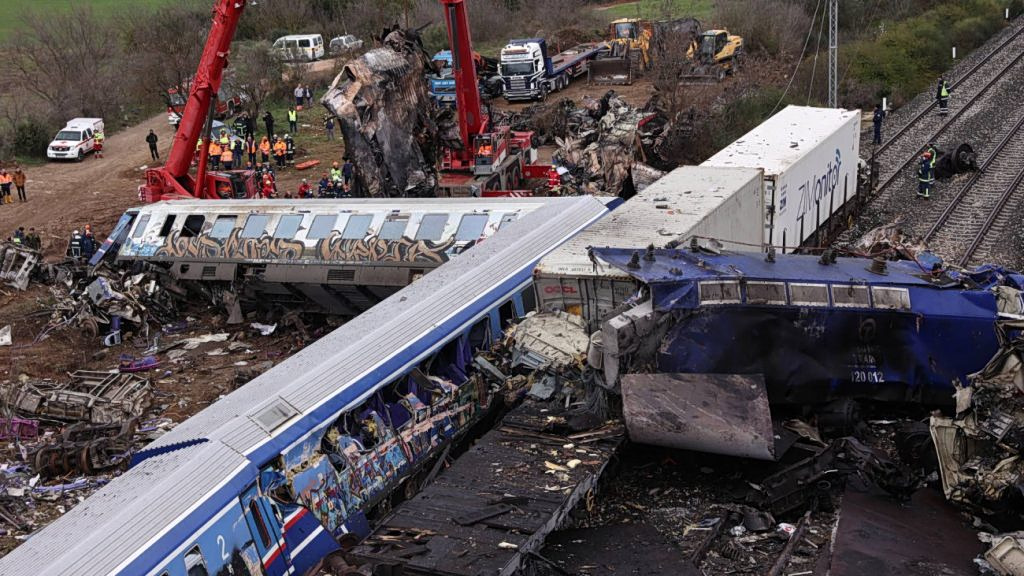
The Tempi disaster occurred in February 2023, when a passenger train and a freight train collided head-on in central Greece after being routed onto the same line. It was the deadliest rail accident in the country’s history and has become a focal point for public anger over railway safety and accountability.
The trial continues with the examination of requests submitted by lawyers representing the victims.