 Μake us preferred on Google
 The tragic accident at “Violanta” exposes the shortcomings and systemic flaws in workplace safety regulations—understaffing, insufficient inspections, and omissions in issuing operating permits for businesses.
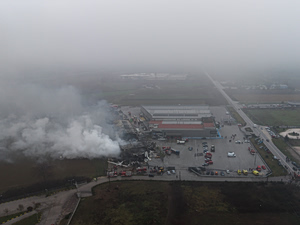
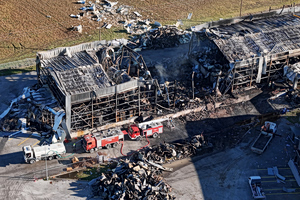
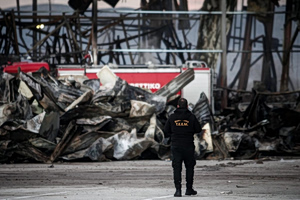
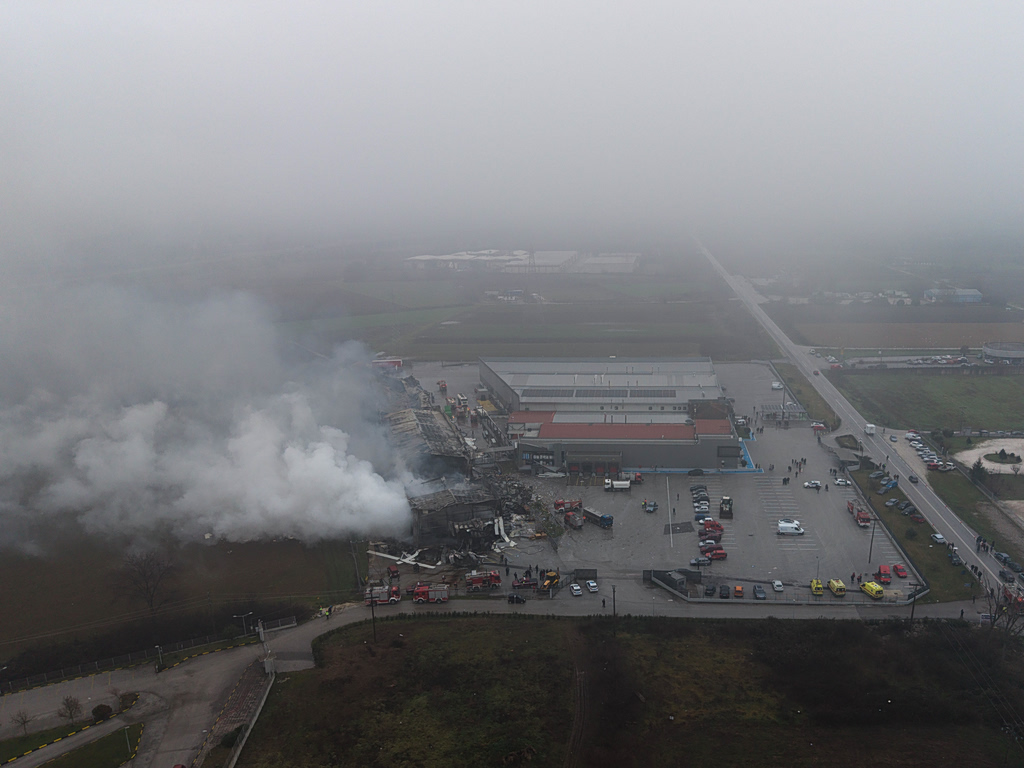
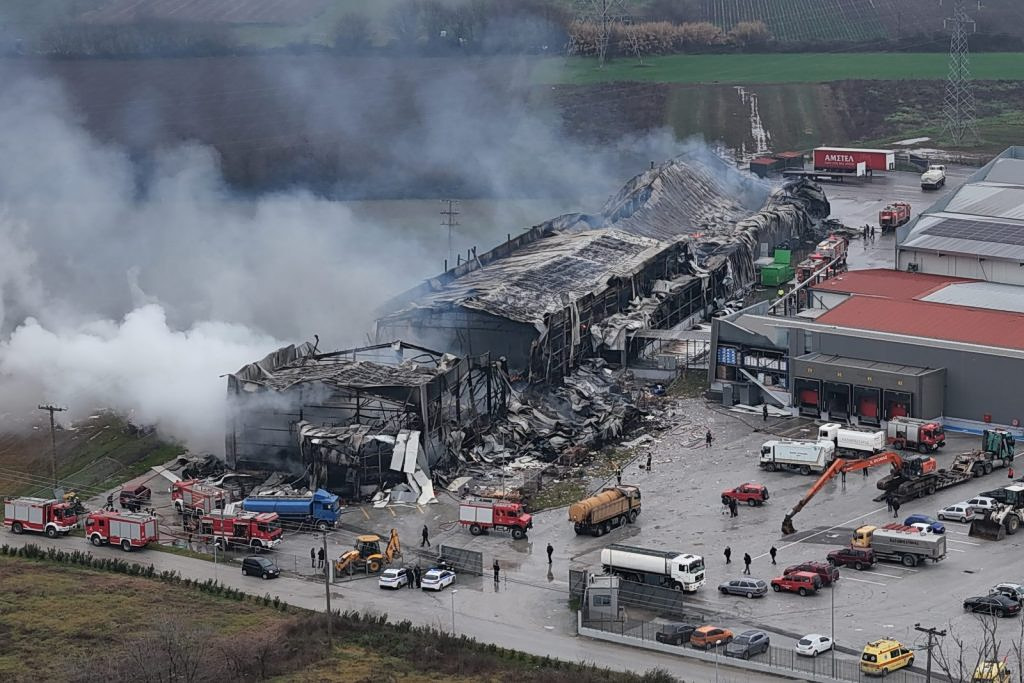
The tragedy at the Violanta biscuit factory in Trikala has highlighted serious flaws in the system for monitoring businesses, especially industries and workshops, concerning workplace safety and the process of recording workplace accidents.
The local community remains shocked by the loss of five women and stunned that this tragic incident occurred in a factory considered a “jewel” for the area, whose reputation had spread throughout Greece.
“If such a tragedy happened at ‘Violanta,’ I don’t want to imagine what happens in other factories,” commented a labor inspector from a neighboring prefecture.
Understaffing
Meanwhile, a heated dispute has erupted between the Labor Inspectorate and the Federation of Technical Enterprise Employees’ Associations of Greece (OSETTE) over the annual number of workplace accidents. The few staff of the Safety and Health Labor Inspection Department in Trikala are raising the alarm, pointing out understaffing and insufficient inspections.
“Our role is primarily preventive. Unfortunately, because we are so few, we mostly conduct enforcement inspections and fewer preventive ones, as we should,” stated Ms. Konstantina Diamanti, head of the Trikala Labor Safety and Health Inspection Department, to To Vima.
As she reports, the department has only three inspectors, one supervisor, and one driver, who are responsible for inspections not only in Trikala but also in Karditsa.
“We are five employees including the supervisor and the driver, with only one service vehicle shared with another department, for two prefectures and 12,000 industries and workshops. We are extremely few while our information system receives two to three complaints per week, on top of the accidents that occur. Before January even ended, we already had 26 accidents in the two prefectures,” she emphasizes.
Issuing Permits
She adds: “Whenever we are called, following a complaint or request, we must go within 24 hours to avoid altering the conditions of the incidents. I am sorry to say this, but no government official has ever cared about adequately staffing these services. Whatever we do, we do with meager resources and tragic understaffing.”
At the same time, she raises the issue of simplifying procedures for issuing business operating permits. “Before granting a business license, inspections must be conducted. Unfortunately, the process has been simplified. There should be a circular ensuring that manufacturing companies are checked, including for LPG. This tragic incident is proof,” she stresses.
Inspections and “Dispute”
The way experts describe the licensing process reveals that the field operates like a “wild vineyard.”
“Managers of low-risk industries submit, by law, the required installation documents and receive the prescribed permit from the Regional Industry Directorate. Similarly, fire safety is processed through the Technical Chamber’s relevant platform. In both cases, submitting the documents does not require an on-site inspection. However, for fire safety, inspections may be conducted randomly by the Fire Service,” notes Associate Professor of Chemistry at Democritus University of Thrace and retired Fire Brigade Major General Michalis Chalaris.
The gaps in inspections and licensing procedures also “fuel” discussions about workplace accidents. At a time when five households are mourning, and residents call the tragic incident at “Violanta” the “Tempi of Trikala,” a dispute over workplace accident statistics unfolds. On one side are representatives of the Labor Inspectorate.
On the other side is Andreas Stoimenidis, president of OSETTE and of the European Organization for Health and Safety at Work, and secretary of the corresponding department of the General Confederation of Greek Workers (GSEE).
The dispute was sparked by research conducted by OSETTE, which shows a doubling of workplace fatalities over three years (104 deaths in 2022 and 201 in 2025) and serious injuries (140 in 2022 and 332 in 2025). According to the same research, most fatalities occurred in the construction sector (50 deaths in 2025) and agriculture (48 deaths). Next were drivers (17), tourism workers (15), and shipyard workers (11).
The Heavy Chain
Stoimenidis believes the actual numbers are higher. “The tragic incident at the ‘Violanta’ factory is not an isolated event but a large link in the heavy chain of human losses in workplaces and the result of legislative interventions promoting work intensification and flexibility,” he states.
The president of the Athens Labor Center, Kostas Koulouris, agrees: “Since the pandemic, we have seen many workplace accidents. The State must stop seeing us as numbers, enforce workplace safety measures, and conduct strict inspections in factories and workshops, which are not currently done. The inspection mechanisms are underperforming.”
Referring to the rise in workplace accidents, Koulouris highlights delivery drivers (motorbike couriers). “There are many accidents there. What measures are being taken for these people?”
The Recording
Labor Inspectorate representatives consider OSETTE’s record arbitrary. The Inspectorate, in an official announcement, sets fatal accidents for 2025 at 42, with five more under investigation. According to its reports, fatal workplace accidents were 46 in 2021, 46 in 2022, 47 in 2023, and 48 in 2024.
“OSETTE must provide a list of 201 names, the companies where they worked, the manner of the accident, and the dates. If these have not been reported, the Labor Inspectorate and Police must be informed for investigation. If they believe some accidents have been ‘hidden,’ they must go to the prosecutor, as it is a criminal offense. But you cannot defame the Labor Inspectorate without evidence,” a sector official states.
Meanwhile, Theodoros Konstantinidis, professor of Medicine at Democritus University of Thrace, specializing in Occupational and Environmental Medicine, and dean of the School of Health Sciences, believes more deaths and accidents occur than are recorded.
As he says, “Clear rules need to be established for which accidents can be classified as workplace accidents.”
Eight Recommendations
In the summer of 2025, around late July, a labor inspector from the Trikala office visited the factory following a request from the city’s Labor Center. The inspections focused on working under heat conditions. According to the head of the department, eight recommendations were made to the company, two of which concerned the thermal strain on employees.
The other six concerned business operations (floor type, personal protective measures, etc.). “A re-inspection took place on September 12,” she notes. She concludes: “The responsible parties complied with all recommendations except one regarding the floors, which was addressed in four days. Everything else we inspected, within our jurisdiction, was in order.”