There was a time when night arrived as an event. The sun set, the flame that gave light went out, the body felt the temperature fall. No one was asked to remain alert past midnight under a glowing screen. For the whole of antiquity, sleep was governed by the cycle of day and night: people rose with Eos, Homer’s rosy-fingered dawn, and retired soon after the evening meal. Body and nature kept time together.
Today, this alignment has been broken. Artificial light, screens, the twenty-four-hour economy, urban noise, and the invasion of anxiety have pulled the body away from the rhythms that shaped it. The result is not merely fatigue — it is a biological, cultural, and ecological disorder. And the strangest feature of our age is that the most effective contemporary treatment for chronic insomnia is, in essence, a return to habits the ancient Greeks already recommended.
The ancient Greek “sleepless night”
In Greek mythology, sleep was never merely a biological shutdown. The god Hypnos lived in a dark cave where the sun never reached. Hesiod calls him the son of Nyx and the twin brother of Thanatos. This genealogy expresses an ancient Greek view: sleep belongs to the borderlands. It is daily, necessary, restorative — and yet vulnerable, mysterious, close to the unknown. Each night, when we sleep, we cross a small threshold and rehearse, briefly, a passage that one day will be made for good.
Hypnos fathered the Oneiroi, the spirits of dreams: Morpheus, who took human form; Phobetor, who appeared as an animal; Phantasos, who transformed himself into inanimate objects. In the Iliad, Hera bribes Hypnos to put Zeus to sleep so that she might intervene in the Trojan War. Sleep, the Greeks understood, is a power that touches everything in the world around us.
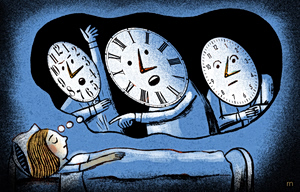
Alongside this was its painful opposite: the long, sleepless night. Homer’s portrait of Agamemnon on the eve of crisis, in Book Ten of the Iliad, reads almost like a modern description of insomnia.
“The other lords of the Achaeans slept all night beside their ships, given over to the sweet embrace of sleep; but Agamemnon, son of Atreus, the chief lord, sweet sleep would not hold for a moment, so many cares oppressed him.”
When Nestor finds him wandering through the camp in the darkness, King Agamemnon explains:
“So I wander, because sweet sleep does not settle on my eyes; war and the sufferings of the Achaeans tyrannise my thoughts.”
Achilles, in Book Twenty-Four of the Iliad, remained awake for another reason: grief. Remembering Patroclus, “sleep the all-conquering would not hold him at all.” Restless, “now on his side, now on his back, now face down,” he shed tears in the darkness until he rose and wandered alone along the shore until dawn.
Sappho, in one of the most famous fragments of Greek lyric poetry, distilled the same experience into a few lines. The ancient text is short enough to quote in full:
«Δέδυκε μὲν ἀ σελάννα / καὶ Πληΐαδες· μέσαι δὲ / νύκτες, παρὰ δ᾽ ἔρχετ᾽ ὤρα, / ἔγω δὲ μόνα κατεύδω.»
(“The moon has set, and the Pleiades; it is midnight, the time is going by, and I sleep alone.”)
The ancient Greeks knew the racing mind, the long night that refuses to pass. They had a word for this condition: ‘agrypnia’, literally the hunt for a sleep that escapes the hunter.
Philosophers and physicians
Greek philosophical reflection on sleep ranged from the cosmological to the strikingly modern. Heraclitus, with his characteristic density, observed:
«Τοῖς ἐγρηγορόσιν ἕνα καὶ κοινὸν κόσμον εἶναι, τῶν δὲ κοιμωμένων ἕκαστον εἰς ἴδιον ἀποστρέφεσθαι.»
(“For those who are awake there is one common world, but each of the sleepers turns away into a world of his own.”)
Sleep, for him, was a daily withdrawal from the common logos that binds the community of the waking — a passage into a private inwardness from which the morning calls us back.
Plato, in the Republic, expressed the view that dreams reveal the unruly desires that reason restrains during the day. One should approach sleep having calmed the passions and roused the rational part with reflection on noble ideas. For Plato this was as much a moral concern as a medical one, anticipating modern psychoanalytic theories.
The Pythagoreans practised a nightly review of the day before sleep. The Golden Verses preserve this habit and discipline intact:
«Μηδ᾽ ὕπνον μαλακοῖσιν ἐπ᾽ ὄμμασι προσδέξασθαι, / πρὶν τῶν ἡμερινῶν ἔργων λογίσασθαι ἕκαστον· / πῇ παρέβην; τί δ᾽ ἔρεξα; τί μοι δέον οὐκ ἐτελέσθη;»
(“Do not let soft sleep fall upon your eyes before you have reckoned each of the day’s deeds: where did I go wrong? What did I do? What duty did I leave unfulfilled?”)
This practice was not merely moral hygiene. It was understood to settle the mind, releasing it from the unfinished thoughts that would otherwise keep it churning.
On the medical side, the Hippocratic writers, especially in ‘On Regimen’, developed a framework that contains many elements now established in sleep medicine. Good health, they argued, depends on regular daily rhythms: meals, exercise, study, and sleep should take place at consistent hours, attuned to the cycles of day and season. The ‘Aphorisms’ of Hippocrates also state a diagnostic point with characteristic brevity:
«Ὕπνος, ἀγρυπνίη, ἀμφότερα τοῦ μετρίου μᾶλλον γενόμενα, κακόν.»
(“Both sleep and sleeplessness, when they exceed the measure, are bad.”)
The Hippocratic writers identified causes of insomnia that any modern clinician would recognise: improper diet, heavy meals or meals consumed late at night, anxious thoughts (“phrontides”), pain, and acute illness. They prescribed warm baths in the evening, gentle walking after meals, moderate diet, soothing foods such as lettuce — which appears to contain mild calming compounds they identified empirically — and, in severe cases, preparations based on poppy. Galen, who worked later in the same tradition, emphasised regular sleeping and waking times as part of a steady daily programme and treated persistent insomnia as a serious health disorder.
Asclepius and healing sleep
The most striking institutional expression of the ancient Greek understanding of the healing dimension of sleep was the cult of Asclepius. At the great healing sanctuaries of Epidaurus, Kos, and Pergamon, the sick made pilgrimages of sleep. The practice, called “enkoimesis” or incubation, required the pilgrim to undergo purification — bathing in sacred springs, fasting or a prescribed diet, abstinence, sacrifices — and then to lie down in a sacred hall and wait for the god.
The votive inscriptions surviving from Epidaurus describe what happened next. Asclepius would appear in dreams — bearded, gentle, often accompanied by sacred snakes or dogs that licked the wound. Sometimes he indicated a treatment to be followed upon waking. Other times the cure was performed entirely within the dream: the god opened the patient’s body, removed what was wrong, sewed it back up, and the patient woke healed. Whether read religiously, anthropologically, or as a forerunner of psychosomatic medicine, these accounts reveal a culture that understood sleep as an active, transformative state — one in which body and mind took part in a kind of healing that waking life could not deliver.
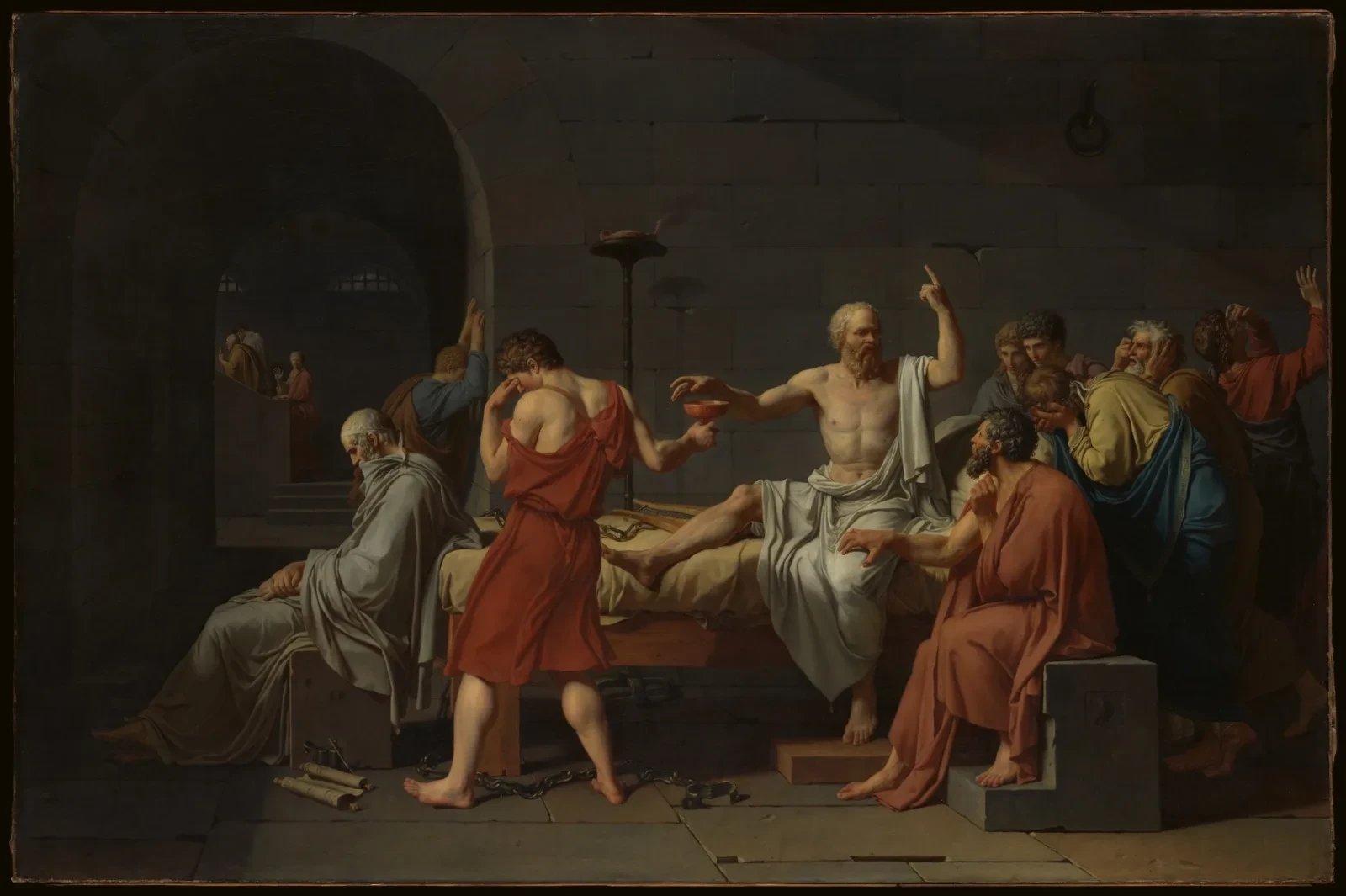
This conception coexisted, without obvious tension, with the rationalist medicine of the Hippocratics. The same patient might consult a physician in the morning and sleep in an Asclepieion that night. The ancient Greeks felt no need to choose. Even Socrates, on his last day, alluded to this. According to Plato’s ‘Phaedo’, his final words were:
«(…) ὦ Κρίτων, τῷ Ἀσκληπιῷ ὀφείλομεν ἀλεκτρυόνα· ἀλλὰ ἀπόδοτε καὶ μὴ ἀμελήσητε.»
(“Crito, we owe a cock to Asclepius; pay the debt, and do not neglect it.”)
It is the offering of a pilgrim who has received healing in a dream — a final reference by the philosopher to this old tradition of therapeutic sleep, and at the same time the necessary familiarisation with his imminent death.
The night now becomes negotiable
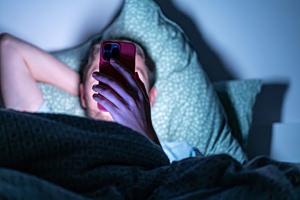
With modern technology, this ancient ecology of sleep has been progressively dismantled. The Industrial Revolution brought artificial lighting on a wide scale; electricity, television, computers, and, finally, the smartphone in bed have all together created a world in which the night needs protection.
The biological cost is now well documented. The circadian rhythm — regulated by the suprachiasmatic nucleus of the brain’s hypothalamus — governs sleep, body temperature, hormones, and alertness, with light as its principal zeitgeber, or “time-giver.” When bright light reaches the eyes at eleven o’clock at night, the production of melatonin is suppressed. A teenager with a phone in bed receives, simultaneously, light, technological bombardment, and emotional stimulation precisely when the body needs darkness and quiet.
The consequences are visible at the population scale. Matthew Walker, in ‘Why We Sleep’, captures the change: a hundred years ago, fewer than two per cent of Americans slept six hours or less a night; today the figure is nearly thirty per cent of adults. Adolescents — whose natural sleep cycle shifts up to two hours later due to biology — are forced to wake early. Chronic sleep deprivation, one of the quiet casualties of modern life, is associated with higher risks of obesity, diabetes, hypertension, depression, weakened immunity, and cognitive decline.
Globally, insomnia and other sleep problems are very common. Epidemiological studies summarized by the World Health Organization indicate that roughly 15–30% of the global population shows clinically significant symptoms of insomnia. In the United States, nearly one in five adults reports using some form of sleep aid (prescription or over-the-counter) at least occasionally, and around 8–9% use such medications every night or most nights, while comparable studies in European countries such as Switzerland and Sweden also find that roughly 5–10% of adults use hypnotic pills. National and international data show particularly high use among older adults, and rising use among adolescents and young adult women, even as long-term prescription of benzodiazepines declines and is being partly replaced by newer hypnotics and over-the-counter products. Against this background, the WHO emphasises that non-pharmacological treatments, such as Cognitive Behavioural Therapy, should be preferred for insomnia, and that hypnotic medications, when used, should be prescribed with caution and for limited periods, given risks such as dependence, cognitive impairment, and accidents.
CBT-I: science returns to nature
The treatment now considered the gold standard for chronic insomnia — endorsed as first-line therapy by the American College of Physicians and described by Harvard Medical School as more effective and longer-lasting than prescription sleep medication — is not another drug. It is Cognitive Behavioural Therapy for Insomnia, or CBT-i. And what is striking, when one reads the protocols carefully, is how much of it would have been recognisable to a Hippocratic physician or a Pythagorean philosopher.
Dr Jennifer Bradtke, a clinical psychologist in the United States and the United Kingdom whose practice focuses on this approach, describes it as follows:
“CBT-i, or Cognitive Behavioural Therapy for insomnia, is considered the gold-standard, first-line treatment for chronic insomnia. Unlike sleep medication, which addresses symptoms, CBT-i targets the underlying thoughts and behaviours that perpetuate poor sleep, making its effects effective for the long term.
It works by identifying and restructuring the beliefs and habits that keep the brain in a state of hyperarousal at night. It combines several evidence-based techniques, including sleep restriction, stimulus control, relaxation training, and cognitive restructuring, to essentially retrain the brain’s relationship with sleep. The recommendations can feel counterintuitive at first, but the results tend to speak for themselves.”

Dr Jennifer Bradtke
“How many sessions does it take? It depends on the individual. Some people have been on sleep medications for years, sometimes decades. Obviously, that can take some time. However, one of the most compelling aspects of CBT-I is its efficiency. Many people see significant improvement in as few as four to eight sessions, whether delivered in person or online. Online CBT-I programmes have also shown strong efficacy, which makes the treatment increasingly accessible to people regardless of where they live. In fact, my entire practice is now virtual — something I think is particularly exciting for communities where reaching sleep specialists may be difficult.”
What does CBT-I actually ask of a person? To compress sleep, maintain consistent sleeping and waking hours, including at weekends. To use the bed only for sleep, not for work, screen exposure, or worry. To avoid heavy meals, alcohol, and caffeine in the hours before sleep. To dim the lights in the evening. To keep the bedroom cool and dark. To move the body during the day and spend time in natural morning light. Before sleep, to follow a calming routine — a warm bath, a little reading, gentle breathing, perhaps a brief review of the day. If sleep does not come within twenty minutes, to get out of bed and do something quiet until drowsiness returns. To replace catastrophic thoughts about sleep (“I won’t function at all tomorrow if I don’t sleep now”) with more realistic ones.
If one reads this list alongside the programme “prescribed” by the Hippocratic writers, the evening review of the Pythagoreans, the warm bath and frugal supper of Galen, the contemplative pre-sleep practice of the Stoics, and the deep assumption — built into Greek life by the absence of artificial light — of rising with the dawn and resting soon after dusk, the convergence is striking. The ancient Greeks did not have in their vocabulary the suprachiasmatic nucleus or instruments for measuring melatonin. But they understood, through long observation and a culture closely attuned to the natural world, that sleep is something the body prepares for, and that it arrives when the conditions are right. Hunt it, and it flees. Become receptive, and it comes.
A return, not a retreat
It would be too romantic to idealise the pre-industrial night. It could be cold, dangerous, and uncomfortable. The Greeks were no more free of insomnia than we are; their literature is full of sleepless lovers, anxious commanders, and grieving mourners who could not sleep. What they had — and what modernity has eroded — was an environment and a culture that did not actively work against sleep. The night, then, still had the right to be night.
The contemporary task is not to return to oil lamps or to abandon the genuine gifts of modern life — safety, light, productivity, the medical knowledge that has saved so many lives. The task is more subtle: to recognise that sleep is as closely bound up with our environment as it is personal, that it depends on the relationship between body and nature, and that this relationship requires protection. Darker evenings, quieter bedrooms, cooler homes, perhaps a later school start for adolescents, screens that do not follow us into bed, a culture that stops treating exhaustion as a sign of achievement — these are not luxuries. They are the conditions under which the human nervous system, shaped over hundreds of thousands of years, was designed to function.
The Greeks placed sleep among the gods because they understood that it is not empty time. It is the daily passage in which memory, emotion, immunity, and meaning are reorganised — the quiet labour without which waking life cannot hold its coherence. Modern science has now confirmed, in the language of neurotransmitters and circadian biology, what the temple of Asclepius proposed in the language of healing dreams: sleep is restoration.
Note: This article is informational and does not replace medical advice.
Source: BHMAgazino