As Europe moves closer to defense cooperation with Ankara, Turkey’s growing assertiveness and shifting strategy are reshaping regional power dynamics — with direct consequences for Greece and Cyprus.
The rearmament of Europe and Turkey’s activities in the wider region bring a question that has long exercised Greek politics back to the fore. What sort of Turkey do we want? Obviously, the question is rhetorical. No nation, Turkey or any other, is ever going to ask us what kind of country we would like […]
As British PM Keir Starmer visits Turkey today trying to finalize a multibillion-pound jet deal with Ankara, the espionage charges against Istanbul’s mayor deepen concerns about Turkey’s democratic backslide and raise alarm in Athens over regional security risks
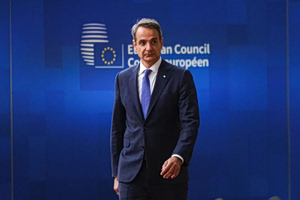
"As long as Turkey maintains a standing casus belli against Greece, and as long as it continues to challenge the sovereignty of Greek islands in the Aegean, it’s obviously impossible for us to agree to such participation,” Mitsotakis said pointedly.
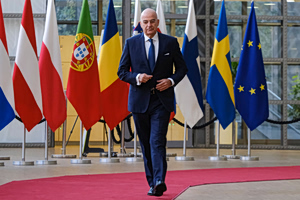
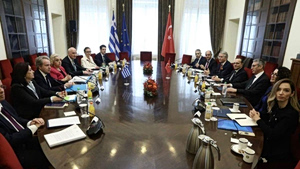
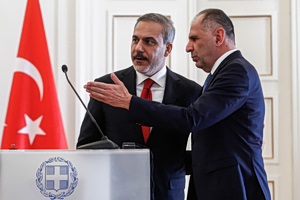
Talks between Greek and Turkish foreign ministers in Luxembourg failed to ease mounting strains, as Ankara pressed on the SAFE defense issue and Athens reiterated its red lines on sovereignty and maritime borders
Greek diplomacy this month has quietly “floated” the idea of such a summit to ostensibly deal with, among others, the delimitation of maritime zones in the east-central and eastern Mediterranean
The Greek FM told his Turkish counterpart the sole difference between the countries was the demarcation of the Exclusive Economic Zone (EEZ) and the continental shelf.
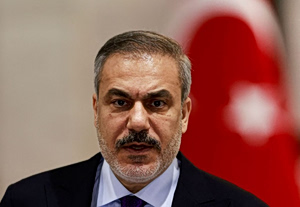
Athens links Ankara’s participation in the EU defence programme to the withdrawal of Turkey’s war threat, as Foreign Minister Fidan warns against escalating rhetoric
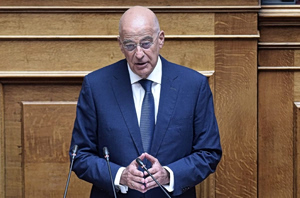
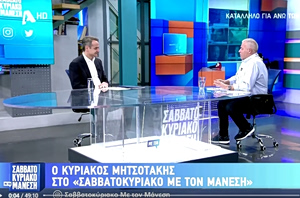
Speaking at an off-the-agenda debate in Parliament on Thursday on foreign policy issues, PM Kyriakos Mitsotakis referred to an initiative by Athens for a future meeting of Mediterranean states of the wider region
PM Kyriakos Mitsotakis spoke from Parliament’s podium during an off-the-agenda debate at the political party leaders’ level on foreign policy issues
Ministers Kyriakos Pierrakakis and Mehmet Şimşek discussed efforts to boost bilateral trade and investments
Athens faces mounting pressure from Berlin and NATO to ease its stance on Turkey’s role in Europe’s new defense framework—risking both its regional balance and relations with powerful EU allies
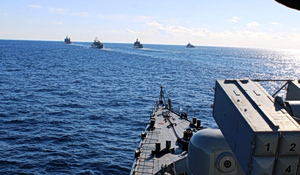
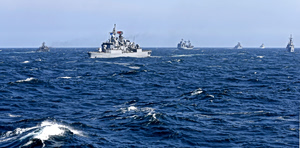
Greece closely monitors the Turkish vessel conducting Aegean Sea surveys despite anti-NAVTEX orders, amid rising tensions and ongoing Turkish naval exercises in the region
Latest attempt by a Turkish vessel, the Piri Reis, to conduct research in a maritime region within a future Greek continental shelf generated an immediate reaction by Athens
With limited fiscal space and the prospect of joint programs with the EU still at a theoretical stage, Athens has no current plans to acquire additional fighter jets beyond a possible expansion of the F-35 and Rafale fleets.
“With regard to Chevron, we have nothing to discuss with Turkey, as the Prime Minister made very clear in his interview with the Wall Street Journal," stressed Greece’s Environment and Energy Minister.
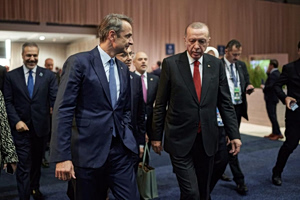
A canceled summit in New York, rising tension over defense programs, and Erdogan’s renewed leverage under Trump mark the latest twist in the fragile Greece–Turkey relationship
Greek Prime Minister Kyriakos Mitsotakis told the Wall Street Journal that Athens has nothing to discuss with Ankara regarding Chevron’s energy projects south of Crete, while stressing Greece’s economic recovery and strong ties with the U.S
When Turkish President Recep Tayyip Erdoğan canceled his scheduled meeting with Greek Prime Minister Kyriakos Mitsotakis in New York, he cited “lack of time.” Yet, on the same day, Erdoğan held high-profile talks with former U.S. President Donald Trump, U.N. Secretary-General António Guterres, the Libyan leader Mohammed al-Menfi, and even gave an interview on Fox News — all in the framework of the United Nations General Assembly
Turkey cancelled the planned meeting between President Erdoğan and Prime Minister Mitsotakis at the UN, citing early announcement of the summit by Greece, a move described by Turkish media as “Turkophobia” and a diplomatic misstep