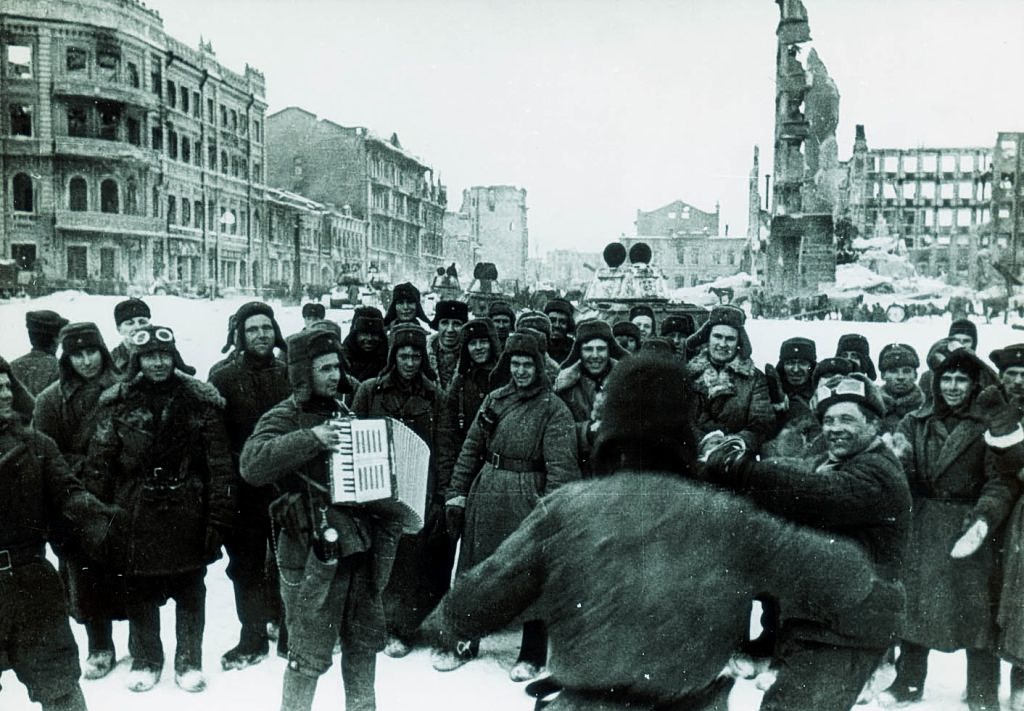
On February 2, 1943, the Battle of Stalingrad concluded—the confrontation that definitively changed the course of World War II. The defeat of the German forces on the banks of the Volga did not only represent a military loss but also the overturning of the balance of power in Europe.
The battle, which was fought from August 1942 until February 2, 1943, is one of the most decisive events not only of the so-called Great Patriotic War but of the entire Second World War. At Stalingrad, the myth of the invincible German army was permanently shattered.
On December 31, 1982, on the occasion of the 40th anniversary of the great battle, TA NEA published an extensive interview with Soviet General Pavel Batov—who fought at Stalingrad with the rank of Lieutenant General—conducted by historian V. Morozov for the Novosti agency.
Attempting to assess the strategic and historical significance of the conflict, Pavel Batov emphasized from the outset:
“The Battle of Stalingrad, we must stress from the beginning, stands out both for its scale and for the consequences it had for the entire course of the war.”
The decisive battles that broke the German army
Within the framework of Soviet military history of World War II, Stalingrad belongs to a limited number of pivotal battles, which combined large-scale defensive and offensive operations along strategic directions where the main balances of the war were decided.
“In 1941, these directions were: toward Moscow and Leningrad. In 1942, toward Stalingrad and the Caucasus, and in 1943, toward Kursk–Kiev. And it was precisely in these directions, at these strategic points, that decisive blows were struck against the enemy, which suffered the decisive defeats that, as a whole, created a radical turning point not only for the struggle waged by the Soviet people but for the entire Second World War, because they changed its course in favor of the peoples and states of the anti-Hitler coalition.”
“The Crushing of Fascism”
“The Battle of Stalingrad was the decisive link in this chain. We recall here that in the battles of Moscow and the Caucasus, fought during the transitional phase of the war from December 1941 to September 1943, the German–fascist army lost approximately 3 million soldiers and officers. Of these 3 million, 1.5 million men were lost by the fascists during the battles of Stalingrad (from November 19, 1942, to February 2, 1943).”
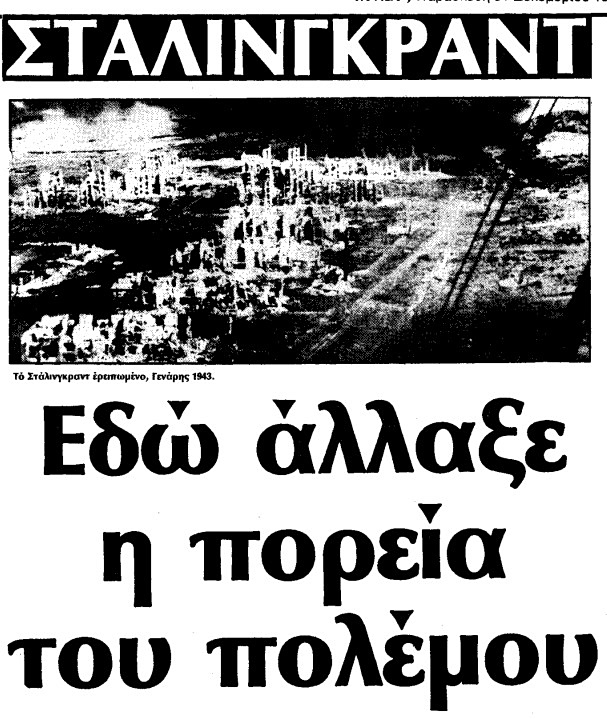
“Here the Course of the War Changed” TA NEA, 31.12.1982, Historical Archive “TO VIMA” | TA NEA
“In this battle,” Leonid Brezhnev declared on October 15, 1967, at the unveiling of the imposing memorial complex in the city of Volgograd (Stalingrad), “not only elite units of Hitler’s troops were crushed. Here the offensive surge expired; the morale of fascism was shattered… After the battle on the Volga, the war continued for over two more years. Much still remained to be done. Yet the course of events had already been determined. The following battles completed the destruction of the strike forces of imperialism…”
The Defensive Phase
Batov placed particular emphasis on the defensive phase of the battle, which lasted over two months within the destroyed city:
“The Hitlerites had overwhelming superiority in men and technical resources. In the main direction of the attack they conducted, they had twice the manpower and five times the number of tanks. The defensive battles continued for over two months within Stalingrad. Soviet troops repelled more than 700 attacks by the enemy’s superior forces but held Stalingrad. The fascist forces were strained and exhausted, suffered enormous losses, and did not achieve their objective.”
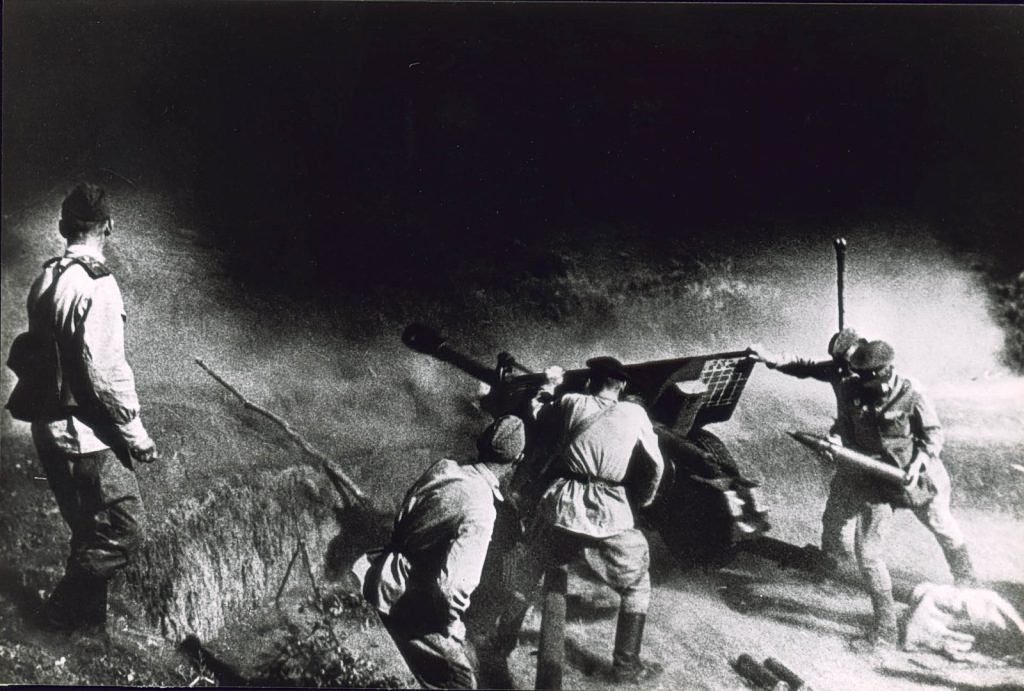
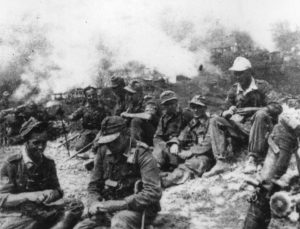
Battle of Stalingrad, 1943
The exhaustion of the German forces at this stage, Batov stressed, created the conditions for transitioning to the counteroffensive while simultaneously facilitating the actions of the Allies on other fronts, especially in the North African campaign of the Anglo-American forces.
The Soviet Counteroffensive
The Soviet counteroffensive began on November 19–20, 1942. As Batov described:
“Already by the fifth day of operations, the encirclement of the 6th Army and part of the 4th Panzer Army was completed. A large group of Hitler’s troops found itself trapped: 22 divisions and 160 other military units, totaling over 300,000 men.
“In the final days of November, Soviet troops continued to tighten the encirclement while simultaneously moving the outer security front away from the surrounded forces.”
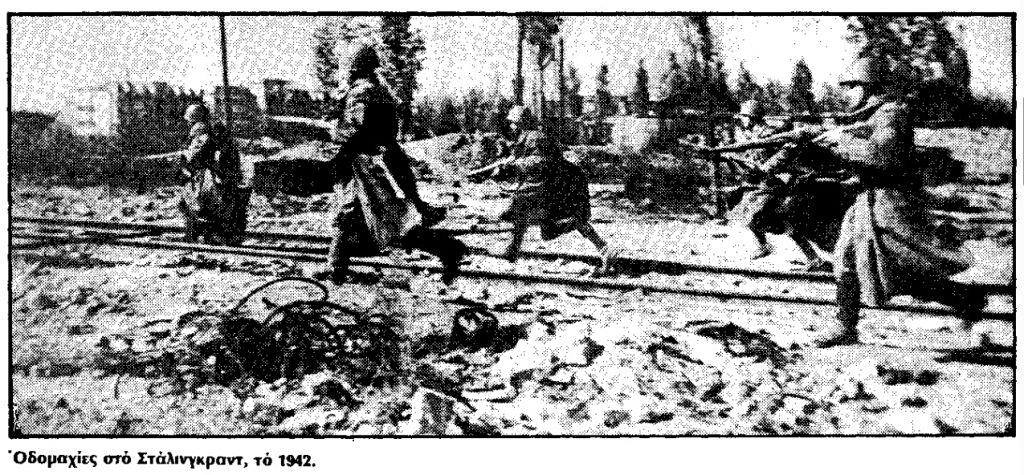 TA NEA, 31.12.1982, Historical Archive “TO VIMA” | TA NEA
“Hitler forbade his encircled troops from surrendering. He urgently sent the ‘DON’ army group as well as transport and combat aircraft to assist them. However, Soviet troops crushed all efforts to break the encirclement […] Later, it was estimated that the Don Front troops captured 91,000 enemy soldiers and officers and collected and buried 147,200 Hitlerite corpses on the battlefield.”
The German army lost one-quarter of its forces on the Soviet-German front at that time.
The scale of the defeat was also reflected in later testimonies from the German side itself. Former military leader Westphal wrote:
“The defeat at Stalingrad caused horror both to the German people and to its army. Never before in the history of Germany had there been such a terrible destruction of such a large number of troops.”
The Development of Soviet Military Technology
In the final part of the interview, when asked about the development of Soviet military technology, Batov noted that Stalingrad was a harsh but decisive test:
“[…] Soviet military technology underwent a severe trial here and fully demonstrated its superiority over the military technology of the German–fascist army. This could not fail to be recognized even by realistically minded Western historians.
“The Soviet victory was due to the intellect, composure, and initiative of the Soviet generals at every link,” wrote General F. Gabier, president of the French Committee for Military History and president of the International Committee of Comparative History, in Figaro on August 28, 1972.”
Successful encirclement, surprise, careful preparation, and endurance in extreme winter conditions highlighted, as Batov concluded, the high level of Soviet strategic thinking.