Spain’s autonomous city of Ceuta has declared a state of emergency following the mass and uncontrolled arrival of thousands of migrants from Morocco, in what has become one of the country’s most serious humanitarian crises in recent years.
The situation escalated rapidly on Thursday afternoon, leaving at least 18 people dead. In response, the Spanish government deployed the Army to reinforce the Civil Guard.
How the crisis unfolded
The surge began on Thursday morning at a relatively modest pace, with dozens of people crossing the border by swimming. Civil Guard officers gathered them at the El Tarajal border crossing to transfer them to a temporary reception center. However, communication proved difficult because of language barriers, and some migrants, distrustful of the authorities, fled into nearby ravines.
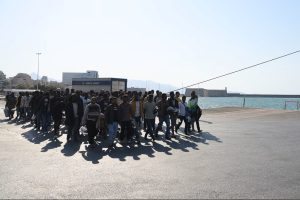
By midday, the situation had changed dramatically. The flow turned into a mass movement involving thousands of people, which crossed the border without any checks, first on foot across land and then by swimming around the breakwater that marks the border.
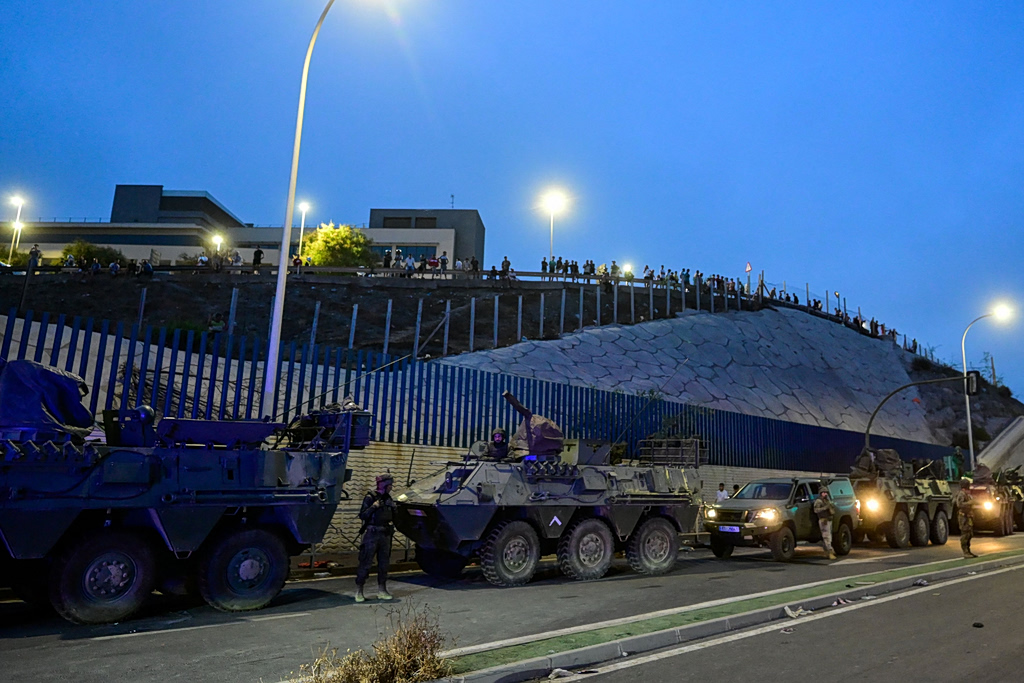
Spanish military stands guard at the border between the Spanish enclave of Ceuta and Morocco, after thousands of migrants crossed into Ceuta by sea, as seen from Ceuta, Spain, July 30, 2026. REUTERS/Fabian Bimmer
Scenes of relief, celebration—and tragedy
The scenes along Ceuta’s coastline and streets were striking. The sea and beach were strewn with life jackets, flippers and wetsuits.
Children and young men, many with bloodied feet and knees from scrambling over rocks, arrived soaked and barefoot, celebrating their arrival. They embraced one another, threw their flip-flops into the air, asked for dry clothes and shouted, “Long live Spain!” Some knelt to kiss the ground, while others carried children in search of a reception center.
Behind those scenes of relief, however, unfolded a tragedy. At least 18 people died while trying to reach the border, and many others arrived exhausted and in critical condition.

Migrants from Morocco react as they crossed into Ceuta by sea, at the border between the Spanish enclave of Ceuta and Morocco, Spain, July 30, 2026. REUTERS/Fabian Bimmer
Reception system overwhelmed as Army intervenes
Emergency services and the Civil Guard were overwhelmed by the sheer number of arrivals, managing to provide first aid only to the injured.
The city’s reception center has been operating beyond capacity for days and has closed its doors. Hundreds, and possibly thousands, of migrants are now gathered around the facility, making it impossible for authorities to manage the reception process effectively.
Facing a crisis reminiscent of the 2021 Ceuta migration surge, when about 5,000 people crossed the border in a single day, the Spanish government deployed military units stationed in Ceuta late Thursday afternoon. Prime Minister Pedro Sánchez is also expected to visit the autonomous city on Friday.
Ceuta is an autonomous city of Spain on the North African coast and is one of the “special territories” of members of the European Economic Area. It is bordered by Morocco and lies between the Mediterranean sea and Atlantic Ocean.