
 Μake us preferred on Google
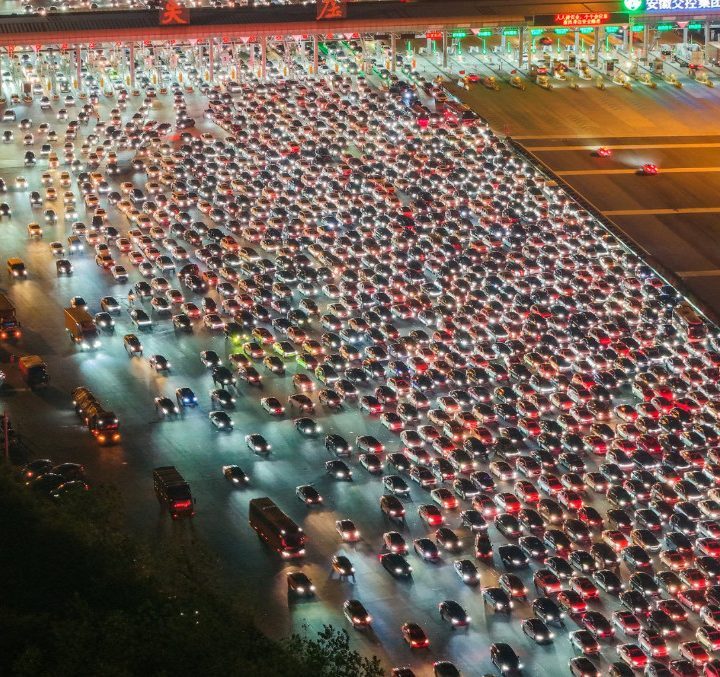
 China has experienced what is being described as the largest traffic jam in history, with thousands of vehicles stranded for more than 24 hours on key national highways. The massive gridlock came as millions of travelers attempted to return home at the end of the country’s National Day and Mid-Autumn Festival holidays.
36 Lanes of Standstill
An expressway is crowded with traffic at China’s largest toll road station, as drivers make their way home after the country’s eight-day National Day holiday, traditionally one of the busiest on the country’s travel calendar. pic.twitter.com/6LavGkfj6K
— ABC News (@ABC) October 9, 2025
Images from the Wuzhuang toll station, the largest in China, showed endless lines of cars stretching across 36 lanes, their brake lights glowing red through the night. The surreal scenes, captured by ABC News and other international outlets, resembled a dystopian film.
A Holiday Travel Surge
The chaos was fueled by a government decision to allow free passage for passenger vehicles with up to seven seats during the eight-day public holiday from October 1 to 8. The policy encouraged an unprecedented surge in domestic travel.
This is the traffic in China as millions return to the cities after a week long holiday. pic.twitter.com/sOnh9YxomR
— Catch Up (@CatchUpFeed) October 9, 2025
According to China’s Ministry of Transport, nearly 888 million trips were recorded over the period — up from 765 million in 2024, when the break lasted one day less.
Warnings Came True
Even before the holidays began, authorities had warned of traffic jams lasting up to 35 hours, particularly near major cities such as Shanghai and Beijing. Those predictions proved accurate as highways leading into these urban centers reached record congestion levels.
October 1 was marked as the busiest travel day in Chinese history, both for highways and passenger traffic overall.
Tourism Boom Amid Gridlock
Despite the traffic chaos, the extended holiday brought a tourism boom. Travel platforms reported a 58% rise in bookings for interprovincial trips, with smaller destinations such as Zhaotong and Ganzhou seeing increases of up to 95% in reservations.
The twin holidays — celebrating China’s National Day and the Mid-Autumn Festival — traditionally spark mass travel across the country. This year, however, the combination of free tolls, record numbers of travelers, and limited highway capacity turned the nationwide journey home into a 24-hour standstill — a stark reminder of the logistical challenges behind China’s growing mobility.