The Eastern Mediterranean Gateway Act, a bipartisan legislative initiative aimed at elevating the Eastern Mediterranean in U.S. foreign policy, has cleared another hurdle in Congress after advancing through the Senate Foreign Relations Committee.
The bill can now move toward consideration by the full Senate and the full House of Representatives, although final floor scheduling remains in the hands of congressional leadership.
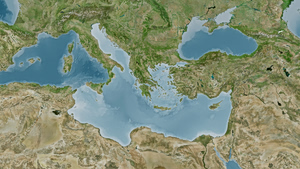
The legislation seeks to formally recognize the Eastern Mediterranean as a strategic gateway in the India Middle East Europe Economic Corridor, known as IMEC, and to strengthen U.S. cooperation with key regional partners, including Greece, Cyprus, Israel, and Egypt.
At its core, the bill reflects a broader effort in Washington to treat the Eastern Mediterranean not as a peripheral subregion, but as a central link in a wider network connecting Europe, the Middle East, and India. The initiative places particular emphasis on energy security, defense cooperation, critical infrastructure, supply chain resilience, and regional connectivity.
According to the text of the legislation, the United States should prioritize the Eastern Mediterranean in its foreign policy, with a focus on energy security and defense cooperation. The bill also calls for regular reporting to Congress on the implementation of the strategy and on the role of IMEC in strengthening trade and connectivity among U.S. partners.
The measure highlights the importance of existing regional formats, including the Greece, Cyprus, Israel, and United States 3+1 framework, the East Mediterranean Gas Forum, and broader cooperation connected to the Abraham Accords. It also identifies energy and infrastructure projects in the region as potential building blocks for linking the Gulf and India with Europe through the Eastern Mediterranean.
Supporters of the bill argue that the region has gained renewed strategic importance as Washington looks for ways to diversify energy routes, strengthen allied supply chains, and counter the influence of rival powers in global infrastructure networks.
If enacted, the Eastern Mediterranean Gateway Act would not create a single new corridor by itself. Rather, it would codify a U.S. policy framework designed to support the region’s role in IMEC and to deepen cooperation with countries that Washington views as central to energy security, regional stability, and strategic connectivity.
The bill must still be approved by both chambers of Congress before it can be sent to the White House.