“It’s just anxiety.”
That diagnosis from doctors aboard the cruise ship MV Hondius almost cost a French passenger her life. While authorities were reassuring the public that all passengers were asymptomatic, the woman whose symptoms were labeled as anxiety is now fighting for her life in a Paris hospital after testing positive for hantavirus.
Spanish Health Minister Javier Padilla Bernáldez said the woman had shown flu-like symptoms. However, they appeared to be improving, and she did not have a fever. The World Health Organization later said the woman was in “very critical” condition, according to the Guardian.
The “Anxiety” Diagnosis and Her Deterioration
Despite the deaths of three people and eight other confirmed cases, doctors from the European Centre for Disease Prevention and Control (ECDC) and Spain’s health service examined the French passenger and attributed her symptoms to anxiety or stress.
“They did not consider the symptoms compatible with hantavirus,” Padilla said. “What she reported was an episode of coughing a few days earlier that had disappeared, and at that moment she was experiencing nervousness. So she was not classified as a hantavirus case.”
WHO Director-General Dr. Tedros Adhanom Ghebreyesus thanked Spain for its assistance, adding: “Imagine if she had stayed longer on the ship.”
French Health Minister Stéphanie Rist confirmed that the woman’s condition deteriorated rapidly overnight and that she is now being treated in a specialized infectious diseases unit in Paris.
The Evacuation Operation in Tenerife
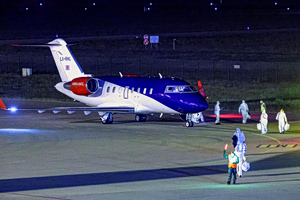
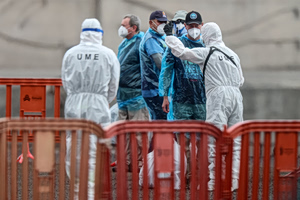
The MV Hondius departed the port of Tenerife in Spain’s Canary Islands on Monday night, after 120 people from 23 nations were repatriated within 48 hours in an operation Spanish authorities described as “complex” and “unprecedented.”
By Tuesday night, the final two evacuation flights carrying passengers and crew had landed in the Netherlands.
Twenty-six crew members and two health workers remained on board as the ship headed to Rotterdam for disinfection. The vessel is also carrying the body of a German passenger who died during the voyage.
Quarantine Measures and International Reactions
The WHO and the Spanish government had assured the public that all passengers were asymptomatic, but Padilla defended their approach, explaining that this was precisely why a 45-day isolation period had been recommended for everyone.
In Spain, evacuees were transferred to a military hospital.
In Britain, 22 British nationals, one German and one Japanese passenger were taken to Arrowe Park Hospital for testing and a three-day quarantine before continuing isolation at home.
In the United States, one American passenger tested positive for the Andes strain — the only hantavirus strain known to spread from person to person — although the WHO did not consider the results definitive.
The Challenges and the Source of the Outbreak
Padilla explained that PCR testing could not be carried out on board the ship, and that any delay in transporting samples to Madrid would have made the rescue impossible because of storm-force winds that were forecast. Those winds ultimately forced the ship to dock, despite objections from local authorities in the Canary Islands, who feared the virus could spread to land through rats.
The source of the outbreak is still uncertain, but it is believed to have spread from person to person after a Dutch couple, who were the first victims, took part in a birdwatching excursion in Argentina, where the virus is endemic.
Although there are no vaccines or specific treatments for hantavirus, health authorities are reassuring the public that the risk to global health remains low and are avoiding comparisons with the Covid-19 pandemic.