 Μake us preferred on Google
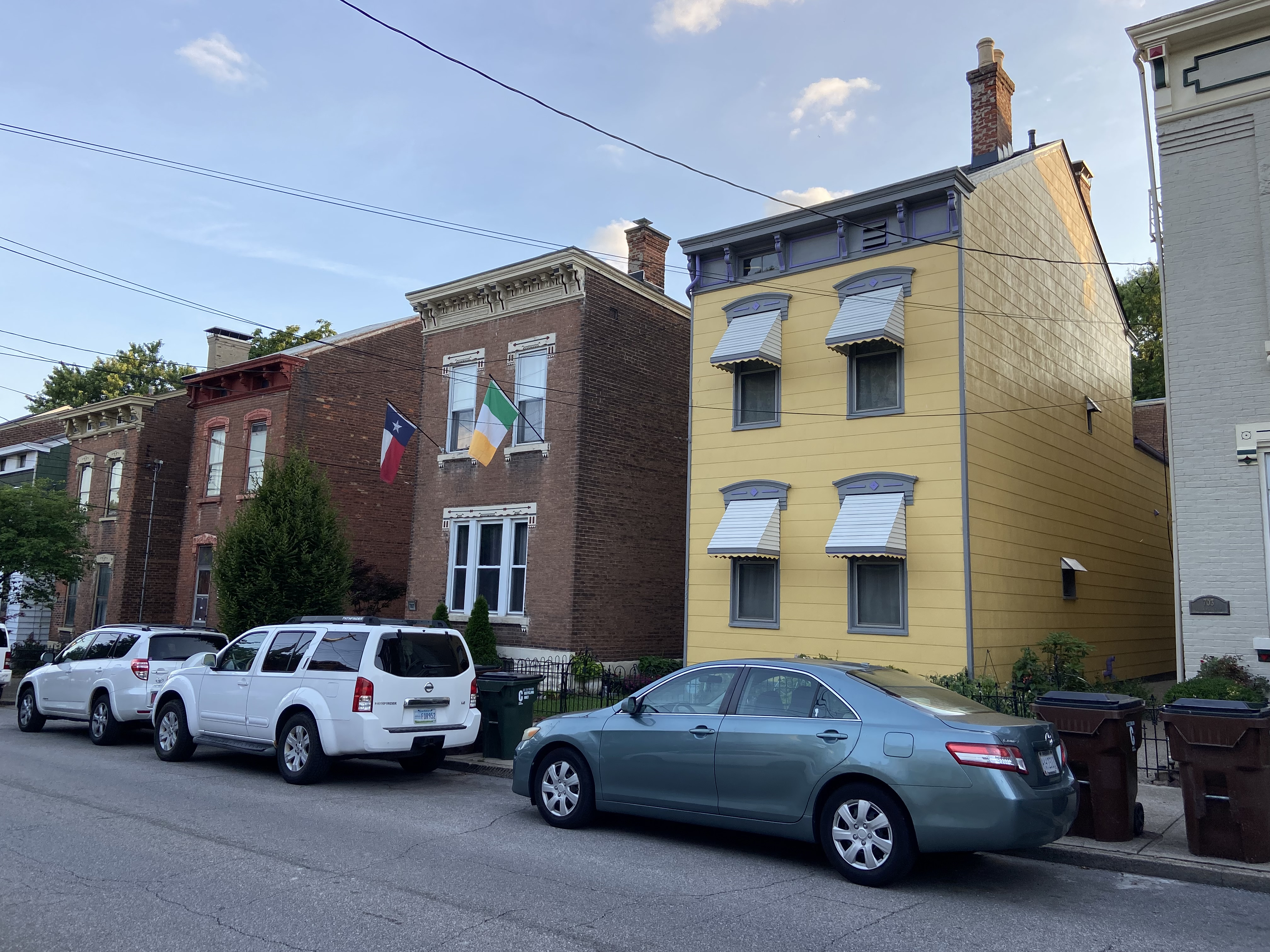
 The housing crisis has taken on global proportions. Both European countries and the United States are facing significant housing shortages.
In the US, the shortfall is estimated at between 4 and 8 million homes. In Europe, the European Commission’s Joint Research Centre puts the current shortage at 4.6 million homes.
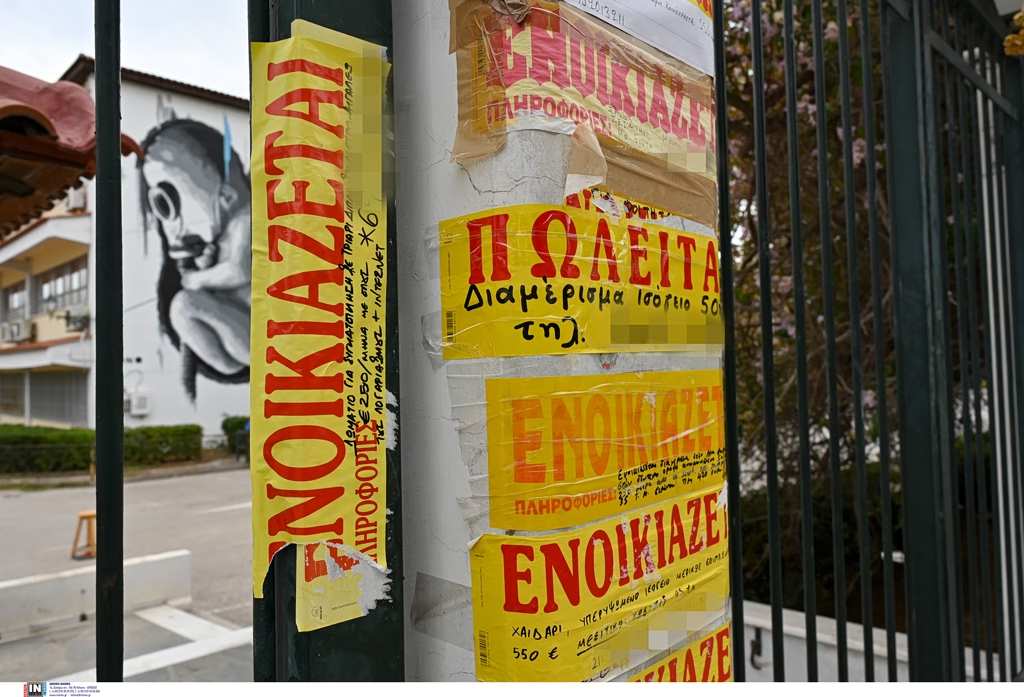
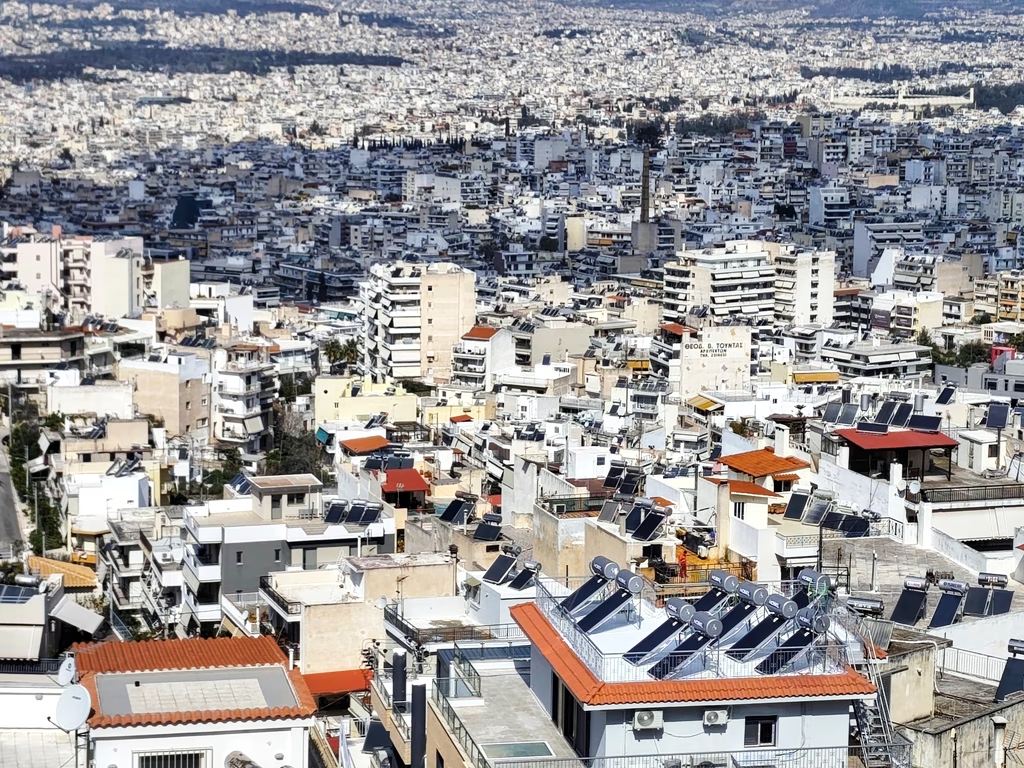
In Greece, the housing crisis is no longer reflected only in rising rents, difficulty accessing homeownership, or higher housing costs. It shows up most clearly in households’ daily lives and their ability to maintain a decent standard of living.
When the Housing Crisis Began
The modern housing crisis has different starting points and causes depending on the region, but all of them connect to a broader global pattern of economic and social change.
In the US, the crisis began in 2007-2008 with the subprime mortgage crisis. Excessive lending to borrowers with poor credit, combined with the collapse of the real estate bubble, led to millions of foreclosures and evictions.
After the recovery, the crisis evolved through the 2010s into a shortage of affordable housing, driven by limited new construction and soaring prices.
In Europe, the crisis unfolded in two main phases. From 2008 to 2012, in southern European countries like Spain and Ireland, it was directly tied to the global financial crisis and non-performing loans. After 2015-2016, and more intensely after the pandemic, a broader housing crisis, marked by expensive rents, the rise of tourism-driven housing, short-term rentals like Airbnb, and foreign capital, gradually spread across the EU, now hitting middle incomes as well.
Greece’s housing crisis was closely tied to its debt crisis (2009-2018), which froze construction activity and sharply reduced incomes. However, the acute form the crisis takes today, a housing shortage paired with rents that have far outpaced wages, took shape rapidly after 2017-2018, when the market recovered on the back of a tourism boom, a wave of capital flowing into real estate, and short-term rentals, pushing Greece toward the top of Europe’s most expensive housing costs.
In Greece, the Housing Crisis Isn’t Just About Low Incomes
The European Commission reports that Greece has one of the highest rates of housing cost burden in the EU, with a significant share of households spending more than 40% of their disposable income on housing. That pressure is sharper in cities, where rents have climbed faster than incomes.
The Commission also notes that affordability problems are no longer limited to low-income households. They’re gradually spreading to the middle class as well, whose disposable income is increasingly squeezed.
In its latest report, the Commission points to several features of the Greek housing market that deepen these imbalances:
- A large share of aging, energy-inefficient housing stock
- Limited investment in renovations since the debt crisis
- A significant share of homes not used as primary residences
- Insufficient growth in new housing supply relative to demand
According to the Commission, these factors combine to create a market where available supply doesn’t meet household needs, driving up prices and rents.
In Europe, Young People Are Paying the Price
Recent Eurostat data on housing prices and rents in the EU confirm that housing has become a genuine headache with a pan-European dimension.
The shortage of new construction, combined with rapidly rising sale prices, has pushed much of Europe’s population toward renting.
Among the many challenges undermining the EU, the housing crisis stands out. The numbers are striking: since 2010, average sale prices and rents across the 27 member states have risen by 55.4% and 26.7%, respectively, far outpacing real per capita income, which grew by only about 20%, according to the European Foundation for the Improvement of Living and Working Conditions.
Young people have been hit especially hard. In Bulgaria, Ireland, Poland, Portugal, Spain, and parts of Austria and Italy, renting a typical two-room apartment costs more than 80% of a young adult’s median salary, and exceeds 100% in heavily touristic areas. As a result, young people are finding it increasingly difficult to become independent.
In Ireland, the share of students still living with their parents rose from 73% to 93% between 2013 and 2023, while the share of 25-to-34-year-olds in the same situation rose from 23% to 40%, according to Eurofound.
In the US, Homebuilding Still Hasn’t Recovered from 2008
To understand why millions of Americans are struggling to find housing they can afford, it helps to look past recent headlines and revisit a crisis that began nearly two decades ago, in the wreckage of the global financial crisis.
When the housing market collapsed in 2008, the damage went far beyond foreclosures and failed banks. Homebuilders went bankrupt. Construction workers left the industry. Lending dried up dramatically. Investment disappeared. Homebuilding plunged.
The economy eventually recovered, but homebuilding never did. In fact, the 2010s saw the fewest single-family housing starts since at least the 1960s, roughly half the pace of the previous decade.
Freddie Mac now estimates the country is short by about 3.7 million homes relative to what’s needed to meet demand. The National Low Income Housing Coalition estimates there’s a shortage of 7.2 million rental homes affordable to renters earning at or below the federal poverty line.
The Great Recession officially ended in 2009, but the housing recession never did. Until policymakers address the structural housing shortfall left behind by the financial crisis, Americans will keep feeling its effects through higher rents, higher home prices, and fewer chances to achieve financial security.