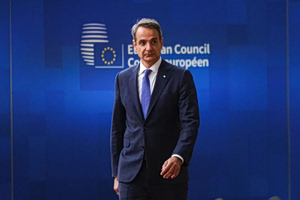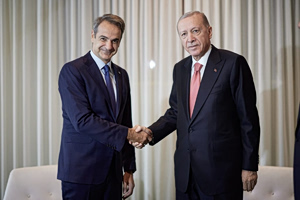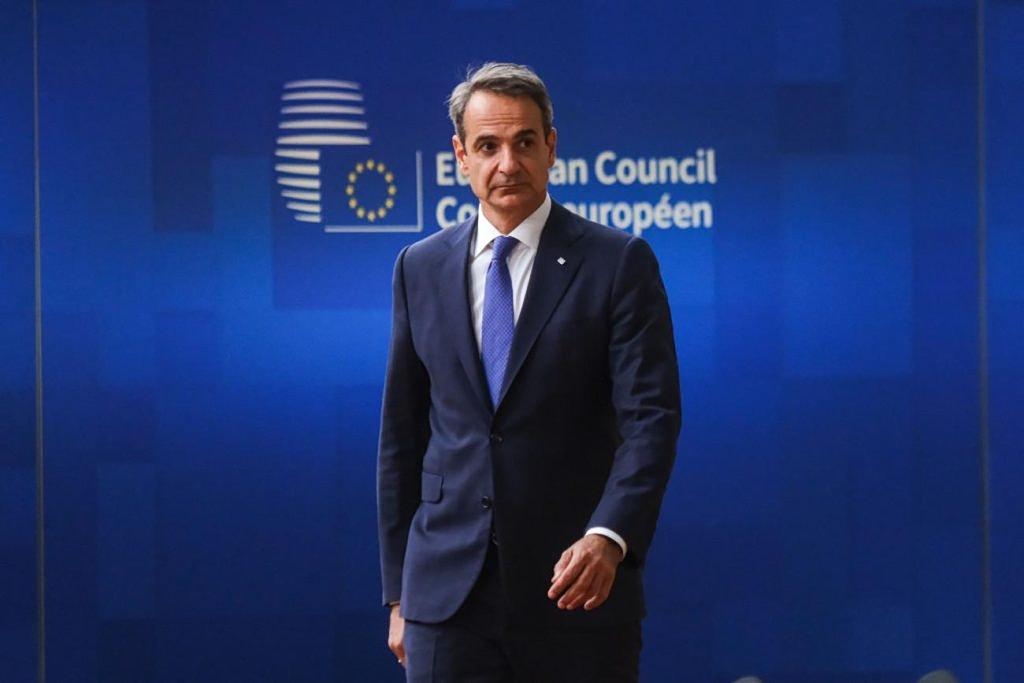
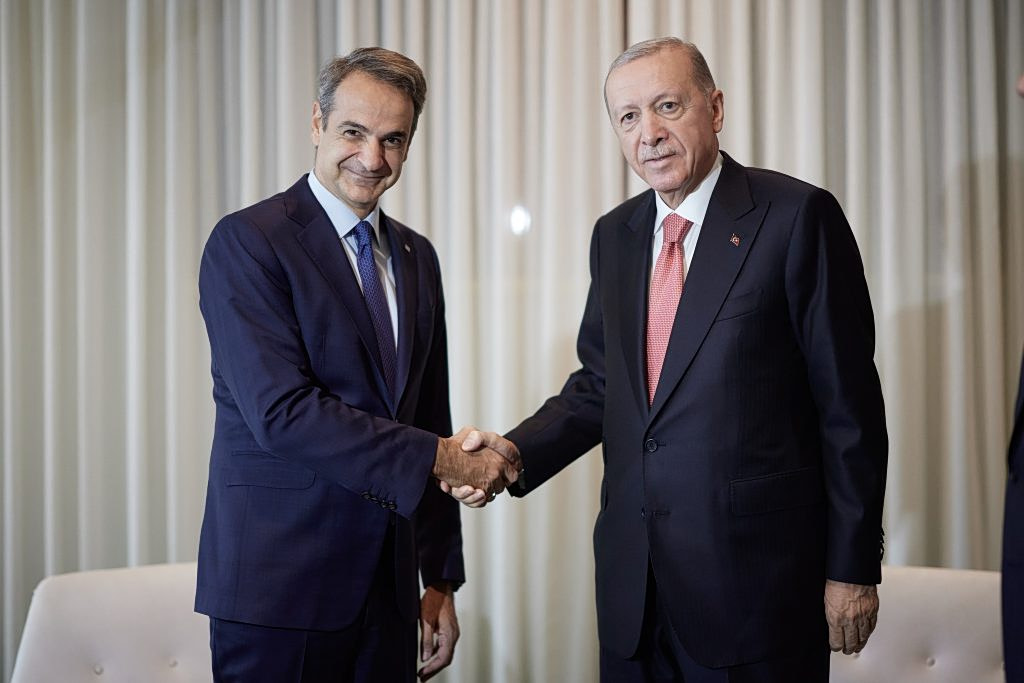
The upcoming summit meeting between Mitsotakis and Erdoğan on Wednesday in Turkey, within the framework of the 6th Supreme Cooperation Council of the two countries, has been planned in every detail by the diplomatic teams in Athens and Ankara. Its shared objective will be the maintenance and strengthening of active communication channels to establish a functional relationship at a moment when uncertainty and instability prevail internationally.
The Prime Minister’s recent statements (Foreign Policy), just a few days before the leaders’ face-to-face, were recorded positively by Turkish media, with special reference to Mitsotakis’s remark that he does not foresee a significant risk of escalation with Turkey, emphasizing that “the situation is now clearly more manageable,” as both he and the Turkish president are “two experienced leaders.” The main “thorn,” from the perspective of Turkish media, is, pending the SCC, the one and only dispute that Greece—according to the Prime Minister—recognizes with Turkey: the delimitation of the continental shelf and Exclusive Economic Zone (EEZ).
As both Athens and Ankara note, from consultations prior to the upcoming Mitsotakis-Erdoğan summit, no common ground has yet been established regarding the scope of discussion on maritime boundary delimitation. Nevertheless, the Greek side continues to reiterate that there is always room for a prospective agreement, in order to bring this dispute before an international jurisdiction, while simultaneously making clear in all directions that issues of sovereignty are not open for discussion.
Low Tones
Greek diplomacy has recently acknowledged in the Turkish approach reasonable indications of a shift from entrenched (unfounded) positions—chiefly Fidan’s intention to “move away” from Turkey’s red line of 6 nautical miles in the Aegean, due to the Greek blockade in the European SAFE mechanism and under Athenian pressure for the removal of the casus belli. However, it is clear that there are no illusions in the Greek camp. The Prime Minister has already sought to outline Greece’s stance in response to a potential proposal, as leaked to the Turkish press, from President Erdoğan for a mutually beneficial (“win-win”) solution in the Aegean and Eastern Mediterranean, noting that he considers it difficult to resolve the single Greek-Turkish dispute “as long as Turkey adds other issues to this menu.”
Tensions on the path toward the SCC have also been caused by the revival of the completely illegal “Blue Homeland” narrative by the Turkish Ministry of Defense, with Greece focusing on Turkey’s contradiction: on one hand invoking International Law, and on the other reproducing its entrenched revisionist positions. Nevertheless, it is evident that both sides are keeping a low tone in any verbal exchanges occurring en route to the leaders’ summit, as the mutual goal is the continuation of bilateral dialogue without high expectations, guided by the common interest in cooperation on specific fields that yield results and with a view to closing gaps that could allow external interventions with unpredictable consequences for the region.
Both sides have more or less outlined that they prefer bilateral dialogue even if the two leaders need to agree on a series of issues on which they disagree, without this changing the bilateral cooperation on the themes of the Positive Agenda. Differences of opinion will therefore clearly emerge if the Prime Minister raises the request for the removal of the casus belli as a negotiation card to subsequently allow Turkey to enter SAFE—provided that, simultaneously, Turkish revisionist rhetoric ceases. The same is expected if Ankara proposes cooperation that does not adhere to International Law and the Law of the Sea.
However, Greece and Turkey have diametrically opposing views on regional and international issues as well, such as the course of talks on the Cyprus issue, the disarmament of Hamas within the framework of the second phase of the Trump peace plan for Gaza, and the interpretation of Israel’s role, which for Turkey is a “red flag” while for Greece it is a “strategic ally.”