 Μake us preferred on Google
 In the days before Iran’s regime hanged Nasser Bakerzadeh, the 26-year-old spoke of the normal life he would never return to.
Bakerzadeh dreamed of returning to run his mobile-phone store, he told fellow inmates in the main prison of Urmia, a city in Iran’s northwest. Instead, he was executed for being an Israeli spy—a charge he denied and his lawyer said lacked any credible evidence.
“He just wanted to live, to work, and to make his parents happy,” said Hamid Chapati, a former cellmate.
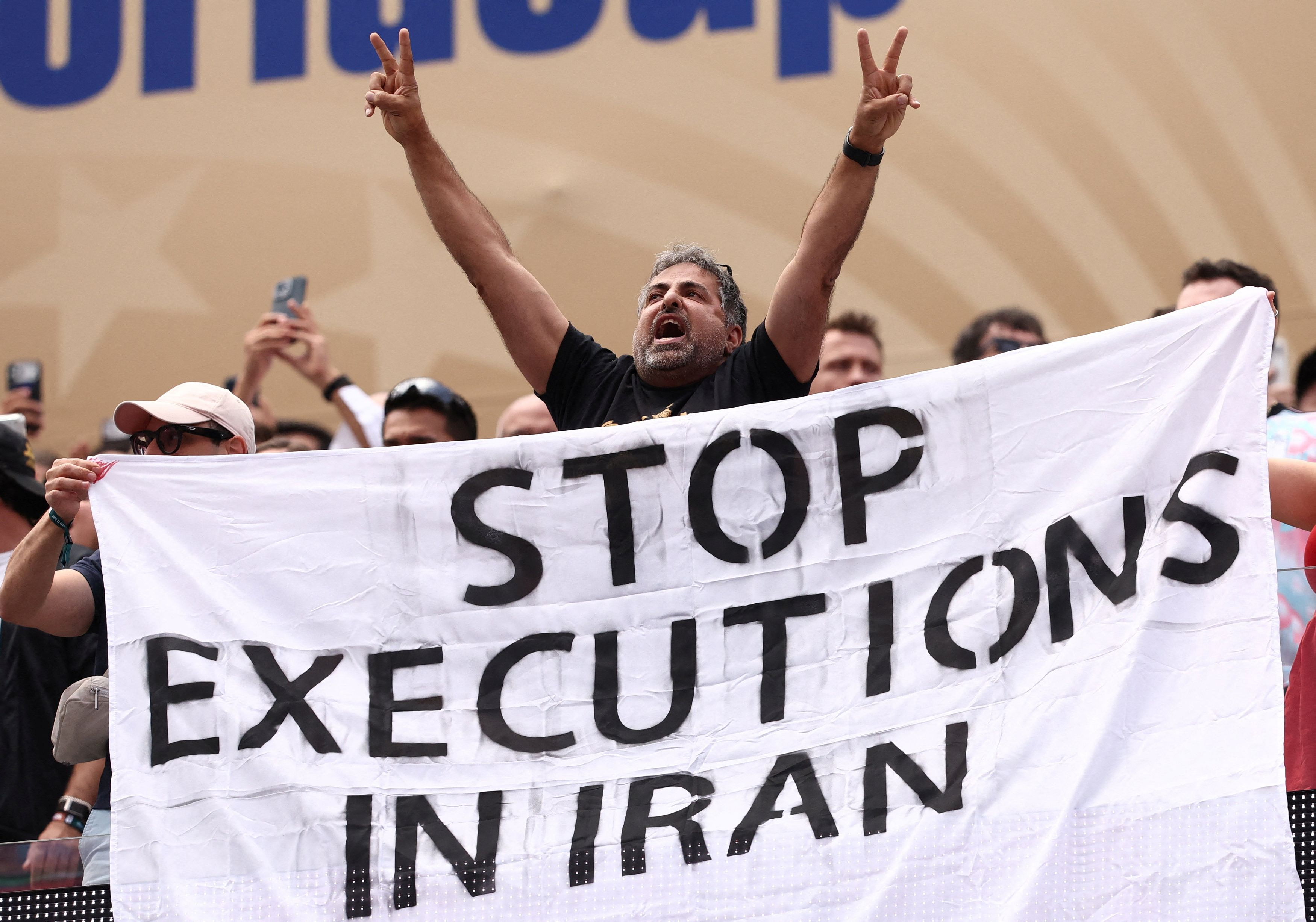
Bakerzadeh is one of at least 45 people executed in Iran this year on political charges, ranging from spreading propaganda to espionage, according to human-rights groups and Iranian state media.
Most of those death sentences have been carried out in the past three months, as the authorities have hurried to send a message to a restless population: The regime is still firmly in charge, and dissent won’t be tolerated.
Tehran has pushed to strengthen its internal hold on power as it starts talks with the U.S. after negotiating a memorandum of understanding that, among other things, will give the regime a financial boost from ending sanctions on oil exports.
Negotiations that began in Switzerland this weekend are aimed at curbing Tehran’s nuclear ambitions in exchange for broader sanctions relief, though talks have been hampered by continued fighting in Lebanon between Israel and Iran-backed Hezbollah.
Even with that prospective financial relief, Iran’s leaders still face a challenge from their deeply disaffected population. The regime has run out of tools for maintaining control, said Mahmood Amiry-Moghaddam, director of Iran Human Rights, a nonprofit group based in Oslo.
“They do not have legitimacy among people. The economy is in a terrible state,” he said. “The only way they can hold on to power is by instigating fear.”
In addition to the hangings, thousands of alleged traitors and spies have been arrested in recent months, according to Ahmad-Reza Radan, head of Iran’s Law Enforcement Command.
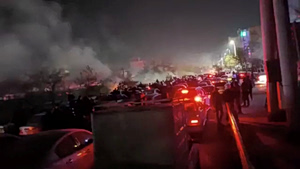
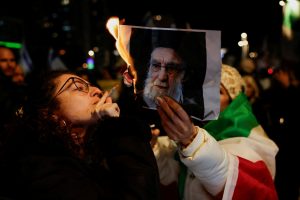
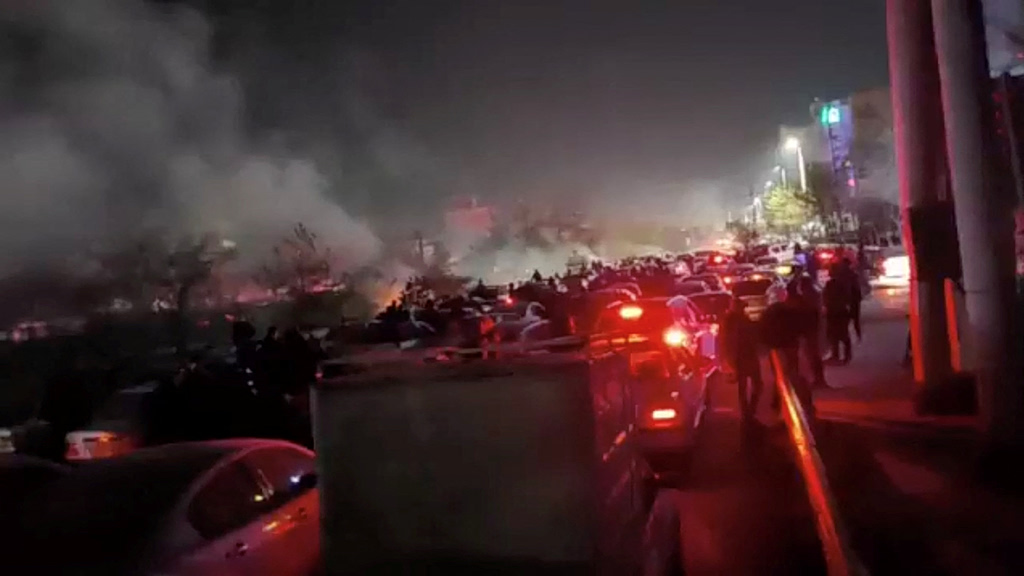
The latest round of internal repression began when Iranian authorities suppressed street protests in January, killing thousands of demonstrators who were calling for sweeping political change against a background of a crumbling economy.
As U.S. air and naval forces gathered in the Middle East, President Trump encouraged the Iranian protesters, saying “help is on its way.” But the regime survived the U.S.-Israeli bombing campaign that began on Feb. 28, and soon resumed its internal crackdown.
The head of Iran’s judiciary, Gholam Hossein Mohseni-Ejei, said at the end of April that cases involving alleged collaboration with aggressor regimes would be handled under expedited procedures and “addressed decisively and without leniency under the law.”
Espionage is being used as an increasingly elastic accusation to suppress political activity, human-rights groups say. Other loosely defined capital offenses used against political dissenters include “enmity against God” and “corruption on Earth.”
Many of those executed in recent weeks were arrested following those protests in January, but others had been in Iranian jails for longer—in some cases for years.
Bakerzadeh took part in nationwide protests in late 2022 that began as a call for protecting women’s rights and freedoms but soon turned into a broader antiregime movement.
He was arrested in 2023, accused of working with Israeli spy agency Mossad, and eventually sentenced to death. He maintained his innocence to the end.
On death row in Urmia’s main prison, Bakerzadeh became friends with Mehrab Abdollahzadeh, a barber from a village near the city who was also arrested after the protests for women’s rights.
Abdollahzadeh was accused of murdering a member of the Basij, a militia under the control of Iran’s Islamic Revolutionary Guard Corps that is used for suppressing domestic opposition.
His conviction relied on a coerced confession, he told Rebin Rahmani of the Kurdistan Human Rights Network, a nonprofit group based in Paris, in a phone call that Rahmani recorded.
“From the very first day of my arrest, I was subjected to violence, torture and threats, and forced to give confessions that were all false,” Abdollahzadeh said in the recording, which was reviewed by The Wall Street Journal. “None of the charges brought against me are true. They know it, and God knows it. I am innocent.”
At his trial, he said that surveillance footage and witness testimony placed him far from the location of the killing that would send him to the gallows.
“None of these individuals were allowed independent lawyers,” said Karen Kramer, deputy director at the Center for Human Rights in Iran, a nonprofit organization based in New York. “There are serious fair trial and due process violations in these cases, and they are being rammed through the revolutionary courts and fast-tracked.”
Abdollahzadeh brought humor to a cellblock defined by fear, said Chapati, who shared a cell with him and Bakerzadeh for months. Other inmates would ask the young barber for a haircut before their family members visited, Chapati said.
A day after Bakerzadeh’s execution, Abdollahzadeh was hanged too.
“He would warm the cold atmosphere of the prison with jokes and laughter,” Chapati said. “When they killed Mehrab, they killed all that energy for life, and those laughs too.”
Chapati was released after serving a six-month sentence for political agitation and now lives in Iraq.
The three cellmates match the profile of many of those facing jail or execution for political offenses, say human-rights groups: young men in their 20s and 30s from ethnic minority communities, particularly Kurds. But the current wave of repression has caught up Iranians from all ethnic and social backgrounds, from Tehran to small provincial towns.
The rise in political executions is raising alarm about the fate of thousands of Iranians who are still in prison for participating in the January protests.
Many more Iranians who have taken part in recent waves of protests are facing a punitive crackdown on their livelihoods, said Roya Boroumand, executive director of the Abdorrahman Boroumand Center for Human Rights in Iran, a nonprofit group based in Washington, D.C. The authorities are confiscating families’ properties, or setting such high bail for arrested family members that people are forced to sell their possessions, she said.