 Μake us preferred on Google
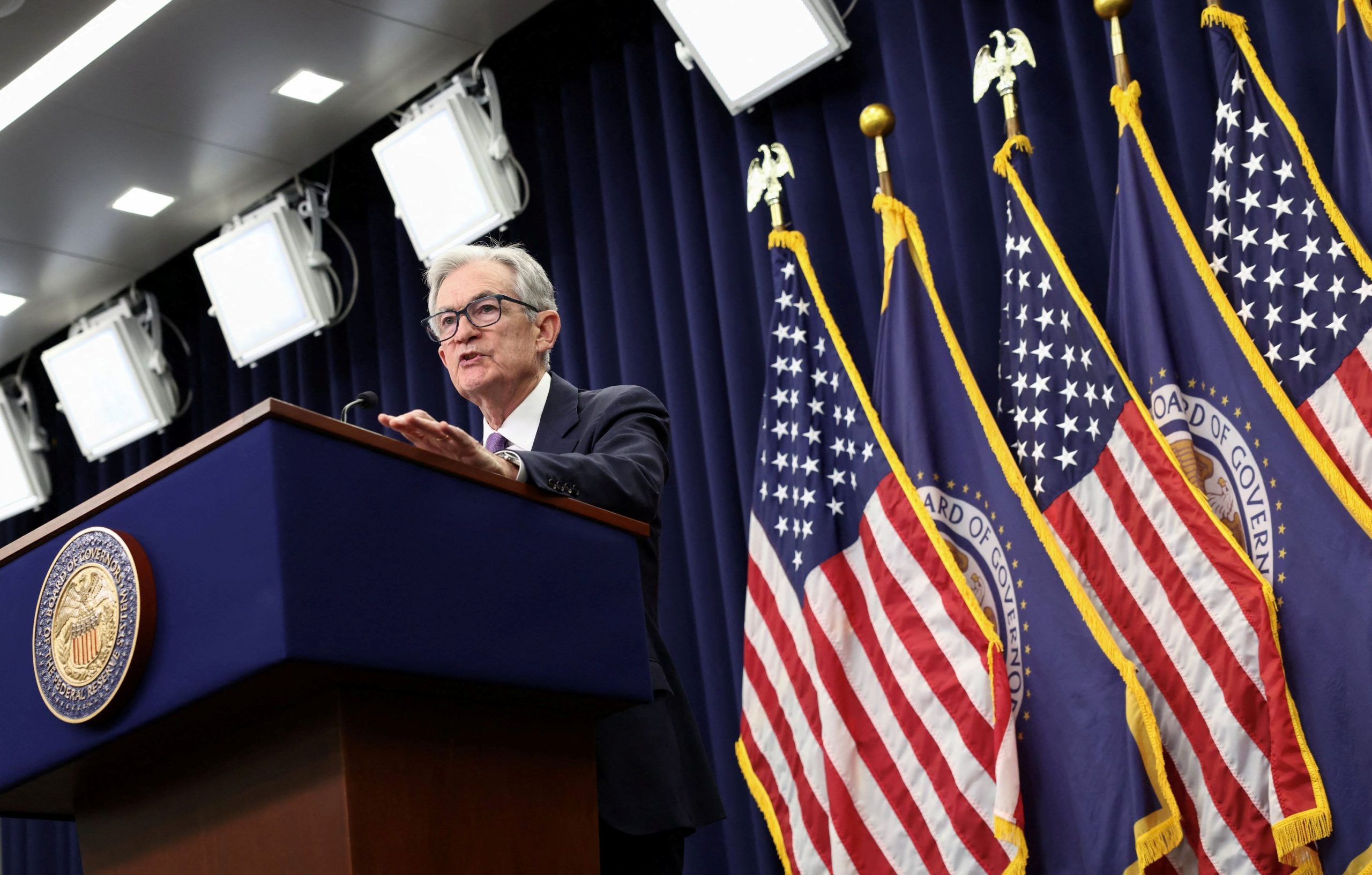
 The Federal Reserve lowered interest rates at its second consecutive meeting, but Chair Jerome Powell cast doubt on expectations of a further rate cut this year.
Powell made an unusually pointed intervention at a news conference following the meeting Wednesday to push back against market expectations that a rate cut at the Fed’s next gathering in December was a foregone conclusion. “Far from it,” he told reporters.
The Dow Jones Industrial Average and the S&P 500 erased their gains, with the Dow falling 0.2% while the S&P 500 ended the day nearly flat, down 0.3 point. The Nasdaq Composite rose 0.5% to another record high. The 2-year Treasury yield, which is especially sensitive to expectations about the Fed, rose 0.092 percentage point to 3.585%, the largest one-day gain since early July.
The latest quarter-point cut will reduce the Fed’s benchmark short-term interest rate to between 3.75% and 4%, the lowest setting in three years and down from a peak of around 5.4% maintained for much of last year. The cut was made to extend an effort to prevent a recent slowdown in hiring from turning into something more serious.
Powell’s comments underscored how the easiest part of unwinding the central bank’s aggressive rate increases might be over as he navigates a committee with what he identified as a “growing chorus” of officials who are wondering whether further cuts are warranted.
That thorny task has been complicated by a data blackout resulting from the government shutdown. If officials face a very high level of uncertainty about the economic outlook because the shutdown keeps the Fed in the data blackout, “That could be an argument in favor of caution” about cutting again, Powell said.
The Fed approved the rate cut on a 10-2 vote. Kansas City Fed President Jeffrey Schmid voted against the decision because he favored no change in rates, while Fed governor Stephen Miran dissented in favor of a larger, half-point cut.
Separately, officials agreed to stop their 3½-year campaign to shrink the Fed’s $6.6 trillion asset portfolio on Dec. 1. That effort had been designed to unwind pandemic stimulus passively.
Officials long said they would cease the runoff of their Treasury holdings when they detected evidence in overnight lending markets that banks were no longer awash in surplus cash. Those signals have mounted over the past week. The Fed will continue to shrink its holdings of mortgage-backed securities, but it will replace maturing bonds with short-term Treasury bills starting in December.
Expectations of a rate cut Wednesday was so hardwired in markets that the focus had already turned to the central bank’s final meeting of the year in December. Policymakers brought “strongly different views about how to proceed in December,” Powell said.
In September, a narrow majority of officials penciled in two more cuts this year, leaving a reasonable presumption that a December reduction remains more likely than not. But a significant minority of officials didn’t think further rate cuts after last month would be appropriate.
These officials are more worried about inflation that has run above the Fed’s 2% target for several years and stopped declining this year, largely reflecting higher prices for goods following tariff increases by President Trump .
Normally, economic reports that shade the outlook in between Fed meetings help reconcile any divisions. But the lack of new labor-market indicators, in particular, has robbed officials of the information that might resolve disagreements.
The lack of data means “they haven’t learned that much since September, and that leaves them presumably closer to where they were in September, but with wider uncertainty bands around it,” said William English , a former senior Fed adviser.
Powell has acknowledged that there is no “risk-free path.” On the one hand, officials don’t want to cut rates more than necessary and spur stronger activity that could keep inflation above target. Stock markets have raced to new records in recent months, partly in anticipation of further Fed cuts.
At the same time, other officials don’t want to ignore signs that trade-policy changes or the lagged effects of past increases are biting rate-sensitive sectors of the economy, including housing, and squeezing spending by low-income consumers and small businesses.
Several of the nation’s largest employers have announced plans to trim their white-collar ranks in recent weeks. The high-profile layoff announcements reflect both the embrace of artificial intelligence and nagging concern that companies overstaffed or overpaid hires as they scrambled to reopen from the pandemic four years ago.
The government shutdown has made it harder for Fed officials to gauge changes in the economy that shape their policy expectations. “You’d be worried as a policymaker that something’s happening and you’re just missing it,” said English, a professor at the Yale School of Management.
The Fed cut interest rates by 1 percentage point at the last three meetings of 2024 before standing pat in the midst of concern inflation might be proving to be sticky. For much of this year, debates turned on what it would take to return to lowering rates given that most officials judged rates were high enough to restrain growth.
That changed this summer, when labor-market reports showed job growth slowed sharply despite somewhat-firmer inflation readings. After broad-based declines in 2023 and 2024, inflation has edged up to almost 3%.
Without clear data showing meaningful job-market deterioration, it is difficult to build support for rate cuts that are larger than a quarter point. Meanwhile, with each quarter-point reduction, the question of when to stop cutting becomes more pressing.
Recent comments from Powell and other Fed leaders suggested “the data has to disqualify further easing, and that’s a higher hurdle,” said Vincent Reinhart , a former senior Fed adviser who is now chief economist at BNY Investments. Given the data blackout, Reinhart added, “It’s really hard for them not to cut in December. It’s easier to keep on going than stop.”
While inflation has been a big focus this year, it is the labor market that sits at the center of the debate. Many officials have become more confident that price increases due to tariffs aren’t likely to be repeated because the labor market is more brittle. Without the oxygen from a hot labor market, the thinking goes, any inflationary fire is less likely to burn.
Policymakers are trying to disentangle whether a slowdown in monthly job gains reflects fewer people entering the country and seeking jobs or, instead, a drop in demand for workers. The economy added around 29,000 jobs a month, on average, over the three months through August, down from 82,000 in the year-earlier period, according to the Labor Department.
Rate cuts can boost weak demand but can’t offset fewer people seeking work.
Immigration-policy changes could be lowering the number of new jobs needed to hold the unemployment rate steady every month to 50,000 or fewer, down from around 90,000 before the pandemic and 150,000 when immigration surged after the pandemic, according to various models.
“Are they really adjusting their thinking to the idea that 50,000 jobs a month would be perfectly fine? I don’t know that everyone has really adjusted to that,” said James Bullard , who served as president of the St. Louis Fed from 2008 to 2023.
Solid consumer spending, supported by lofty stock markets, and growth in overall economic activity could argue for slowing the pace of rate cuts given recent inflation setbacks, said Bullard, who is now dean of Purdue University’s business school. A December rate cut “is a little dicier than markets have it right now. You’re hanging a lot on the slowdown in nonfarm payrolls,” he said.