MILAN—Team USA was dressed by Ralph Lauren, Canada came decked out in the finest Lululemon and Italy welcomed the world to the Milan Cortina Games in uniforms designed by Emporio Armani.
But the most stylish delegation in this global capital of fashion was the one wearing a cashmere collection inspired by warriors on horseback, nomads in yurts and the strength of history’s most sprawling empire.
Benvenuti …Mongolia!
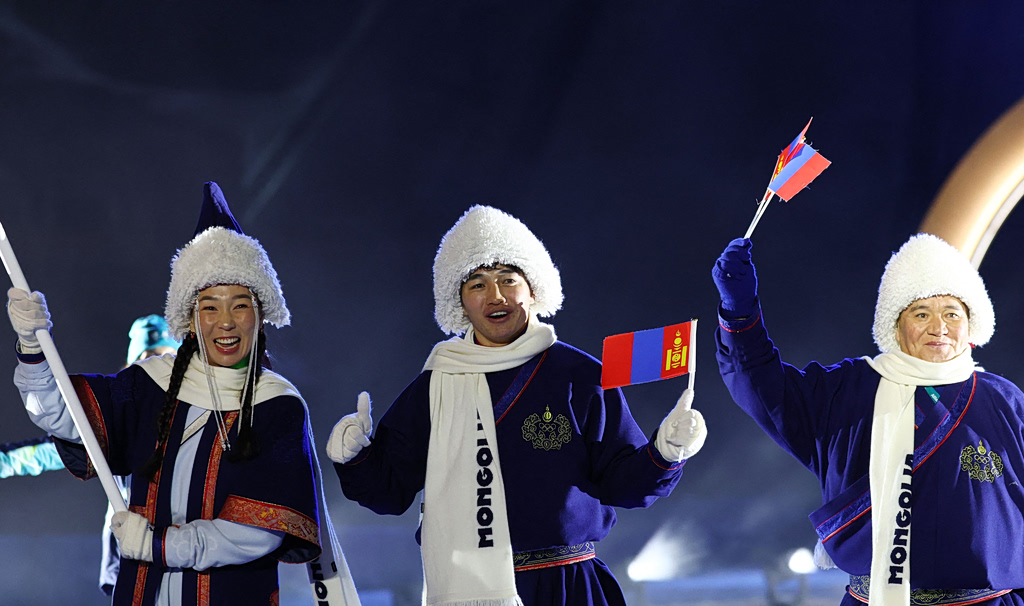
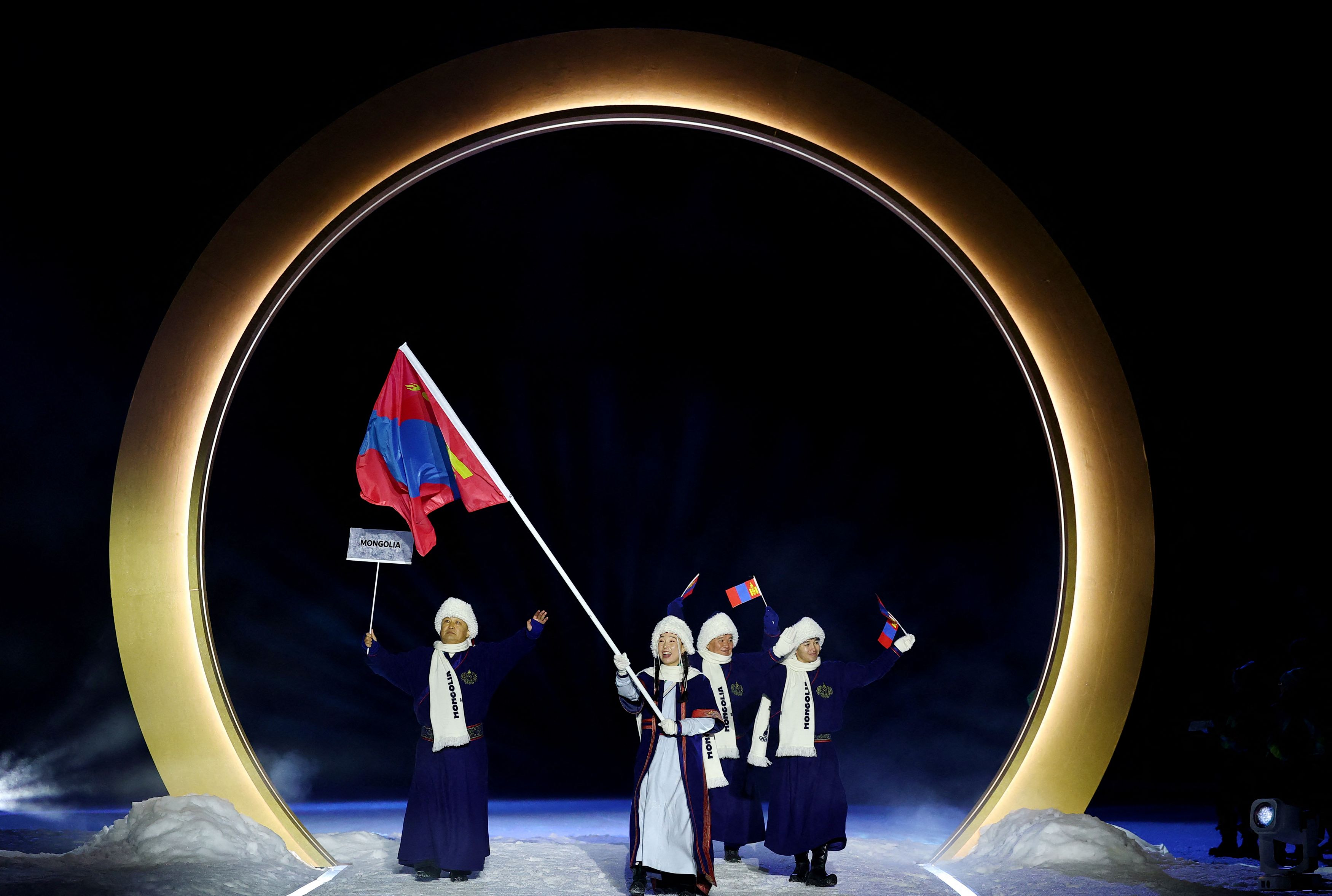
Milano Cortina 2026 Olympics – Opening Ceremony – Predazzo, Italy – February 06, 2026. Flag bearer Ariuntungalag Enkhbayar of Mongolia with contingent in the athletes parade during the opening ceremony REUTERS/Kai Pfaffenbach
In the Opening Ceremony on Friday, the trio of Mongolian Olympians competing in alpine and cross-country skiing seized the attention of the Games by parading around in deels, their robes made of cashmere and lined with yak down for extra warmth. They paired them with horn-shaped hats designed to protect against enemy arrows and survive the biting cold of the Mongolian steppes—and a trip to Northern Italy.
By the time they waved the flag, their uniforms designed by Goyol Cashmere had already been declared the look of the season. When the Mongolian company behind the merch released a sneak preview weeks ago, Vogue raved about the clothing and shoppers from all over the world preordered sweaters, scarves and ski caps.
The unveiling was so highly anticipated that Mongolia’s finest athletes came here feeling like they were off to a fashion show.
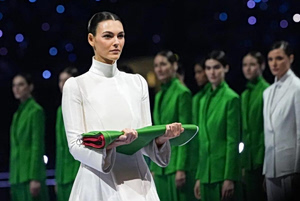
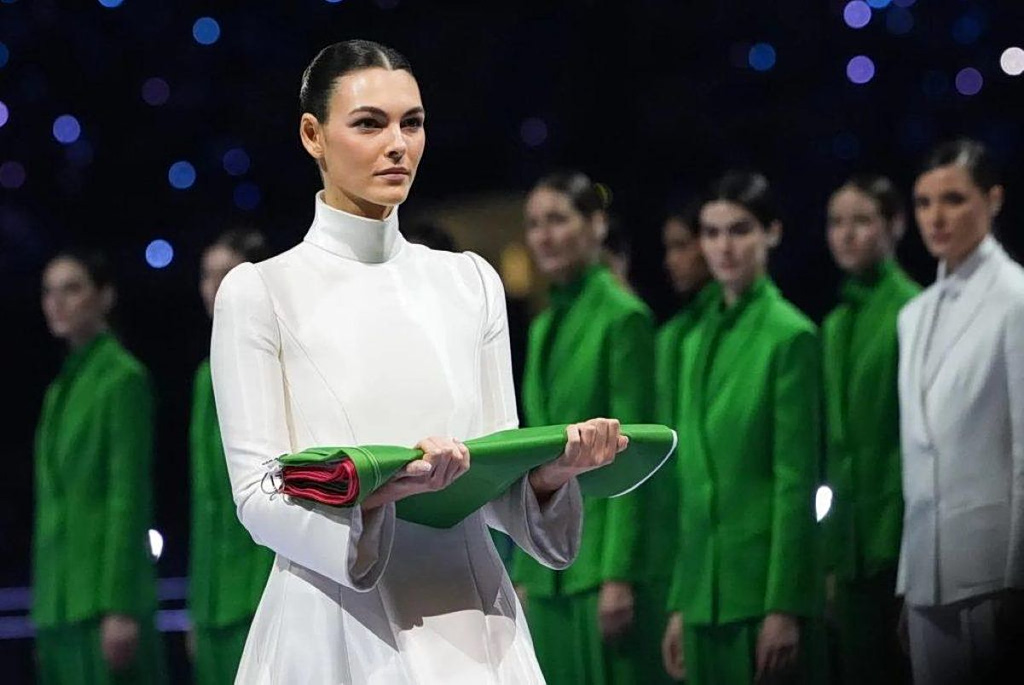
In fact, the clothing had been in an actual Milan fashion show 48 hours before the Opening Ceremony. At the invite-only affair for countries chosen by the International Olympic Committee, Mongolians walked the runway in uniforms that could have passed as couture.
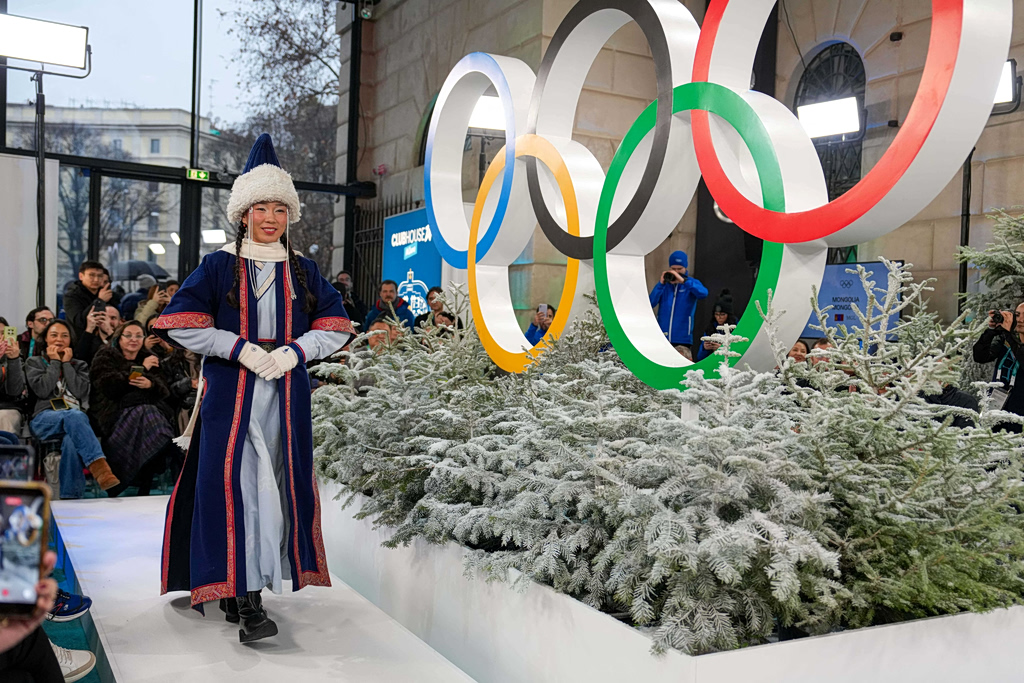
Milano Cortina 2026 – Olympic Games Winter Fashion Showcase – Milan, Italy – February 4, 2026 Ariuntungalag Enkhbayar of Mongolia presents an outfit during the Olympic Games Winter Fashion Show Pool via REUTERS/Xue Yuge
They were also the only uniforms inspired by attire from the 13th century, back when Mongolia was busy raiding the world.
“We chose the specific period when our country was the strongest,” said Baysa Delgerbat, Goyol Cashmere’s creative director.
She made sure the outfits were as much about function as they are about fashion. The deel’s high skirt slits allow enough freedom of movement to ride horses, while a raised collar shields the neck in frigid temperatures, she explained from her office in Ulaanbaatar, the coldest capital city on earth.
“The resilience, the hard work, the warrior spirit,” she said. “It all came from the endurance of the harsh winters of Mongolia.”
Even harsher is the country’s record at the Winter Olympics: Mongolians have never won a medal.
But they won the Opening Ceremony.
The Mongolians announced on Facebook last year they were launching an open design competition. The winning bid came from a family business that specializes in premium cashmere knitwear.
Goyol Cashmere was founded in 2005 by Delgerbat’s parents. As the 28-year-old designer took on more responsibilities inside the company, she realized she needed more formal training. She enrolled at Milan’s Istituto Marangoni, a finishing school for Italian fashion royalty. When she graduated last year, she dreamed of returning to Italy to flaunt her work.
She couldn’t have predicted it would be so soon—or that it would be for a sporting event.
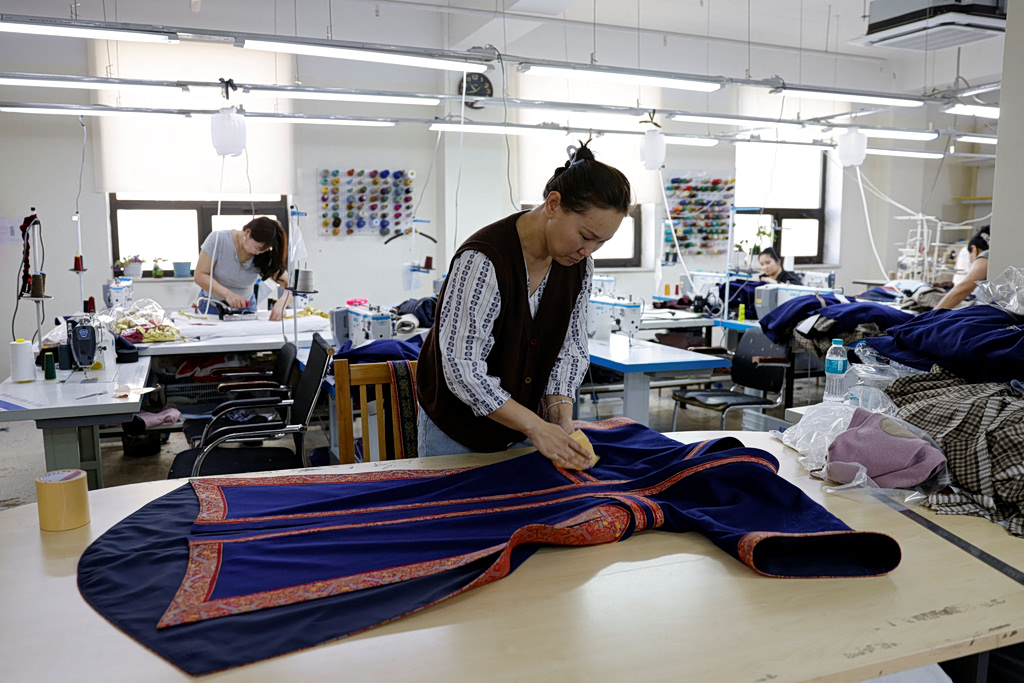
An employee works on a deel, one of Goyol Cashmere’s Team Mongolia outfits for the 2026 Winter Olympics, at its factory in Ulaanbaatar, Mongolia, February 5, 2026. REUTERS/B. Rentsendorj
These days, she travels between two places that understand the value of luxury fibers. For centuries, Mongolians have wrapped themselves in cashmere to survive brutal winters. Today more than a quarter of the world’s cashmere comes from this Central Asian state where goats outnumber humans.
But the Ulaanbaatar-based brand doesn’t just rely on Mongolians. It’s also funded by Americans.
Goyol Cashmere received a $5 million loan from the U.S. International Development Finance Corporation in 2020 with the goal of diversifying the Mongolian economy.
As it turned out, the deal also bankrolled deels.
Goyol went to extremes to make sure its final garments would justify the investment. Delgerbat brought in the country’s three Olympians and their coaches for multiple fittings. She paid special attention to their hats, digging through historical archives—“there are over 200 types of hats that are worn by Mongolians,” she said—before using the culture of ancient nomads as her creative inspiration.
A more modern Mongolian issue: When the collection went online last month, the company was swamped with orders and struggled to meet demand. Goyol had to figure out how to ship products despite the high costs of running an e-commerce business from Ulaanbaatar.
“Mongolia is centrally located,” she said, “in the middle of nowhere.”
To maintain quality, she required anyone who pre-ordered a deel to visit the Goyol shop for proper tailoring. For those who can’t afford a customized robe priced around $800 or a trip to the middle of nowhere, the top sellers are the beanies, scarves and yurt-spangled mountain sweaters.
The collection went on full display earlier this week at the IOC fashion show. Then came the twin Opening Ceremonies in Milan and the Dolomites. Their next stop will be the Olympic Museum, where Goyol has arranged to donate one of its Opening Ceremony costumes.
“Everyone is talking about our uniform,” said Undral Amarsaikhan, a senior adviser to the Mongolian National Olympic Committee.
As much as Amarsaikhan would like a Goyol deel of his own, he settled for an official team jacket. In the week before the Opening Ceremony, he gallivanted around Italy in a jacket with the national slogan on the sleeve: “Go Mongolia.”
“Because,” he said, “you can’t say Mongolia without Go.”