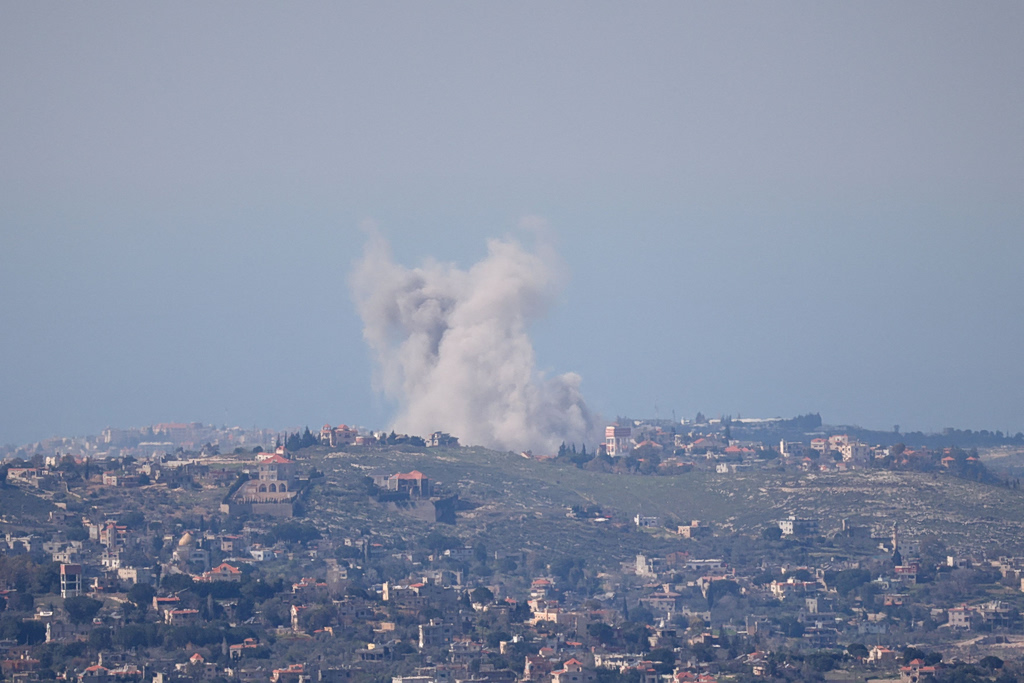
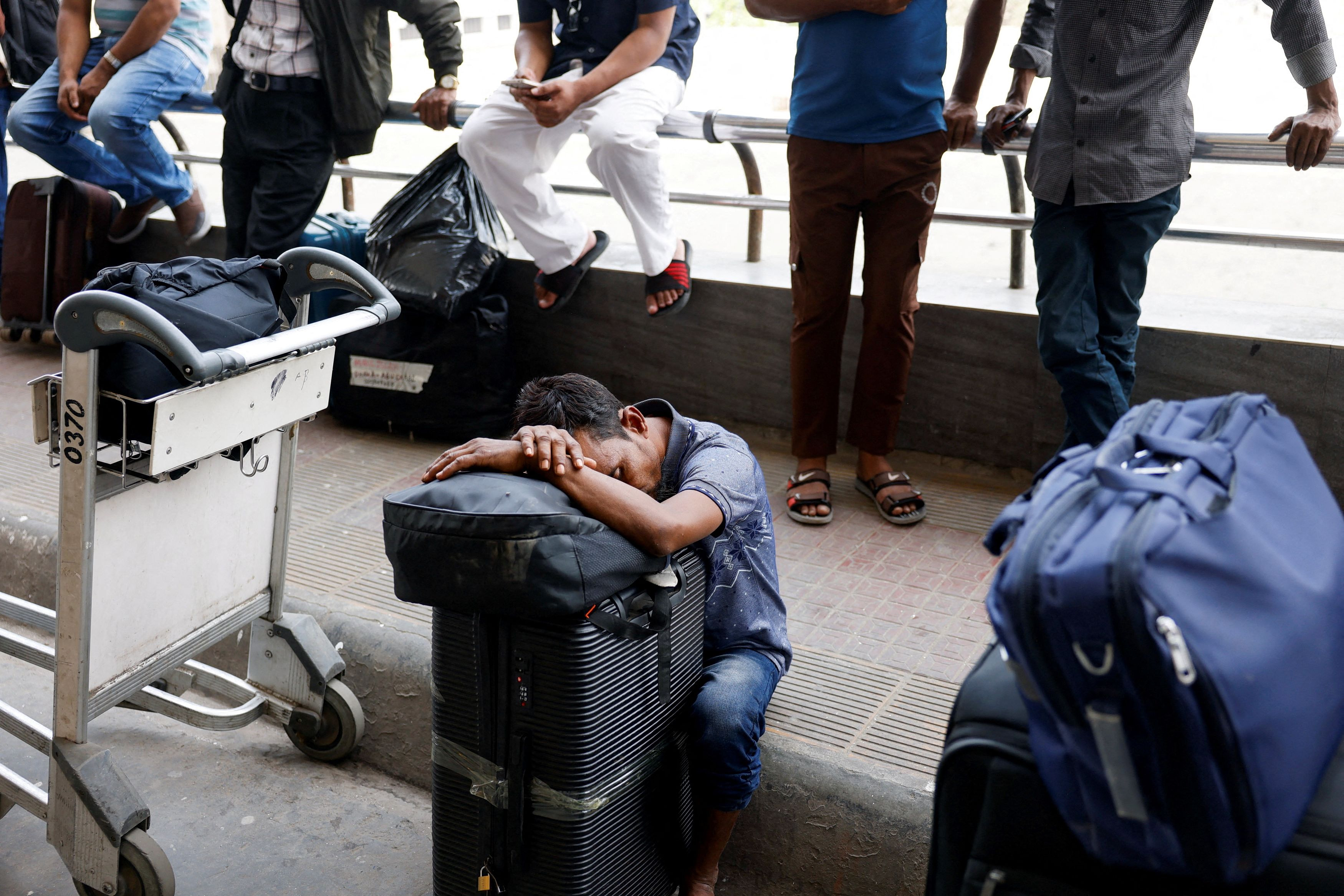
After weeks of threats, the U.S. and Israel have launched military strikes against Iran, and the Islamic Republic has hit back against U.S. bases in the Gulf. If you’re set to fly to or through the region today, here’s what to know:
Can airlines fly to the Middle East?
Swaths of airspace have already been shut. Skies over Israel and Iran closed earlier on Saturday shortly after the first strikes, but other Gulf states have followed suit since, with the likes of Iraq, Qatar, Oman and Kuwait issuing temporary bans affecting all commercial flights.
If you’re set to fly into one of those countries today, you may already have been advised by your airline that your flight has been canceled.
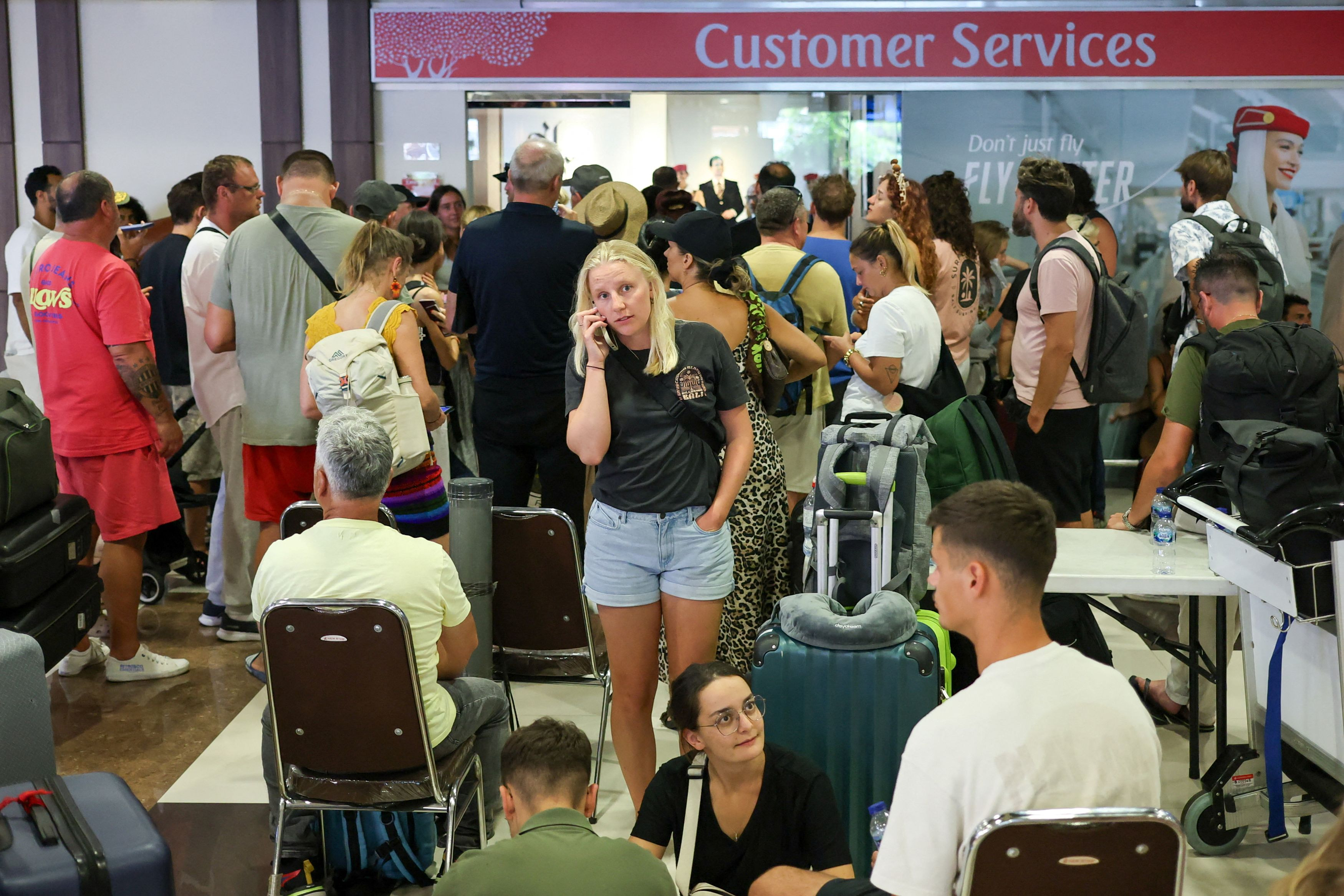
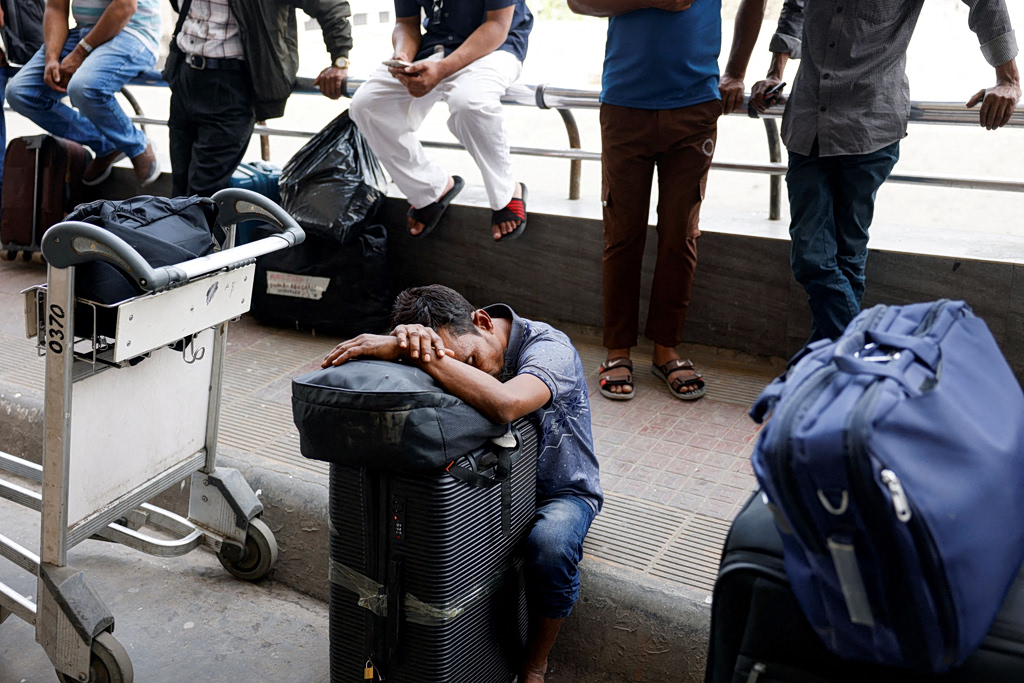
Stranded passengers wait near Emirates Airways customer service office at I Gusti Ngurah Rai International Airport after flights to Doha, Dubai, and Abu Dhabi were cancelled following strikes on Iran launched by the United States and Israel, in Kuta, Bali, Indonesia, March 1, 2026. REUTERS/Johannes Christo
While other countries may not have issued formal or complete airspace bans, many have shut airports, while some airlines have halted operations in response. Emirates, the world’s biggest carrier by international traffic, has suspended all flights to and from its megahub in Dubai.
About a quarter of all arrivals at airports across the region are showing as canceled, according to aviation data provider Cirium. Emirates, the world’s biggest carrier by international traffic, Abu Dhabi’s Etihad, Qatar Airways and Flydubai have grounded all flights to and from their hub airports.
Others—including British Airways, Germany’s Lufthansa, Air France, Cathay Pacific and Ethiopian Airlines—have also scrapped flights into the region. Air India has also canceled flights to and from airports in North America and Europe due to the airspace restrictions.
Is it safe to fly there?
Europe says no. The European Union’s aviation safety body issued warnings to all European airlines warning of a “high risk” facing any and all commercial flights operating not only to destinations in the Middle East, but also to flights flying over the region.
Its warning covers the airspace you would expect—over Israel and Iran and the corridor between, such as Iraq and Jordan. But it also advised against operations across almost the entire region, including the whole of Saudi Arabia, and as far down as Oman.
That isn’t only due to the risks of missile strikes between Israel and Iran, but the likelihood of ad hoc launches from Iranian-backed militia such as the Houthis in Yemen, whose rocket fire toward Israel has in the past crossed Saudi skies. U.S. and allied states’ military bases are also dotted around the region, and are likely to be targeted, it said.
What are the risks?
Arsenals in the region include missiles capable of reaching all altitudes at which commercial flights operate. That includes lower-surface cruise missiles and intercontinental ballistic missiles that fire up and over the roughly 35,000 feet that commercial flights typically operate at.
But it isn’t only the risk of crossing paths with an active missile. Commercial aircraft have been accidentally misidentified as hostile by air-defense systems in the past, most recently when Russian defenses mistakenly shot down an Azerbaijani commercial flight in late 2024. In 2020, Iran accidentally downed a Ukrainian airliner shortly after takeoff from Tehran.
Missiles also aren’t 100% reliable. Aviation security specialists warn that many blow up or fail en route to their targets, exposing aircraft underneath their trajectories to falling debris.
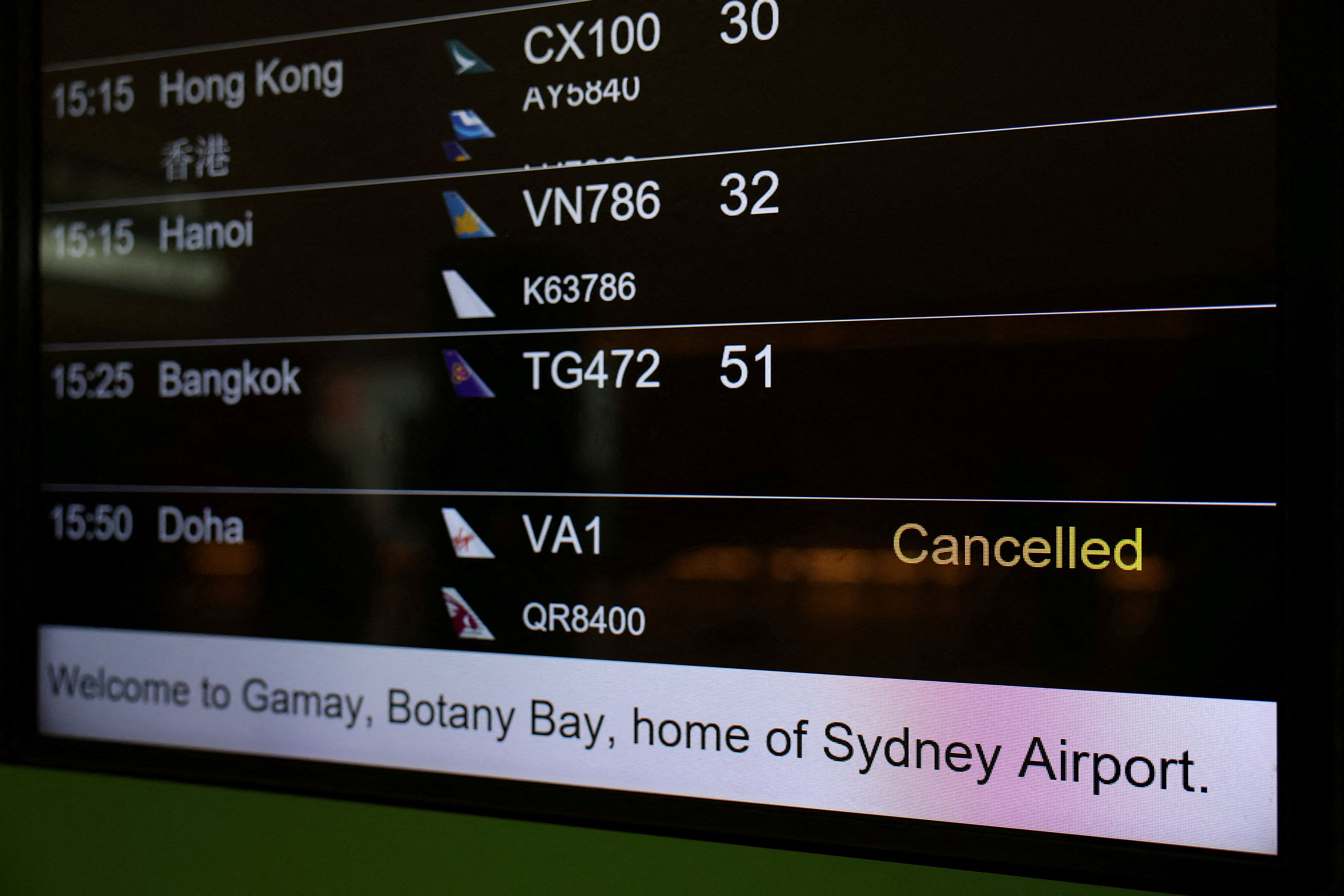
FILE PHOTO: A departures board displays a cancelled sign next to a flight to Doha, at Sydney Airport in Sydney, Australia, March 2, 2026. REUTERS/Hollie Adams/File Photo
What should I do?
If you’re set to fly to the region in the coming days, check in with your airline. If your flight is today, it is likely to be canceled. Airlines are likely to accommodate you on later flights or offer refunds. If you have travel insurance, there is a chance it includes conflict-related disruption.
If you suspect your flight is traveling over the Middle East—especially on routes connecting Europe and Asia—your flight may also be canceled. If it isn’t scrapped by your airline, it is likely to be rerouted, but it is worth checking.
With Russian and Ukrainian airspace closed to much of the world’s airlines, a rerouting to avoid the Middle East means your flight could take hours longer than scheduled. That could cause knock-on delays across the aviation ecosystem, so be prepared to be nimble and patient if you’re still set on flying.