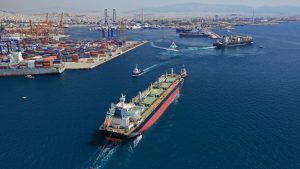
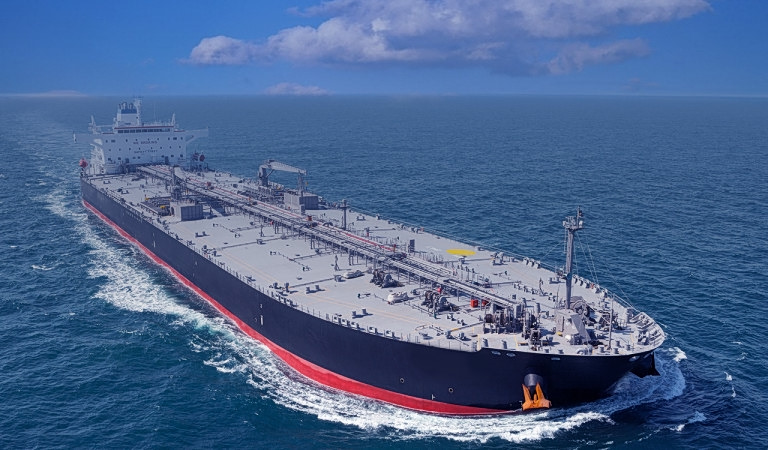
India’s Coast Guard has seized three tankers sanctioned by the U.S. that it says were involved in illicit ship-to-ship transfers off its western coast, a move that analysts said marks New Delhi’s first direct support of U.S. efforts to crack down on the so-called dark fleet .
The vessels were intercepted on Feb. 6 about 100 nautical miles northwest of Mumbai and were part of an “international oil-smuggling racket,” the Coast Guard said in an Instagram post. The tankers are now anchored off Mumbai and under investigation, a spokesman said on Tuesday.
Analysts said the seizures reflect a recent thaw in relations with Washington after a standoff over India’s large-scale purchases of Russian crude following Moscow’s invasion of Ukraine.
“The timing is quite significant just on the back of the India-U.S. trade deal,” said Dinakar Peri, a fellow in the security studies program at Carnegie India, a think tank based in New Delhi.
Last year, Trump doubled tariffs on Indian goods to 50% in an effort to pressure New Delhi to cease its purchases of Russian oil. Early this month, Trump said that India had agreed to halt purchase of Russian oil as part of a trade deal that lowered U.S. tariffs to 18% .
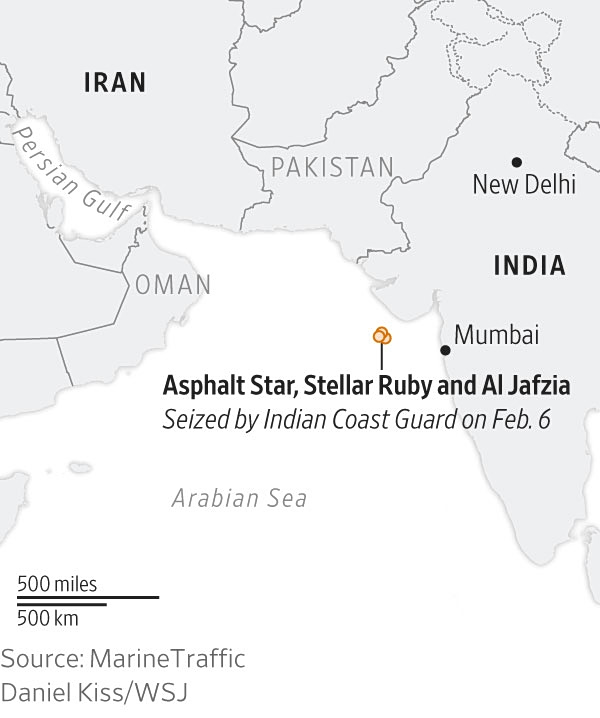
The three tankers were seized on the same day India and the U.S. issued an official statement announcing the deal.
In recent months, Western nations have stepped up efforts to disrupt the shadow fleet—a sprawling network of aging tankers consisting of almost 1,300 vessels, according to the ship-monitoring website TankerTrackers.com. The vessels are used to transport sanctioned oil from countries such as Russia, Iran and Venezuela, often sailing under false flags, changing identities and using opaque structures to conceal their true owners.
In September, over 65% of the Russian oil shipped to India was moved by shadow fleet tankers, according to a report from Lloyd’s List. The Indian Foreign Ministry declined to comment beyond the statement issued by the Indian Coast Guard.
India has slashed its reliance on Russian oil in recent months amid rising sanctions and pressure from the U.S., reducing its dependence on the shadow fleet, analysts said.
The Coast Guard didn’t name the three vessels seized but shared photos of them on Instagram. Vanguard Tech, a British maritime security company, identified them as the Al Jafzia, the Asphalt Star and the Stellar Ruby.
All three tankers were sanctioned by the U.S. Treasury last year, when using different names, for allegedly transporting Iranian oil, according to the Office of Foreign Assets Control. In a statement sent Monday to the Iranian news agency Fars, which is affiliated to Iran’s security services, the state-owned National Iranian Oil Co. denied any connection with the three seized oil tankers.
Relations between the U.S. and Iran have reached new lows this year, with the U.S. warning of military action after massive antigovernment protests that spread across Iran in January were brutally suppressed. The Trump administration is still readying for a possible military strike if talks over Iran’s nuclear program fail to result in a deal .
India stopped buying oil from Iran after the U.S. reimposed sanctions on the country during Trump’s first term. India has also stopped all new investments in an Iranian port, according to the new annual budget.
Western nations including the U.S. have imposed sanctions on thousands of entities tied to shadow-fleet tankers. Recently, Western militaries have begun to intercept the ships, marking a more aggressive approach to stamping out their operations.
On Tuesday, the French foreign minister said that the Grinch, a tanker France says belongs to Moscow’s shadow fleet, had been let go by French authorities after three weeks in detention and a fine of “millions of euros.” Several others have been seized during a U.S.-led operation against sanctioned tankers as part of a campaign to increase pressure on Venezuela. Most were in the Caribbean, off the Venezuelan coast, when captured.
The Stellar Ruby had just received a cargo of Iranian asphalt from the Asphalt Star, which came from Iran, according to commodities data company Kpler. Al Jafzia was loaded with naphtha, a crude byproduct it had received mid-January from another vessel, the Global Peak, a tanker under U.S. sanctions that was loaded in Iran and wasn’t detained, according to Kpler.