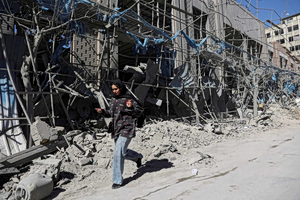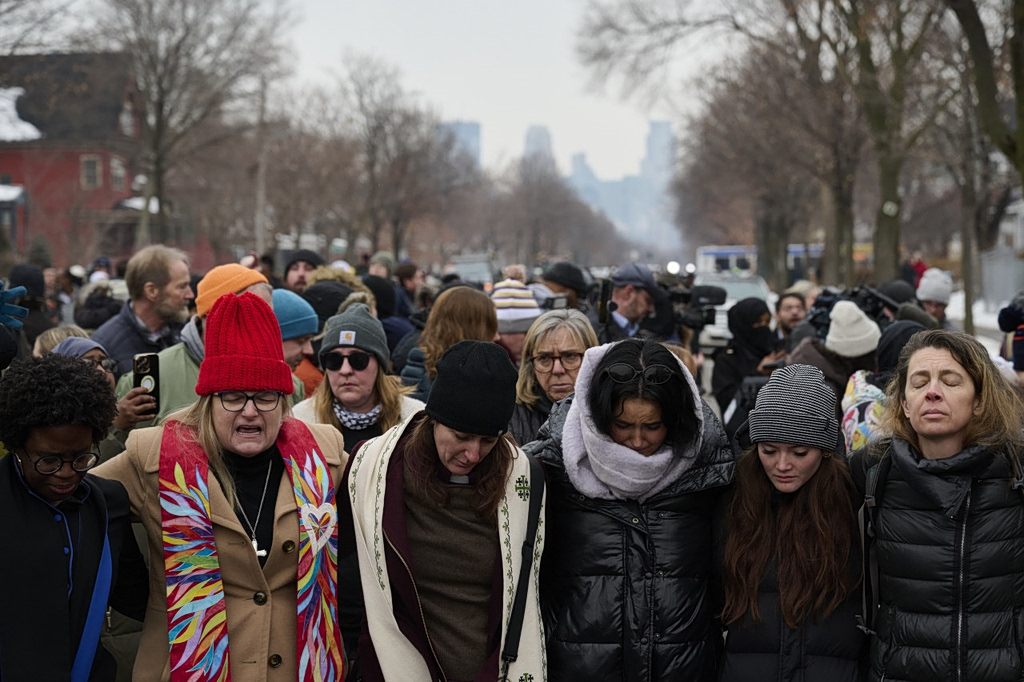

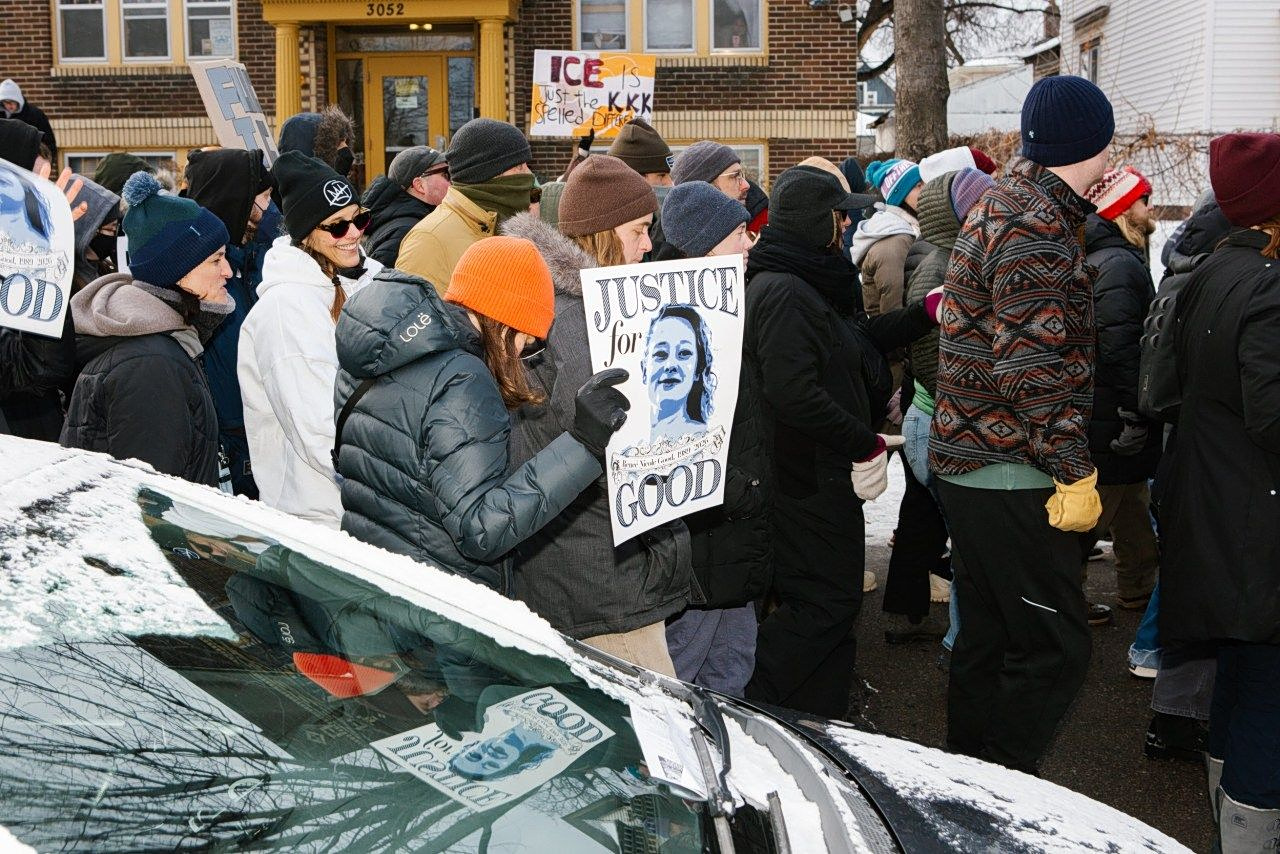
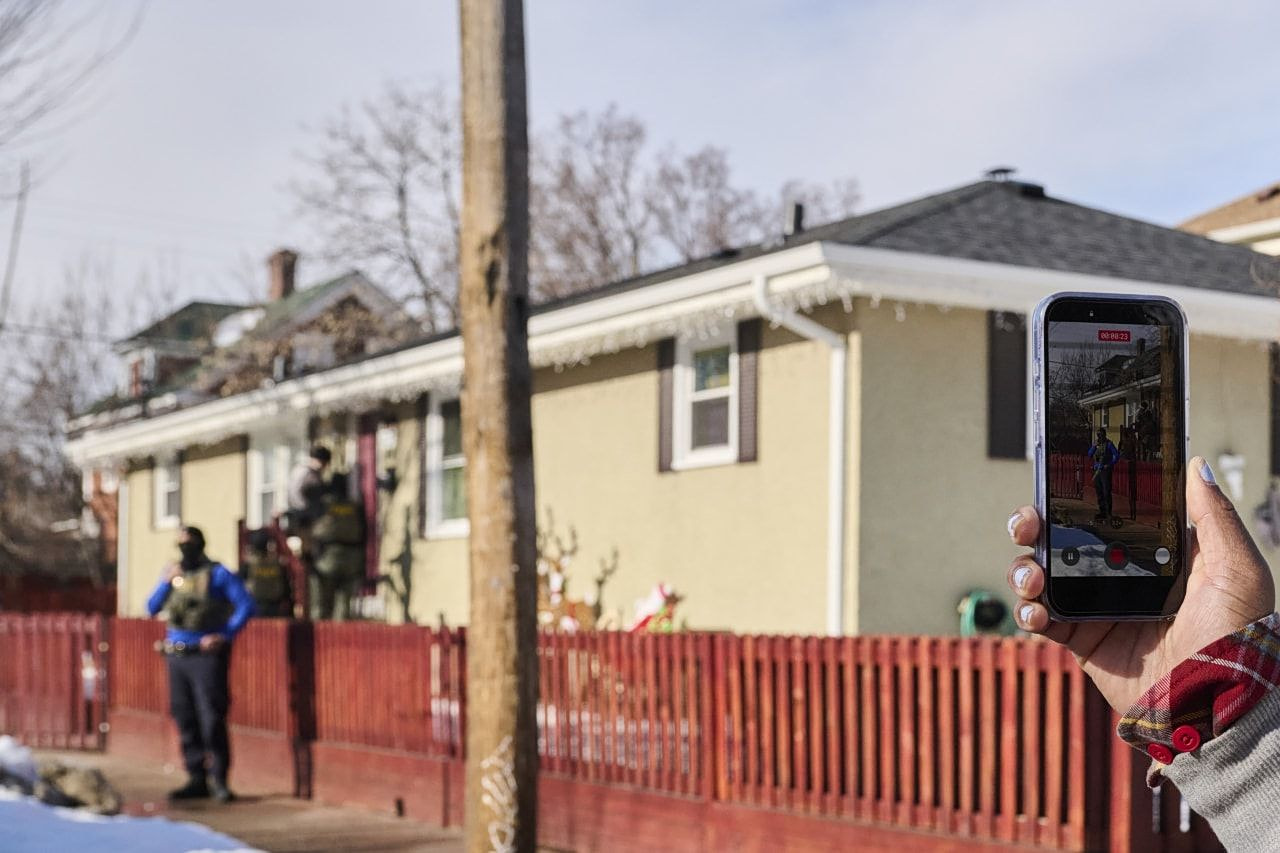
MINNEAPOLIS—The Trump administration’s immigration-enforcement crackdown in blue cities like Los Angeles and Chicago has sparked a rolling countermovement: Neighbors armed with whistles and cameras observe ICE officers, chant at them to leave, trail their movements and warn people ahead of their arrival.
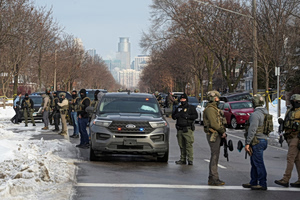
That, according to some Minnesota officials, was why Renee Nicole Good was on Portland Avenue as Immigration and Customs Enforcement officers conducted an operation at the start of a surge of what government officials said would be 2,000 agents into the city and surrounding areas to make immigration arrests, representing one of the largest such operations since President Trump returned to the White House.
“She was a compassionate neighbor trying to be a legal observer on behalf of her immigrant neighbors,” Minnesota Attorney General Keith Ellison told National Public Radio on Thursday. “That’s what she was doing at the moment of her death.” Federal and state officials sharply disagree on what led to the encounter .
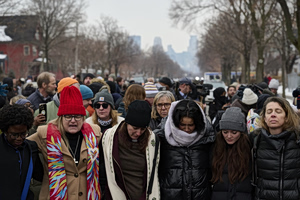
This rising friction between ICE and blue-city residents had potential to peak in Minneapolis, a liberal, activist enclave uniquely positioned to mobilize—and sometimes antagonize—federal officers’ growing street-level presence. The Midwestern city teems with community patrols, hyperlocal rapid-response volunteers and hundreds of informal neighborhood-text networks—part of a protest culture that swelled after George Floyd’s murder to encourage residents to be “observers” who document law-enforcement interactions or rush to unfolding scenes.
In a statement Friday, Rebecca Good— whose wife was fatally shot two days earlier by an ICE agent on a residential street—said the pair had “stopped to support our neighbors” on Wednesday. They had just dropped their son off at school.
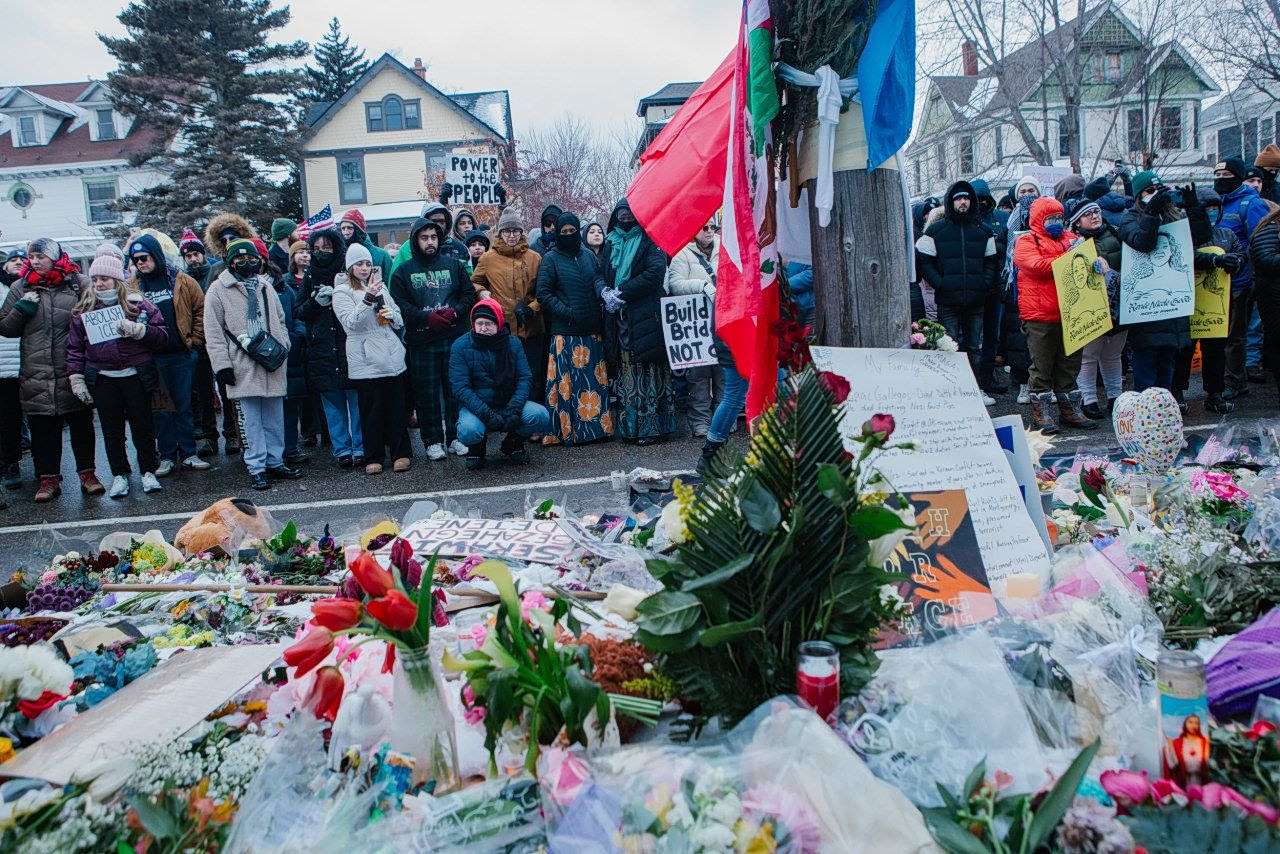
“We had whistles,” Rebecca Good wrote in a statement to a local media station , describing the simple devices thousands have adopted , starting in Chicago, to alert others when immigration officers arrive. “They had guns,” she added. In videos of that incident, residents can be heard blowing whistles and be seen filming in the midst of a heavy ICE presence.
A new video shared Friday by the Department of Homeland Security appeared to show that, in the seconds before the standoff turned deadly, both sides turned cellphone cameras on each other as the officer began to walk around the car. Rebecca Good, walking behind him, told him to go ahead and film their license plate and, as she turned toward the passenger door, said, “You want to come at us? I say, go get yourself some lunch, big boy.”
It couldn’t be determined whether the couple are part of a formal group; efforts to reach Rebecca Good were unsuccessful.
Vice President JD Vance said Renee Good was “there to interfere with a legitimate law enforcement operation” and was “part of a broader left-wing network” that is trying to “make it impossible for our ICE officers to do their job.” The DHS didn’t immediately respond to a request for comment about ICE observers. In the past, a spokeswoman described the groups as agitators and said they weren’t deterring the agency’s work.
The ICE watch groups have been crucial in letting immigrants know when they can safely go to school, church and the store, said Larry Jacobs, a University of Minnesota political-science professor.
Residents said thousands across Minneapolis and surrounding suburbs belong to networks that spring into action when ICE officers appear. One south-side Signal group has nearly 1,000 members who share photos and videos of suspected ICE vehicles almost constantly as they try to identify operations in progress, according to chats viewed by The Wall Street Journal.
“Hearing an unconfirmed report of an attempted abduction at 4th and Lake, observers requested,” said one message on Saturday. Another followed: “Whistles are going off, ICE out of vehicles.”
Some are more formally organized, while others appear to be activating on the fly. In the Signal group, one poster asked anyone “west of 35W and north of 36th” to join a separate chat. “Widespread activity in our area right now.” Some of the posters use only initials or pseudonyms, like “Pumpkin Spice” or “Banana Slug.”
On Saturday, locals carrying protest signs and occasionally blowing whistles patrolled streets under gray skies with patches of crusty snow piled up at corners, looking for ICE convoys. A participant in a rapid-response chat handed out 3D-printed whistles at Five Watt Coffee in the Kingfield neighborhood before going on patrol.
Steve Brandt , a 74-year-old retired journalist in Minneapolis, recently signed up with his wife to a network called Defend the 612—a reference to a local area code—to receive text alerts about ICE actions in his neighborhood.
“There are times when my phone is pinging all the time…. I would say over 100 pings during a day,” he said. “People get real jumpy wherever they see a large black vehicle.”
Brandt said he signed up to stay aware of what is happening nearby, “particularly any threats involving my church.” He added: “I wanted to know if someone lining up to get food is going to be threatened or targeted.”
Brandt said the message from the group is to be “upstanders,” “to document and blow whistles and warn people,” and to remind those ICE confronts that they have rights.
On Friday, Minneapolis City Council President Elliott Payne posted a link to Defend the 612 on X, urging residents to join patrols. Some respondents condemned such activism. “I hope you all get arrested for impeding a law enforcement operation,” one wrote.

Schools have become a priority for ICE watchers. At some, volunteers are forming human chains as students and employees enter and leave schools.
Amanda Otero, co-executive director of TakeAction Minnesota, a progressive advocacy group, said organizers have mobilized about 1,000 mostly parent volunteers at 35 Minneapolis public schools, including at the elementary campus that her daughter attends.
“We wanted to have folks ready to respond,” Otero said. “Everyone is all aligned. We don’t want ICE in our schools.”
Organized into “sanctuary school teams,” the volunteers—many of them moms already involved at their schools—use Google documents to divvy up tasks, such as delivering groceries to immigrant families. Volunteers are on hand at drop-off and pickup with whistles to blow in case ICE agents show up.
Borrowing the tactics from ICE watchers in Chicago, volunteers blow two short-whistle blasts to alert when the federal agents are around and one long blast when they see someone taken into custody.
Organizers said speed is important. When the Minnesota Immigrant Rights Action Committee receives an email tip, the group texts a contact in the neighborhood to verify the activity and then sends out a broader alert, according to Robyn Harbison, a volunteer.
“Any operation can be done in like 15 minutes,” she said. “We let people who we know live there know, and whoever can get there first.”
Organizations are hosting events to train people in becoming “constitutional observers” of law-enforcement activity. A guidebook on observer protocol includes advice for participants to say why they are watching, avoid any physical contact, record events with photos and videos, and ask questions to ICE and witnesses about what is happening.
Write to Kris Maher at Kris.Maher@wsj.com , Jim Carlton at Jim.Carlton@wsj.com and Jennifer Calfas at jennifer.calfas@wsj.com