 Μake us preferred on Google
 BERLIN—The U.S. and Iran have spent weeks struggling to forge a preliminary deal to end the war. One major reason why they are stuck: Tehran wants early access to cold, hard cash, and it is politically hazardous for President Trump to agree.
For Trump, a decision to free Iran’s assets upfront would inevitably generate comparisons to his own attacks on the Obama administration for flying cash into Tehran in the hours after the nuclear accord was implemented in January 2016. Trump vowed this spring to negotiate a “FAR BETTER” deal than that one, which he spent years lambasting and later pulled out of, partly because it provided cash to Tehran.
During a 2016 presidential debate, he told his Democratic opponent, former Secretary of State Hillary Clinton , that the Obama administration had made Iran “very powerful with the dumbest deal perhaps I’ve ever seen in the history of deal-making…with the $1.7 billion in cash, which is enough to fill up this room.”
Now he finds himself in a similar pickle, eager to extract himself from the Iran war, which is deeply unpopular in the U.S. , and negotiating with a regime for whom swift access to cash is a priority.
Talks have been under way for weeks between Tehran and Washington via mediators, with both sides swapping and rejecting the other’s proposals. Trump continues to threaten to resume the war even as he repeatedly predicts an imminent breakthrough. Sporadic fighting continues.
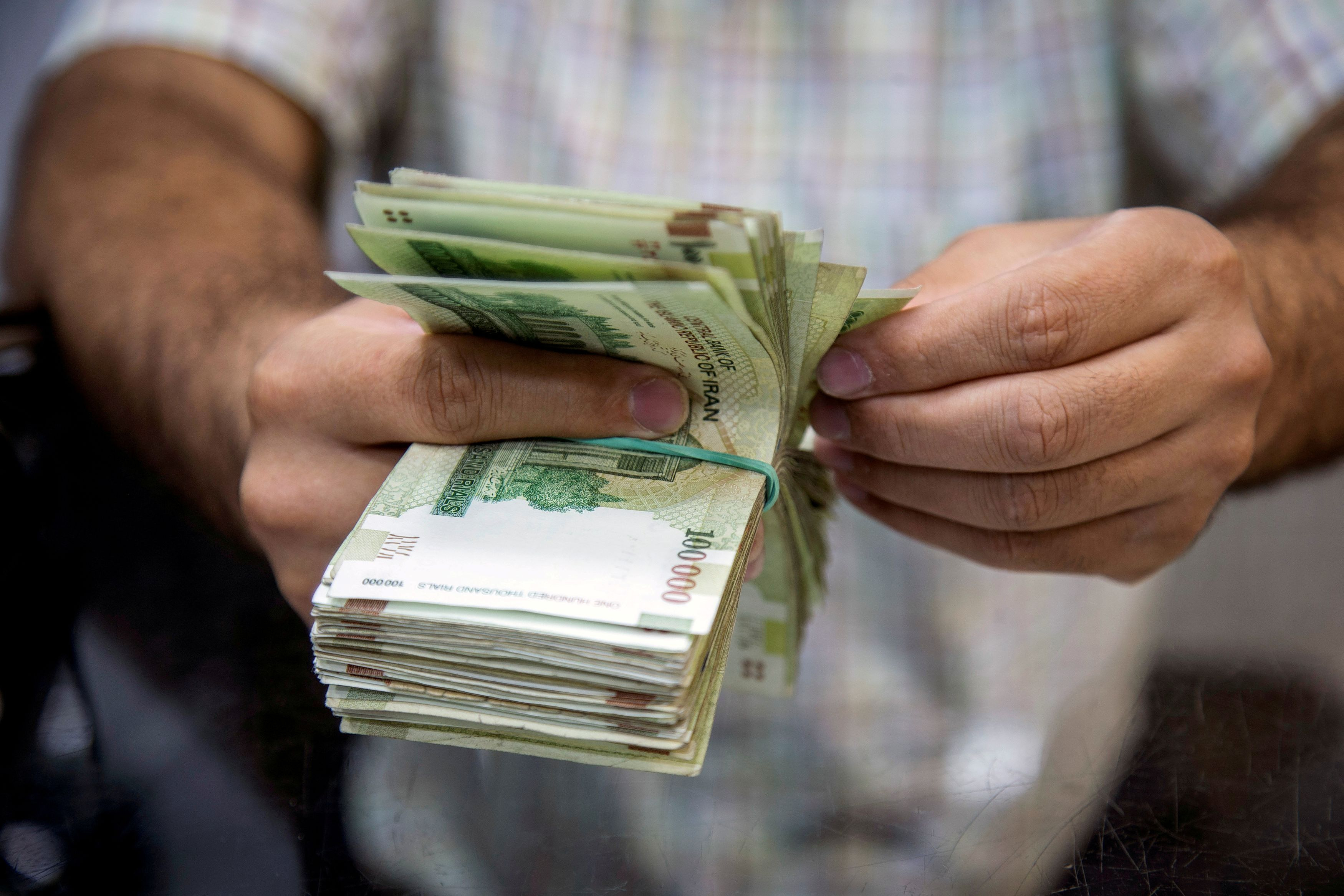
For Tehran, access to tens of billions of dollars frozen by U.S. sanctions is a critical demand for any deal, offering immediate relief to its deeply damaged economy. Iran wants some $12 billion up front and $24 billion during the 60-day negotiation that would be opened by an initial agreement.
“Twenty four billion dollars is not much for America if he wants to reach an agreement with Iran,” Gen. Mohsen Rezaei , a senior adviser to Iran’s top official told CNN on Friday. “This is our own, not America’s money.”
And its leaders are deeply distrustful of the U.S., which went back on a previous agreement to free up Iran’s money and exited the 2015 nuclear deal, foisting sanctions back on the Iranian economy.
Washington says Iran eventually could access some seized assets but the U.S. won’t deliver any money upfront or commit to specific amounts. It is also ruling out broader sanctions relief, like a waiver that would allow Iran to export oil sanctions-free.
The fight over assets is haunted by the political fallout of past Iran-U.S. diplomacy and distrust between the sides.
The decision by the Obama administration to fly $400 million in Iranian cash to Tehran when the 2015 deal was implemented, part of a $1.7 billion payment, proved an embarrassing blow to an agreement already under fire.
When Trump exited the deal in 2018, he said it provided a legal pathway to an Iranian nuclear weapon, that it failed to deal with Iran’s missiles or support for terror and that “it enriched the Iranian regime and enabled its malign behavior.”
In 2023, a Biden administration decision to give Iran access to $6 billion in assets tied to a prisoner swap sparked strong Republican attacks. The money was informally blocked after the Iran-backed militant group Hamas killed and kidnapped Israeli civilians weeks later.
In the U.S., critics of diplomacy have argued that handing cash to Iran would allow Tehran to bolster its defenses and increase support for its network of regional militias, including Hamas and Lebanon’s Hezbollah.
For Iran, a U.S. concession on the cash would show that the regime is converting the results of the war into diplomatic success, as officials have promised. And it would stop Washington from later reneging on the promise.
“In Tehran’s calculus, unfrozen assets are not sweeteners—they are the down payment needed to prove that diplomacy is worth the political risk,” said Ali Vaez , senior adviser at the International Crisis Group, a Brussels-based think tank. “It’s an issue on which Iran is likely to negotiate hardest because it goes to the heart of trust, reciprocity and domestic credibility.”
Iran has an estimated $100 billion in assets rendered inaccessible by U.S. sanctions, mainly revenue from past oil sales and reserves, according to experts. Unlocking it all would be a boon for the economy, although less than the benefits of broad sanctions relief, which would generate export revenue, permit inward investment and allow access to technology. Iran’s exports remain around a third below their 2011 peak because of sanctions, according to World Bank data.
The assets are made up of different types of funds under various sanctions designations. The bulk of the money sits abroad, most notably in China, from oil revenues generated over many years that can’t be transferred to Tehran’s sanctioned banking system without the risk of U.S. penalties.
There are also pools of specific, restricted-use assets. There’s the $6 billion in Iranian revenues the Biden administration allowed to be transferred to Qatar in 2023 for the purchase mainly of humanitarian agricultural and pharmaceutical goods. There is also around $1 billion in Iranian revenues in Oman, which was also informally blocked after the Oct. 7, 2023, Hamas attacks.
Iran also has an estimated $15 billion in Iraqi banks from power and natural-gas exports to its neighbor, said Miad Maleki , a former senior U.S. Treasury sanctions official now at the Foundation for Defense of Democracies, a think tank that opposed the 2015 nuclear deal.
Late last month, Tehran’s top negotiator, Mohammad-Bagher Ghalibaf , traveled to Qatar , hoping to win assistance from the Gulf emirate to unlock funds, Iranian and Arab officials said. Iranian Foreign Minister Abbas Araghchi , who attended the talks, said this week that Qatar had recently played what he called a constructive role in financial matters, according to Iranian reports.
But any deal that allows Iran access to money without a clear nod from the U.S. remains difficult to reach.
One possibility is a credit line from Qatar, collateralized by the Iranian revenue sitting in the country, if such a maneuver were permitted by the Trump administration. But U.S. sanctions guidance prohibits any “significant financial service” provided to the Iranian banking system, notes Maleki, and Washington would need to reassure Qatari banks it wouldn’t penalize them.
Richard Nephew , a former top State Department sanctions official, said the most straightforward option would be for the Trump administration to allow Iran to start drawing on frozen funds for humanitarian purposes.
“The fastest thing they could do is to quietly remove sanctions on Iranian pots of money being held in Qatar, Oman and Iraq because it’s a relatively small, discrete amount of money that is more controllable given where it’s located,” he said.
The administration would have to offer reassurance to the banks involved that they wouldn’t face legal sanctions, and Tehran would likely balk at the restricted access. But the White House could argue that it wasn’t giving Iran funds directly and note that it was a Biden administration decision to initially make the money accessible to Tehran.
Another option for the Trump administration, Nephew said, would be to provide sanctions waivers for the oil that Iran sells to China. That could free up frozen funds held in China and allow Tehran to legitimately export crude again, bolstering Iran’s profits on its exports and keeping global oil markets supplied.
Iranian media have reported that Tehran is pushing for an oil waiver. But it would be a very visible concession by the Trump administration.
Earlier this week, Secretary of State Marco Rubio said Iran would get no sanctions relief or asset releases until it took clear steps to curtail its nuclear program and hand over its stockpile of enriched uranium after future negotiations.
Asked if Iran would get any economic relief just from opening up the Strait of Hormuz to shipping traffic in the first phase of a preliminary deal, Rubio said: “No, that’s not been discussed.”
Write to Laurence Norman at laurence.norman@wsj.com