MUSCAT, Oman—Tehran stuck to its refusal to end enrichment of nuclear fuel in talks Friday between senior U.S. and Iranian officials, but both sides signaled a willingness to keep working toward a diplomatic solution that could head off an American strike.
According to Iranian state media, Foreign Minister Abbas Araghchi told his U.S. counterparts that Tehran wouldn’t agree to end enrichment or move it offshore, rejecting a core U.S. requirement.
Araghchi, however, said it had been a good start, and he and Oman’s foreign minister said the parties aimed to meet again.
The two sides didn’t meet face to face but instead held alternating discussions with Omani diplomats. Neither moved much from their initial position, people familiar with the discussions said.
Regional officials and many analysts had low expectations going into the talks, given Iran’s unwillingness to end nuclear enrichment and the U.S. insistence on including Iran’s ballistic missile program and support for regional militias in the negotiations.
Some were resigned to an inevitable strike, and many thought the best outcome given the significant differences between the parties would be a commitment to de-escalate and an agreement to meet again.
“This is the most dangerous time in the bilateral relationship in the 40-plus years I’ve been following Iran,” Alan Eyre , a former senior U.S. diplomat and nuclear negotiator with Iran, said before the talks. “The possible downsides to a wrong move are commensurately high.”
U.S. special envoy Steve Witkoff, President Trump’s son-in-law Jared Kushner and Araghchi attended the talks.
The U.S. delegation also included Adm. Brad Cooper, the commander of U.S. forces in the Middle East, according to a U.S. official. While it isn’t typical for defense officials to join high-level diplomatic talks, Trump has dispatched senior military leaders to negotiations during his tenure.
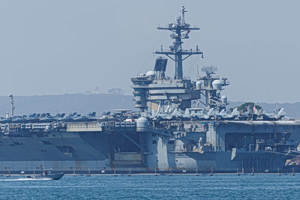
The meeting was the first between the U.S. and Iran since the 12-day war in June. That war, launched by Israel, ended with an American bombing raid on key Iranian nuclear sites. The U.S. again has massed air and naval forces near Iran and is threatening to strike over its nuclear program.
Trump wants to see if a deal can be struck at the negotiating table, White House spokeswoman Karoline Leavitt said late Thursday, but warned Trump has many options at his disposal besides diplomacy.
The U.S. wants Tehran to stop enriching uranium, curb its ballistic-missile program and end its support for regional proxies. Iran has said it is willing to discuss only its nuclear work.
In the talks Friday, Iran said it would only negotiate its missiles and support for militias with regional powers.
Fernando Ferreira, a geopolitical analyst at Washington-based consulting firm Rapidan Energy Group, said before the talks that while Trump appears genuinely interested in a deal, the gap with Iran is still too wide to allow an offramp to conflict.
Iran is returning to the table in a position of weakness. Its enrichment equipment was either destroyed by U.S. and Israeli strikes last June or buried under tons of rubble. Protests earlier this year posed the greatest challenge to the regime in its half-century in power and were only put down with brutal force that left thousands dead. The country’s economy is in shambles, with its currency spiraling to new lows amid the threat of new conflict.
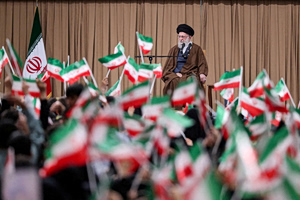
But Iran’s top leaders are digging in, showing little readiness to compromise on the core issue of ending uranium enrichment and threatening to trigger a regional war if the U.S. attacks.
The U.S. is also taking a hard line, saying late Thursday it wants Iran’s nuclear program gone forever.
Late Wednesday, Secretary of State Marco Rubio insisted talks should include Iran’s ballistic missiles, support for its regional militia allies like Hezbollah and Hamas, and human rights.
Even the timing, location and scope of the talks had at one point become a drama of their own right.
On Tuesday, Iran launched a drone at an American aircraft carrier and sent gunboats to harass a U.S.-flagged oil tanker, prompting speculation the meeting may be called off.
Iranian officials also balked at the initially agreed venue for the talks—in Turkey—and their format—a regional gathering to discuss nuclear issues but also missiles and militia support.
A compromise was found with the meeting in Oman.
The back and forth over procedural matters “shows how difficult it will be to bridge the gaps on substance,” Ali Vaez, the Iran project director at the International Crisis Group, said before the talks.