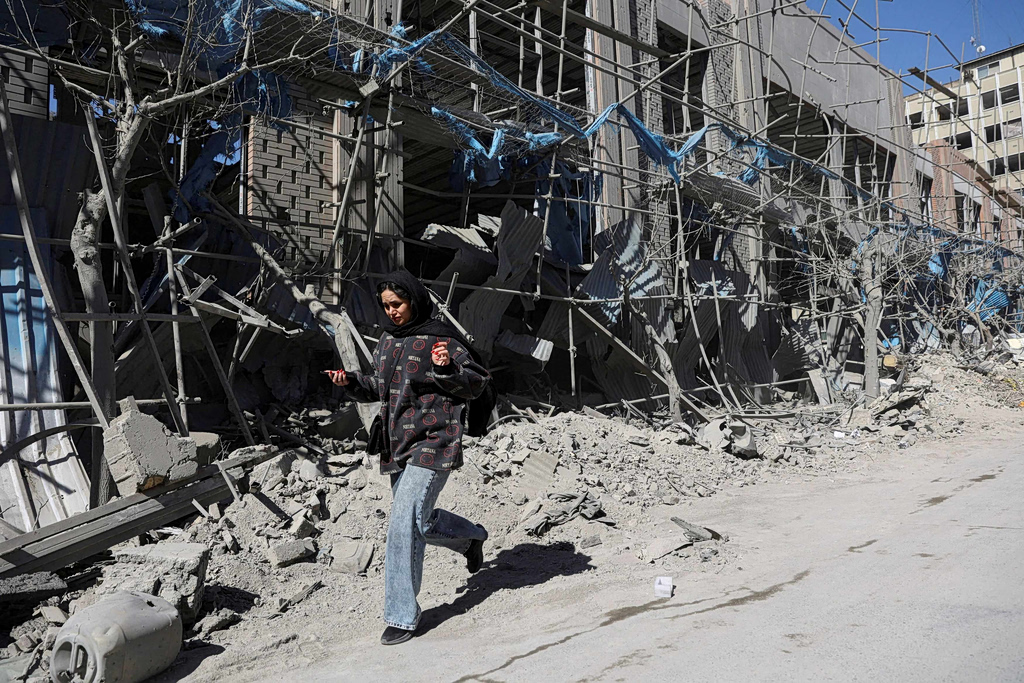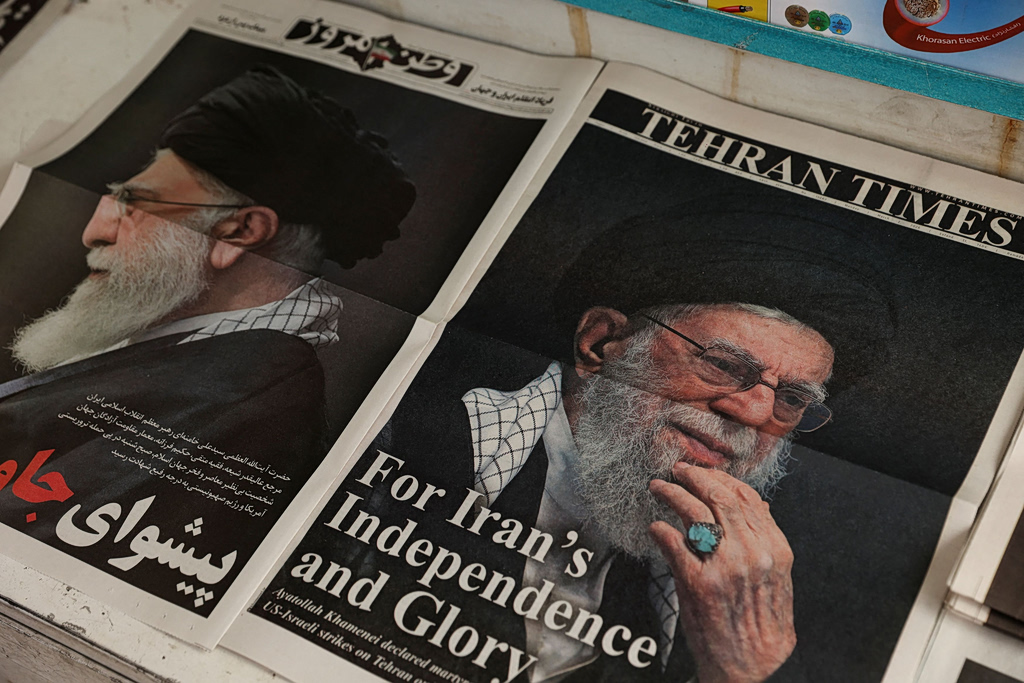

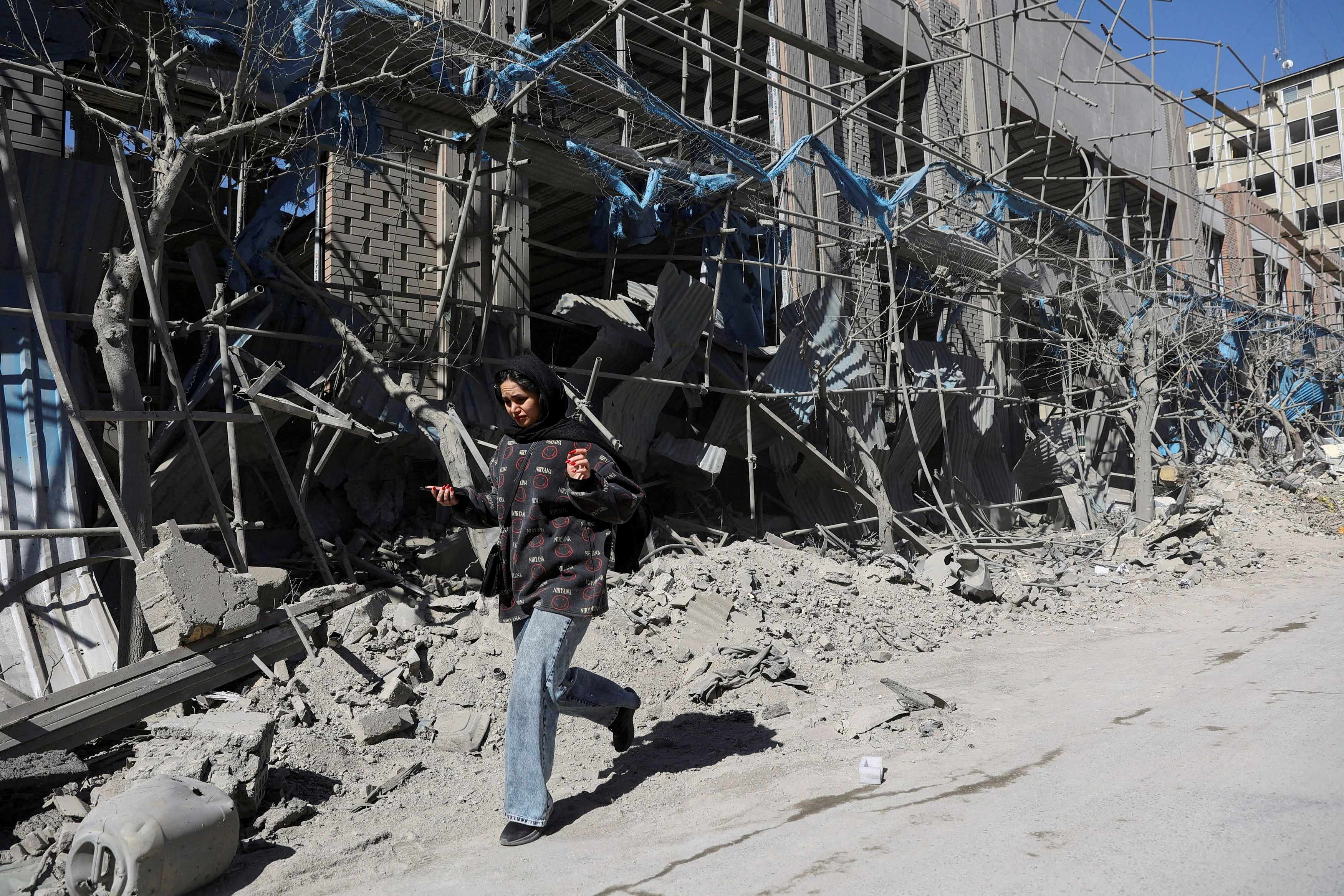
US President Donald Trump on Tuesday emphasized, as he said, that Iran’s military has been largely neutralized, including its navy and air force. The four-day conflict in the Middle East escalated as Iranian missile and drone attacks threatened to shut down air travel in the region and oil shipping in the Strait of Hormuz.
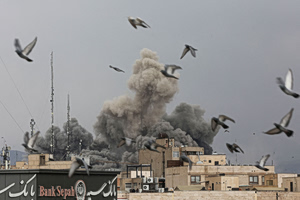
Israel struck a building Iranian clerics use to choose the country’s supreme leader. Iranian official media said the building had been evacuated.
The U.S. Embassy in Riyadh twice came under attack and Gulf states defended against more Iranian drone strikes, prompting the U.A.E.’s two biggest airlines to extend a pause on all scheduled flights.
Israel stationed troops in southern Lebanon as it responded to rocket fire from the militant group Hezbollah. Israel also said it struck Hezbollah command centers and weapons storage facilities in Beirut.
The U.A.E. government raised its combat readiness after Iran launched roughly 1,000 drones and missiles at the country.
Six U.S. troops have been killed so far. Over 700 people have died in the U.S.-Israeli strikes on Iran, the Red Crescent said.
The State Department says it is “actively securing military aircraft and charter flights for American citizens who wish to leave the Middle East.”
Trump is open to supporting groups in Iran willing to take up arms to dislodge the regime, U.S. officials said.
Markets sold off sharply. The Dow industrials tumbled more than 800 points early before paring losses and was down about 400 points by midafternoon. Oil prices continued to rise.
Secretary of State Rubio said Iran was an imminent threat because the administration was concerned that Israel’s planned military action would result in an attack on U.S. forces.
Stepped up Iranian missile, drone attacks
The four-day conflict in the Middle East escalated Tuesday as Iranian missile and drone attacks threatened to shut air travel and oil shipping in the Strait of Hormuz and Israel struck a building Iranian clerics use to choose the country’s supreme leader. Iranian official media said the building had been evacuated.
The U.S. Embassy in Riyadh twice came under attack and Gulf states defended against more Iranian drone strikes, prompting the United Arab Emirates’s two biggest airlines to extend a pause on all scheduled flights.
Markets sold off sharply, with the Dow industrials tumbling more than 800 points before paring losses. Oil prices continued to rise.
Israel stationed troops in southern Lebanon as it responded to rocket fire from the militant group Hezbollah.
The U.A.E. government raised its combat readiness after Iran launched roughly 1,000 drones and missiles at the country.
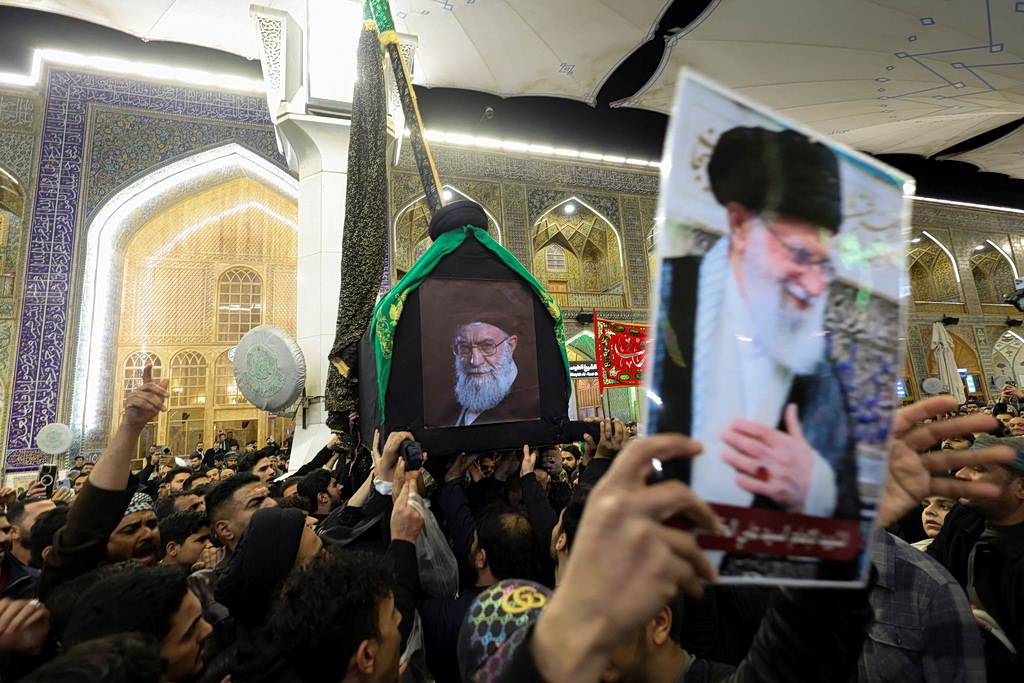
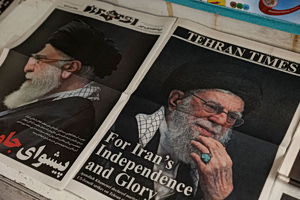
Mourners carry a coffin during a symbolic funeral procession for Iranian Supreme Leader Ayatollah Ali Khamenei, following his death in Israeli and U.S. airstrikes, amid the U.S.-Israeli conflict with Iran, in Najaf, Iraq March 3, 2026. REUTERS/Alaa Al-Marjani
President Trump, who has said the strikes could last four to five weeks, said the U.S. has a “virtually unlimited supply” of most weapons, while acknowledging that the U.S. is “not where we want to be” on the highest-end weapons.
Israel said it struck Hezbollah command centers and weapons storage facilities in Beirut. It also said it struck a key Iranian leadership compound in Tehran.
Six U.S. troops have been killed so far. Over 700 people have died in the U.S.-Israeli strikes on Iran, the Red Crescent said.
Trump is open to supporting groups in Iran willing to take up arms to dislodge the regime, U.S. officials said.
Rubio said Iran was an imminent threat because the administration was concerned that Israel’s planned military action would result in an attack on U.S. forces.
The U.N. atomic agency said Iran’s Natanz nuclear facility was hit in the U.S.-Israeli attacks, a claim Tehran made on Monday.
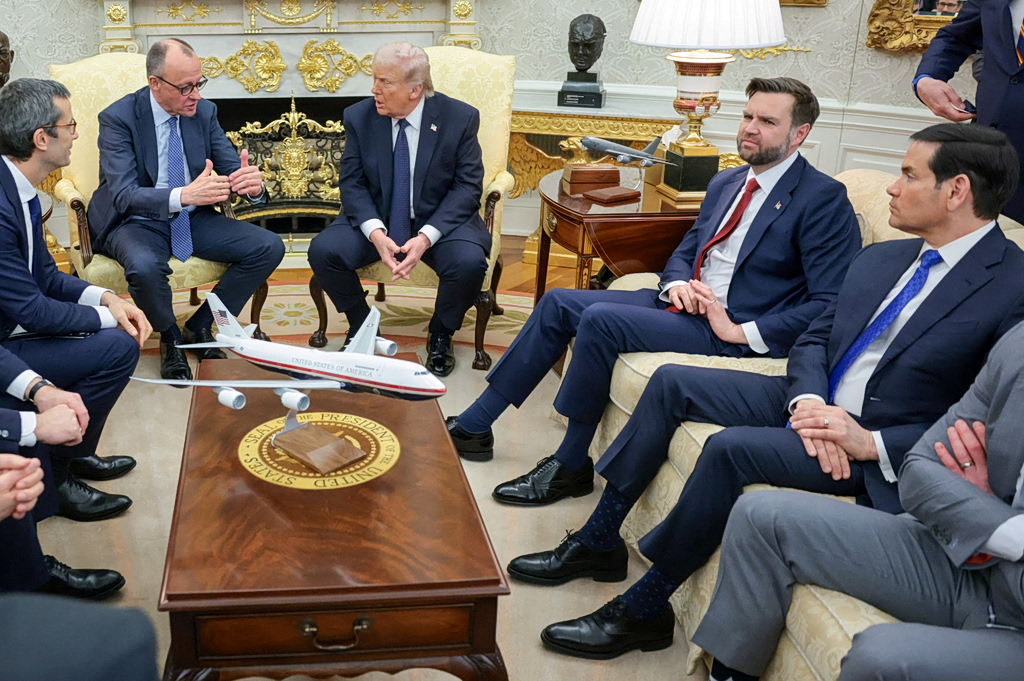
U.S. President Donald Trump and German Chancellor Friedrich Merz sit in the Oval Office, next to U.S. Vice President JD Vance and Secretary of State Marco Rubio, during a meeting, at the White House in Washington, D.C., U.S., March 3, 2026. REUTERS/Jonathan Ernst
Trump, Merz meeting at White House
German Chancellor Friedrich Merz noted rising oil and gas prices in an Oval Office meeting with President Trump on Tuesday. The conflict in the Middle East has rattled markets, with stocks falling sharply and oil prices pushing higher earlier on Tuesday.
“This is, of course, damaging our economies,” Merz said. “We are hoping the Israeli and American armies are doing the right thing, to bring this to an end.”
Trump added: “Something had to be done.”
“As soon as this ends, those prices are going to drop, I believe, lower than even before,” Trump said.
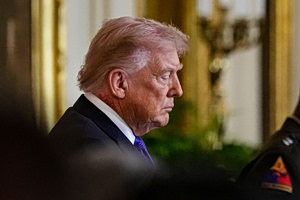
President Trump said in the Oval Office that he believed Iran was “going to attack first,” as he discussed his reason for striking Iran.
“I didn’t want that to happen,” he said. Asked about the notion that Israel’s plans to attack Iran may have forced Trump’s hand, the president responded: “No. I might have forced Israel’s hand.”