More Americans are testing positive for marijuana in workplace drug tests, raising questions among employers over their usefulness in screening job candidates.
As legalized marijuana spreads, its growing use is showing up in drug tests at some of the highest rates in years, according to new data from Quest Diagnostics, which conducted about eight million workforce drug tests in 2025. The share of urine tests that came back positive for the substance rose to 4.4% last year, up from 3.9% in 2021.
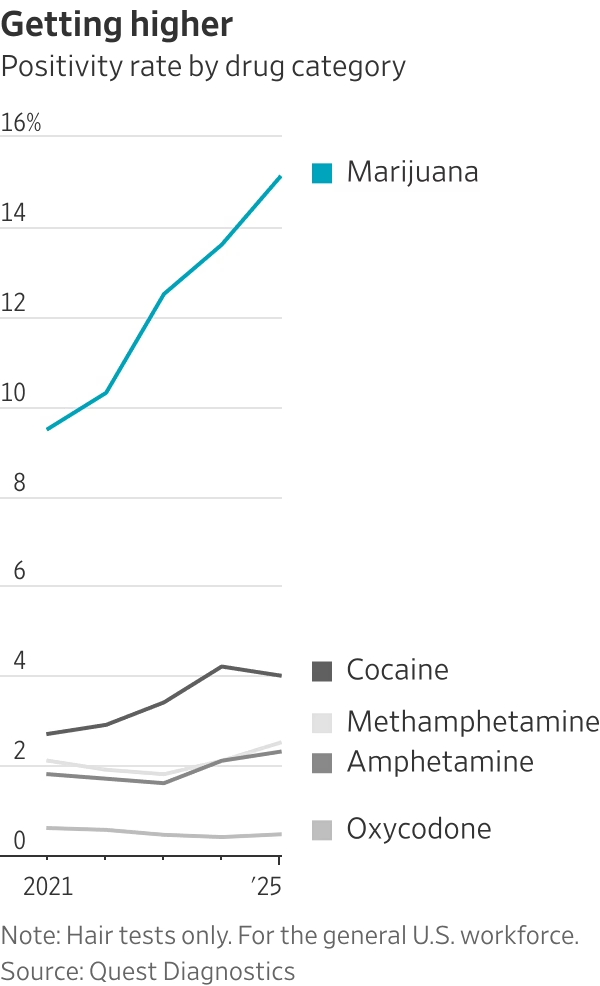
Hair tests, a less common method that can detect drug use much further back, as much as 90 days before, showed more widespread use. About 15% of workers screened that way tested positive for marijuana, a nearly 60% jump from 2021. Random screenings were even higher at 21%.
With so many working Americans now using the drug—at least occasionally—testing positive is no longer the deal breaker to getting or keeping a job it once was. Outside of trucking, construction and other safety-sensitive industries, more employers say they have come to view marijuana as akin to alcohol: not a red flag, as long as workers aren’t indulging on the clock.
And fewer employers are screening job candidates for marijuana use at all, in part because it would make it tougher to find enough qualified candidates, said Todd Logsdon, a partner at employment law firm Fisher Phillips.
“I’ve had other employers tell me, ‘If I test for that, I’m not gonna have any applicants,’ ” Logsdon said. “They’re being very choosy about which role they test for.”
In a 2024 survey of nearly 1,000 employers, the law firm found about half didn’t test for cannabis in the pre-hire process, often for that reason. Among those that did test, 44% said they faced recruiting challenges and nearly a quarter said they were considering loosening the policy.
Citigroup and many of its Wall Street peers dropped the pre-hire test over the past decade. Retailers like AutoNation and Home Depot have done away with it for most positions as well. Amazon stopped testing for marijuana for most applicants in 2021.
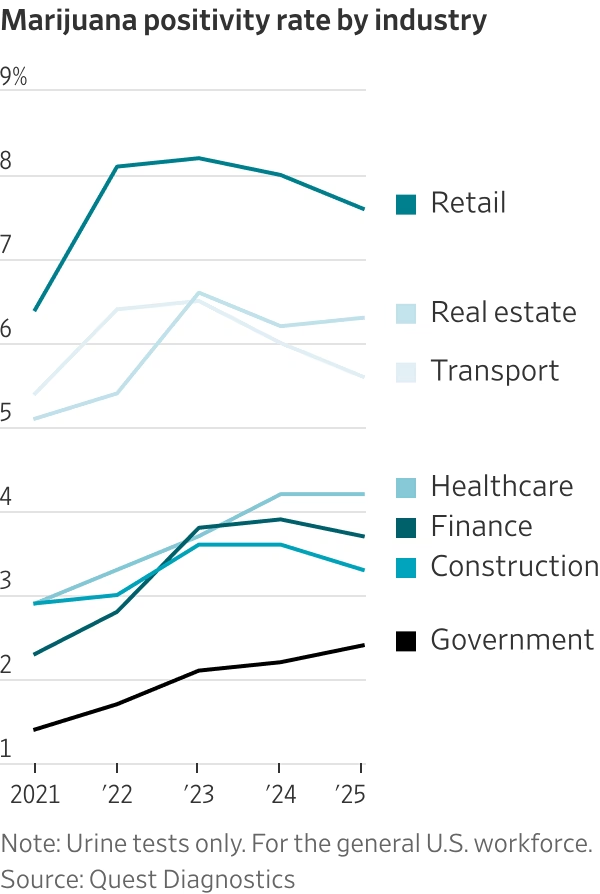
A patchwork of different state rules around testing workers for marijuana has also complicated the issue for employers. New York, for instance, prohibits testing of most job applicants and workers, while at least two dozen states have established employment protections for workers and job applicants who use medical marijuana, according to the Marijuana Policy Project.
This spring, the Trump administration began the process of reclassifying marijuana as a less dangerous drug, which could also eventually affect employers’ drug-testing policies.
Still, employers hiring for safety-sensitive roles are unlikely to give up the full panel of drug testing as part of their hiring process any time soon. Those industries are also more likely to rely on hair tests that can detect patterns of longer-term use.
“They want to make sure there’s no ‘lifestyle’ drug detection before they hire a person to drive the truck, or a school bus,” said Bill Current, a drug-testing industry consultant.
For many companies, Fisher Phillips’s Logsdon said, the safest bet might be to ditch pre-hire marijuana screening and focus on monitoring for on-the-job impairment instead.
Overall, one in five workers in the general workforce tested positive for any kind of drug use in the hair screens, according to the Quest data. Those testing positive for cocaine rose to 4% in 2025, up from 2.7% in 2021, while positivity rates for amphetamine and methamphetamine also increased.
One bright spot in the Quest data: The percentage of workers who tested positive for fentanyl in urine tests fell by half, to 0.28% from 0.55% in 2024, suggesting that employers’ efforts to combat abuse of the drug may be gaining traction.