 Μake us preferred on Google
 Etibar Eyyub is back in business. Moscow’s shadow-fleet kingpin and premier oil trader was reeling until President Trump attacked Iran. Eyyub’s tankers had been boarded by French soldiers and attacked by Ukrainian drones.
American sanctions on his main client , state-owned Rosneft, had pushed India to slash imports of Russian crude. Ships he controlled via a network of shell companies were setting sail with millions of barrels of unsold oil.
Two weeks on, Indian and Chinese refiners are working through those tankerloads of crude to replace supplies trapped inside the Persian Gulf. The U.S. gave India a 30-day waiver to buy stranded Russian oil , then extended it to everyone else.
Much of that crude is under the control of Eyyub, a wily 47-year-old Azeri trader who has been the whale in the market for Moscow’s oil since the start of the Ukraine war.
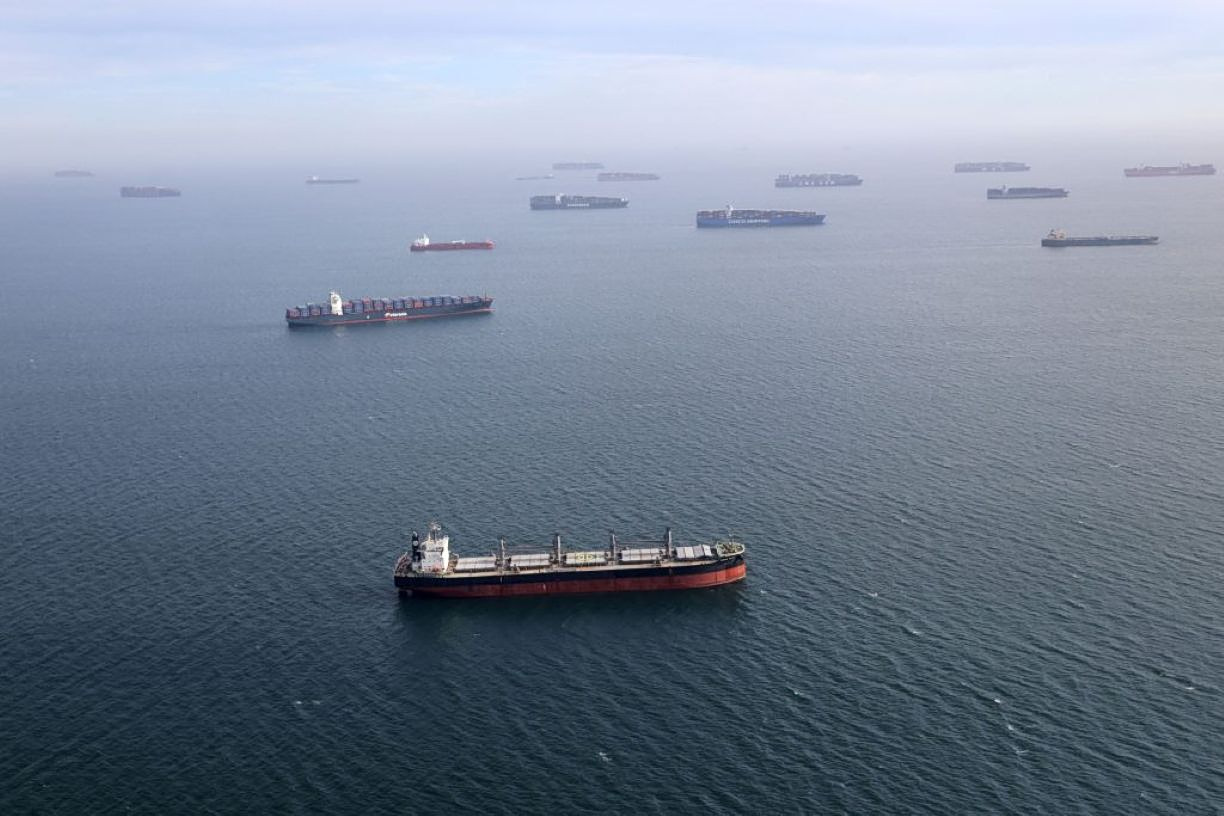
He is Moscow’s salesman-in-chief, responsible for finding buyers for more than $50 billion of crude and fuel a year. He controls up to a third of the 600 ships that ferry Russian oil around the world, according to people familiar with his operations.
Eyyub’s hunting buddy, Rosneft Chief Executive Igor Sechin , was due to fly to India to meet government officials and refining executives about potential oil exports, said people familiar with the trip.
“We are not popping the Champagne yet because nobody knows where this war will take us,” said a senior Rosneft official. “But our exports are substantially up in a very short period of time.”
A rival trader said Etibar just got a second life.
The reprieve shows how Trump’s war has undermined a Western push to target Russia’s oil revenue by hammering the shadow fleet, and in doing so, push Russian President Vladimir Putin toward a peace deal with Ukraine. Oil analysts thought Russia would have to cut production as demand waned. Now it is in line for a windfall.
Just in the past two weeks, India has bought more than 30 million barrels of petroleum to be delivered this month and next, with more deals expected to be struck in coming days, according to traders familiar with the sales. Most of it is handled by Eyyub and his associates.
The deals would take Indian imports from Russia back to where they stood before the Rosneft sanctions in the fall. And they would put a serious dent in the glut of 150 million barrels of oil that had accumulated at sea before the Iran war.
“Russia is ready to ensure increased supply on the market,” said Kremlin spokesman Dmitry Peskov.
In a reversal of fortunes, Russia’s main grade of oil, known as Urals, trades almost at par with global benchmarks. Before the U.S.-Israeli attack on Iran, it sank to a discount of almost 20%.
Some allied officials see Moscow’s financial reliance on Eyyub’s oil-export network as a vulnerability they can target in the Russian war economy. But as long as the Strait of Hormuz stays closed, the only way for global oil supplies to get close to meeting demand is for the Russian crude he handles to reach world markets.
Eyyub was sanctioned by the U.K. last May, by the European Union in December and by Canada in February.
The U.S. government hasn’t taken any actions against Eyyub but he is among the targets of a yearslong Justice Department investigation into suspected sanctions evasion, according to people familiar with the matter. Possible charges by Eastern District of New York prosecutors include money laundering and wire fraud, some of the people said.
Eyyub couldn’t be reached for comment for this article. After the EU sanctions, he said: “I have never done anything unlawful or wrongful.”
Treasury Secretary Scott Bessent has said the waivers “will not provide significant financial benefit to the Russian government” because they expire soon and apply to oil that was already on the move.
Russia has long relied on middlemen to sell oil. Before the war in Ukraine, a few international commodity houses dominated the trade. Moscow played them off each other to ensure Russia got the best deal. The biggest stopped dealing with Rosneft after the invasion.
Eyyub emerged from that chaotic reordering, and has since elbowed aside rivals to handle almost all of Rosneft’s shipments plus more oil from other Russian producers, the people familiar with his operations said.
Moscow’s unlikely savior
The bespectacled middleman started at Dubai-based commodities firm Coral Energy as a novice trader in 2014. He rose to become founder Tahir Garayev’s second in command and gained a reputation as a ruthless dealmaker, some of the people familiar with his operations said. Eyyub built a small trading arm for Coral in Moscow.
After Moscow’s invasion, Eyyub and Garayev worked with Sechin on a secret deal to take over the business of Rosneft’s main prewar trading partner, Switzerland’s Trafigura, The Wall Street Journal has reported . Trafigura’s CEO at the time, Jeremy Weir, and his man in Moscow, Jonathan Kollek, had recommended Coral as a replacement, some of the people familiar with Eyyub’s operations said.
Trafigura hasn’t bought Russian crude since May 2022, a spokeswoman said.
Coral tried to distance itself from Eyyub’s trading to protect its access to European banks and insurance. The operations were intertwined, according to people familiar with his operations and Western law-enforcement officials. The Western-facing part of the network could hedge against oil-price moves on international commodity exchanges. Britain’s National Crime Agency later identified Coral as a linchpin of Russia’s oil market.
The company, by then renamed 2Rivers, said it was “dismayed” by the allegation and that it complied with international sanctions. A lawyer for Garayev, who is also from Azerbaijan, said in February he “has not been involved in any petroleum operations since late 2022.”
Multiple-middleman model
At first, Moscow tried to re-create the multiple-middleman model it had before the war. Eyyub was pitted against a trader from Pakistan, Murtaza Lakhani, according to people familiar with their operations .
As Eyyub, Lakhani and a few other traders competed, the price of Russian oil recovered. Rosneft’s crude found new buyers, particularly in India.
But Eyyub muscled out his rivals. He outbid Lakhani’s firms and others in auctions at Rosneft’s Moscow headquarters, and got close to Sechin.
A Russian speaker who grew up in Soviet times, Eyyub spent time at the Putin ally’s hunting lodge and got invited to his birthday parties. They vacationed together in the Maldives, some of the people familiar with his operations said.
Eyyub, based in a Moscow office tower, flew around on a pair of private jets procured from an Estonian businessman. He would go to the Middle East, Africa and India to strike deals to sell Russian oil that previously went to Europe.
Rosneft officials pushed for one of Eyyub’s traders to become CEO of a refinery in India that the Russian producer co-owned, said people familiar with the matter.
Eyyub eventually took over the rest of Lakhani’s business, including shadow-fleet ships active in Venezuela, some of the people familiar with his operations said. He gained more Russian oil and contracts to trade Iraqi crude, and added to his stake in Sechin’s flagship Arctic exploration project .
A Rosneft spokesman said the company doesn’t permit use of a shadow fleet, which he said would pose environmental and safety risks and violate rules of navigation. He said none of the companies the Journal named in written questions, including Coral, was a Rosneft contractor.
Shadow fleet squeezed
Pressure built on Moscow’s oil complex last fall with U.S. sanctions on Rosneft and fellow producer Lukoil. Running out of space to stash crude on land and at sea, Rosneft started to contemplate output cuts, said senior Russian energy officials. Once oil fields slow down, there is no guarantee they return to previous production rates.
Chinese refineries, sensing Moscow’s weakness, demanded some of the largest discounts to take Eyyub’s oil since 2022. Just before the Iran war, the U.K. sanctioned dozens of firms that are in Eyyub’s network, according to some of the people familiar with his operations.
One of Eyyub’s firms, Redwood Global, was the single-biggest exporter of Russian oil early this year. In January, the Emirati company chartered a tanker named Range Vale to carry Russian crude out through the Baltic Sea. The 21-year-old tanker sailed aimlessly for more than a month, according to ship-tracking data.
Then the U.S. and Israel bombed Iran. The tanker quickly steamed toward India’s biggest refiner, owned by Reliance Industries, where it unloaded the oil on March 8. A Reliance executive and people familiar with the matter said that since Hormuz closed, the conglomerate has bought as much Russian oil as it can.
Write to Joe Wallace at joe.wallace@wsj.com , Costas Paris at costas.paris@wsj.com and Max Colchester at Max.Colchester@wsj.com