If Spanish Prime Minister Pedro Sánchez still has a shot at staying in power, it is partly because of a woman known as Maricarmen who died on Wednesday.
Sánchez this week called snap elections following nationwide protests over the country’s housing crisis. María del Carmen Abascal became the face of that crisis last month, when she was evicted from her flat in Madrid after a court order. Cameras rolled as she was carried away on a stretcher, prompting instant public outrage.
Spain’s housing crisis had bubbled under the surface—with acute housing shortages causing prices to skyrocket—but it was the Maricarmen incident that sparked the unrest. Now, her death is stoking that anger and mingling it with grief.
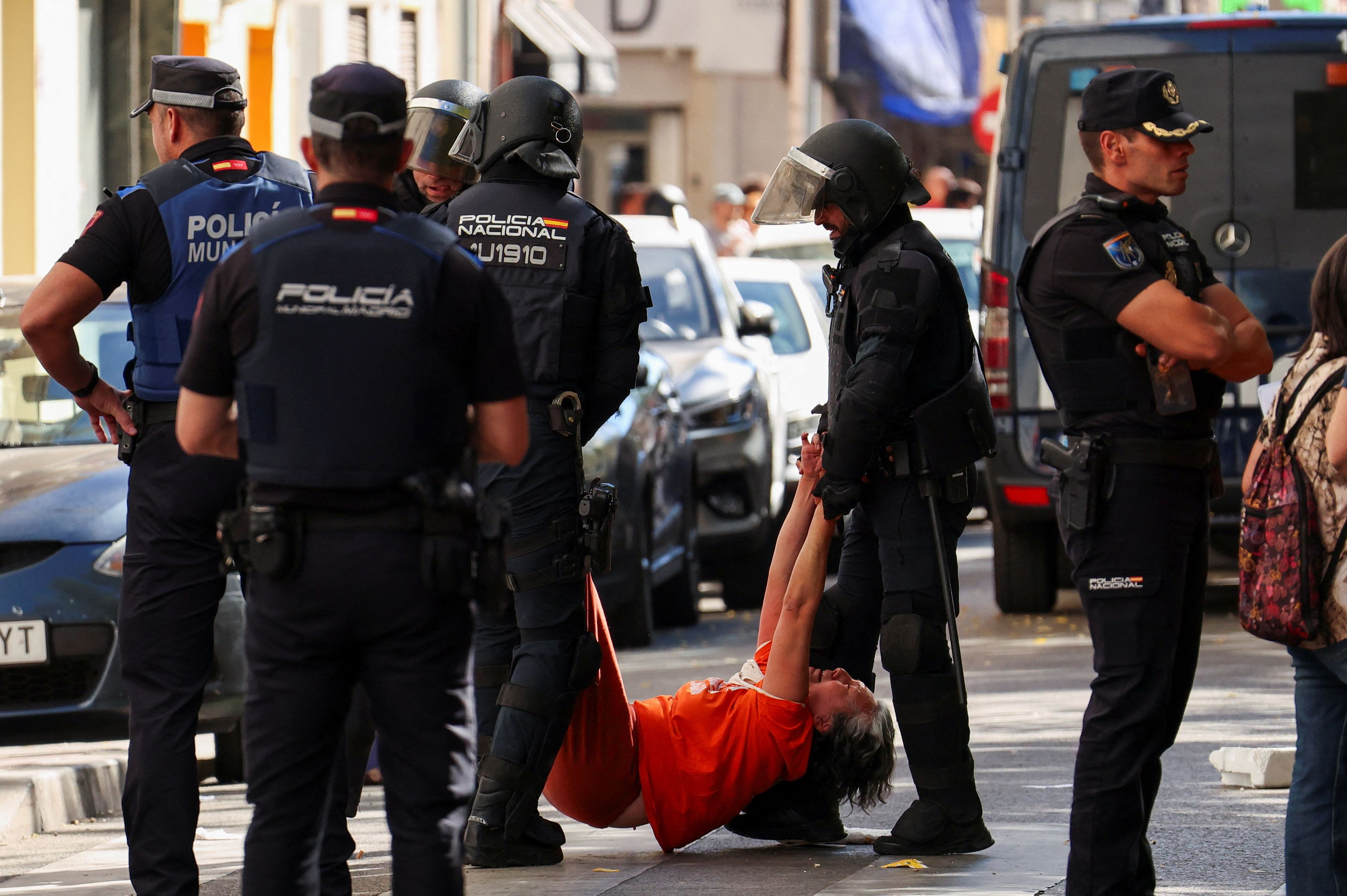
Spanish riot police removes one of the activits, who were trying to prevent the eviction of Maricarmen Abascal, 87, who was evicted from the Madrid home where she had lived for more than seven decades after the apartment was acquired by an investment fund that sought a steep increase in her rent, despite efforts by housing activists to broker an alternative arrangement in Madrid, Spain, September 23, 2026. REUTERS/Susana Vera
Maricarmen inherited her parents’ rent-controlled lease, set decades ago under the military dictator Francisco Franco . An investment firm bought her building several years ago and increased the rent, which she could no longer afford. Following the public uproar, the firm agreed to let her return to the flat and pay a low rent.
Sánchez and his left-wing allies are gambling that a campaign that puts the housing crisis front and center can galvanize support for their beleaguered bloc, which opinion polls show is heading for a bruising electoral defeat. It’s a pathway in part inspired by New York City, where Mayor Zohran Mamdani ’s outsider campaign was an inspiration for one of Europe’s most left-wing leaders.
“We will not allow more evictions like the one Maricarmen suffered,” Sánchez said Tuesday, presenting emergency measures aimed at tackling the housing crisis. “It is a great challenge, one of the main challenges Spain will face in coming years,” he said.
Sánchez almost immediately commented on Maricarmen’s death on social media, sending condolences not only to her family but “a hug as well to everyone who feels this loss as their own today.”
The hard-right, nationalist Vox party shot back that Sánchez was capitalizing on her pain and death. “Without any scruples, they have used the suffering of an elderly person to stage a campaign that hides the Government’s responsibility in the housing disaster,” the party said on X.
Blame for a crisis often falls on the incumbent. But Sánchez is a political survivor who has gone against the European mainstream and governed from the left, granting amnesty to undocumented migrants, championing renewable energy, opposing the Trump administration and vocally criticizing Israel. His blunt, four-word stance on whether Spain should assist the U.S. in its military operations against Iran—“no a la guerra,” or no to war—helped lift his standing this year, just as polls were showing concerns over corruption and mass immigration eroding his popularity.
He is now one of the longest-serving heads of government in the European Union—and the only prominent left-wing leader on a continent where right-wing parties are rising.
That includes Spain, where Sánchez’s Socialist Party trails the main conservative People’s Party by a wide margin. Polls show that the most likely outcome of the Nov. 29 elections is a PP-led coalition government that for the first time includes the Vox party.
But Sánchez, who became prime minister in 2018, has defeated the odds before. Although his socialist party won fewer seats than the PP in 2023, he assembled a ruling coalition with left-wing Sumar. The government didn’t hold an absolute parliamentary majority, making legislating a constant struggle. It hasn’t passed a full national budget in years.
The Spanish premier has also weathered crises that would have ended the careers of other leaders. Several members of Sánchez’s family and inner circle have been accused of misconduct or corruption. They include his brother, who is temporarily banned from public office. His wife is under investigation for corruption and influence peddling. A former transport minister in June was sentenced to 24 years in prison for a pandemic-era corruption scheme. All denied any wrongdoing.
Sánchez has also been under pressure to resign over the migration crisis in the Spanish exclave of Ceuta, in North Africa, where tens of thousands crossed a land border with Morocco this summer, overrunning the city and spreading panic among the population.
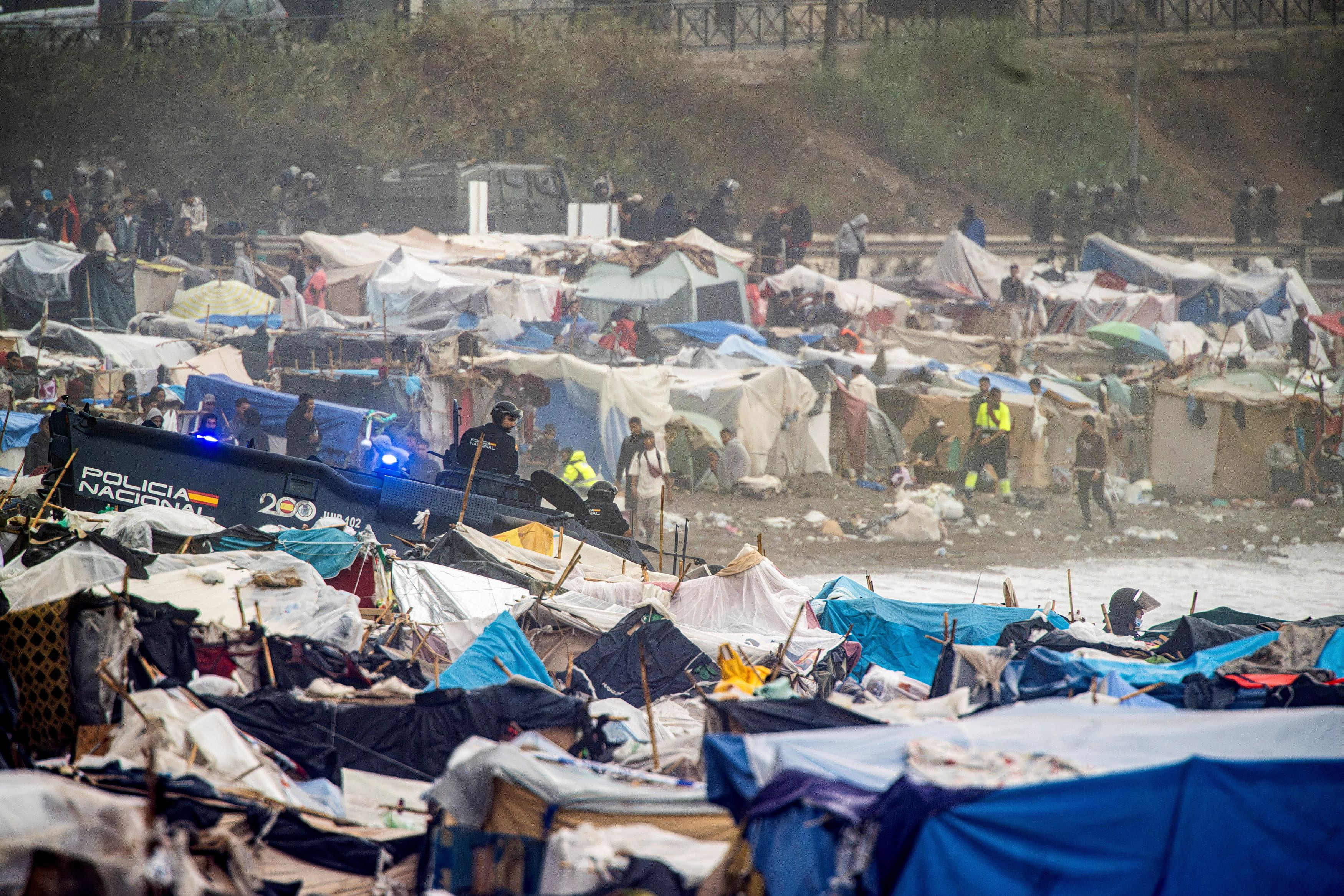
Police clear up an encampment of migrants at El Trampolin beach in the Spanish enclave of Ceuta, in Ceuta, Spain October 4, 2026. REUTERS/Marcos Moreno
Most of the migrants quickly left, but thousands stayed. The Ceuta crisis has fueled right-wing critics of the government’s immigration policies, who say his mass amnesty for undocumented migrants has inspired newcomers to try their luck.
The housing crisis allows Sánchez and his allies to move the political conversation away from these issues.
“The elections, whenever they are, will be a referendum on housing in this country,” Social Affairs Minister Pablo Bustinduy told Spanish media last week.
Housing is a strong hand to play. Around 40% of people in Spain consider the lack of affordable housing their top concern, far more than immigration, according to a recent poll by Spain’s state-run Center for Sociological Studies. Access to affordable housing has a record of bringing votes to the left, as seen in local elections in New York and Berlin.
It’s a comparison Sánchez, 54, is eager to draw. Last month, he and Mamdani filmed a TikTok-style video together and complimented each other’s left-wing policies.
“This is the last bullet they have ahead of polls, which are looking very bad for them. The thinking is: ‘If we have one chance, it can only be this and it has to be now that the topic is hot,’ said José Ignacio Torreblanca of the Madrid office at the European Council on Foreign Relations, a think tank.
After opposition lawmakers last week defeated a first set of housing bills—a move that stoked popular anger—Sánchez called on Spanish voters to give him a broad parliamentary majority in the next legislature to fix the broken housing market.
The government on Tuesday presented amended versions of those bills, which include tax breaks for tenants and small property owners, loans for first-time buyers and an extension of an eviction ban.
Sánchez faces the challenge of persuading voters that he is not to blame for the housing crisis. During the last five years, property prices and rents in Spain have increased more than 66%, according to the real estate portal Indomio. A Spanish government spokeswoman said housing has been a priority, noting increased funding from Madrid for public housing.
“Economic hardship usually wears down those in power. How could seeing a fire burning in the streets benefit a government, whether left-wing or right-wing?” said Lluís Orriols, a professor of political science at Carlos III University of Madrid. “The key question is what will matter more during the campaign: whether public dissatisfaction weakens the government or helps it.”
Write to Margherita Stancati at margherita.stancati@wsj.com