 Μake us preferred on Google
The exact same thing happened with Tolkien’s universe. Before Amazon’s series even officially premiered, “The Rings of Power” had to overcome an obstacle that proved impossible to clear: “The Lord of the Rings.”
Judging by the reviews and the endless posts in online entertainment communities, the show never managed to lift off from the gilded platform that hosts it (the first season cost countless millions) and reach the hearts of longtime Middle-earth fans. It tried, and is still trying hard, but the past is unbeatable, and so is its main ingredient: nostalgia.
“Lord of the Rings” fans insist the series ranges from mediocre to bad. But even if it were objectively good, it would struggle to match the cultural weight and popularity of Peter Jackson’s trilogy, leaving “The Hobbit” aside. The comparison with the past is unfair, but inevitable. For every new Gandalf, there will always be Ian McKellen. And for every new Snape, to move gradually into J.K. Rowling’s world, there will always be Alan Rickman.
That’s life. A constant comparison with the people around us, our online friends, our siblings, our parents, ourselves. What comes first often shows the way and becomes the yardstick. And if you make the mistake, or the choice, of walking your own path, you will face the consequences.
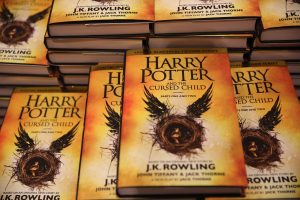
HBO made the bold, and certainly commercially sensible, decision to turn the Harry Potter books into a TV series. The stakes are huge, and so are the expectations. Millennials and Gen Zers grew up with Harry Potter, waiting in line for the books, binge-watching the films in theaters and linking their coming of age to Hogwarts. The films were judged very good overall, and, to keep it short, the unwritten online rule applies: “Don’t mess with our childhood, you’ll regret it.”
The online condemnation of the series began with the latest trailer, released shortly before its December 25 premiere. Of course, that doesn’t mean it won’t make money for the platform or find its audience. The appetite for new content from such powerful franchises remains huge.
On paper, the “more time” argument sounds convincing. A series can fit in what the films left out, give room to characters who were missing and build the world of the books in more detail. In practice, however, audiences first judge the look, the musical identity and the “chemistry” they already love.
On top of that, many big-budget streaming productions today have a flattened look or an overly digital feel. This contrasts with older film adaptations, where the sets, costumes and cinematography had something authentic about them.
From the few minutes of the trailer, many people find the lighting dull or unnatural, the colors, which are synonymous with magic, washed out, and the styling of Hagrid’s clothes ill-suited. All of this is being directly compared with the first film, “Harry Potter and the Sorcerer’s Stone,” in which Chris Columbus and John Williams built a world that served as the audiovisual definition of magic for entire generations. So we are back to the past again. And who can take on the past?
It is rare in the entertainment industry to see the new replace the “original” in viewers’ affections. And when it does happen, it takes time, daring and a touch of miracle, or magic, if you like.
We will see the Harry Potter series and judge it a few days from now. A trailer hasn’t destroyed anyone’s childhood, so millennials can relax. In any case, they will go back to the films over the Christmas holidays.