Almog Italie was flying home from a vacation in Japan with his wife and two teenagers, casually snapping pictures of irrigated circles of farmland in the desert below, when the FlyDubai 737 MAX suddenly went into a steep nosedive.
“It started dropping as if there was turbulence, but crazy. Twenty, 30 seconds of a crazy free fall. It then stabilized and then again started falling,” said Italie, an Israeli e-commerce worker. “We didn’t understand what was happening.”
What Italie couldn’t see from his seat in Row 20 on Flight 1073 was a desperate fight unfolding in the cockpit. The co-pilot had stabbed the plane’s captain , who fought back and opened the cockpit door, said Israeli Prime Minister Benjamin Netanyahu .
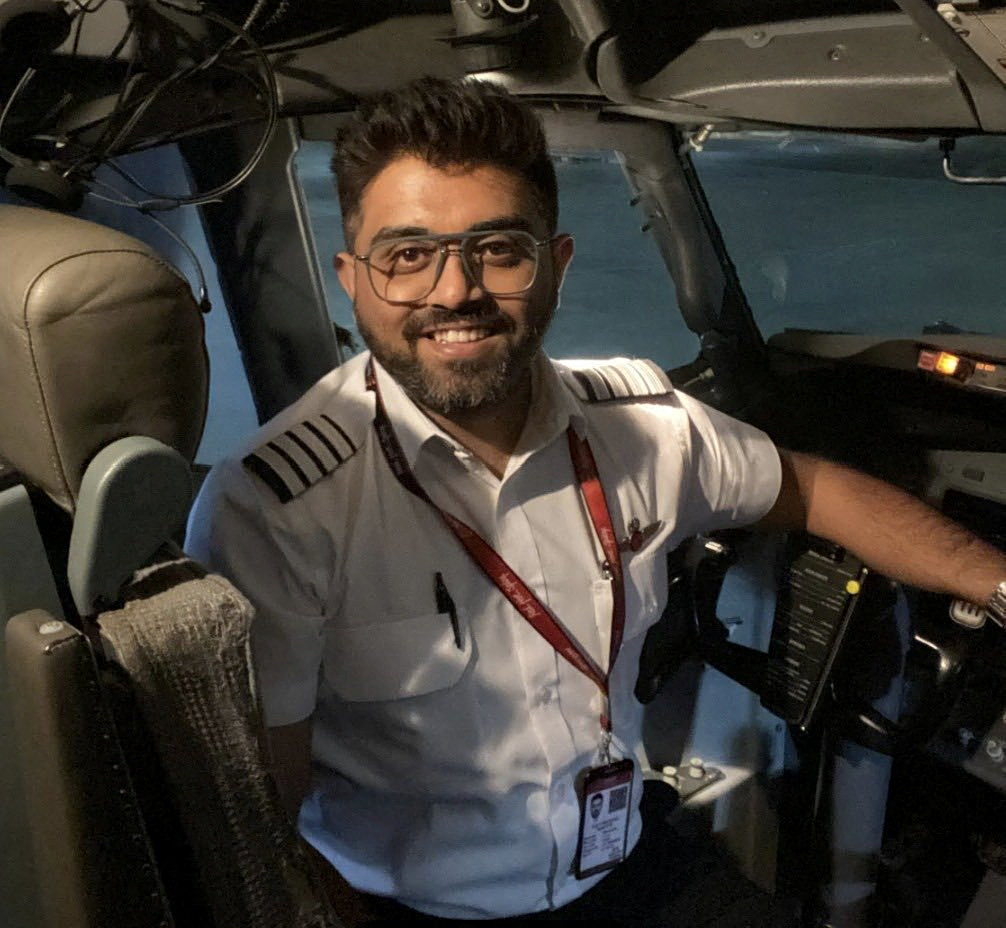
Indian pilot Smit Machchhar, who the leaders of Israel and India hailed as a hero for saving passengers after he was stabbed by his colleague in an alleged attempt to crash a flydubai plane on Wednesday, smiles in an unidentified location in this undated handout image released on September 30, 2026. Israel Foreign Ministry/Handout via REUTERS THIS IMAGE HAS BEEN SUPPLIED BY A THIRD PARTY. MANDATORY CREDIT. NO RESALES. NO ARCHIVES
Seeing a commotion, a small group of passengers and crew members rushed to the front to regain control of the plane, according to interviews with passengers and social-media videos verified by The Wall Street Journal.
Yaniv Hayun, a passenger, said in a video shared by Israel’s public broadcaster that he and another man found the door was unlocked but blocked by the fallen pilot, so they shoved it open.
Inside, he said, he saw the injured captain on the ground as the attacking pilot hovered over the controls.
“I grabbed the attacker and put him in a chokehold and took him outside,” Hayun said, then called other passengers to help.
Afterward, the two pilots lay on the floor of the kitchen area receiving medical care, blood smearing their uniforms and the walls. One passenger looked on in shock, a rivulet of blood running down the middle of his forehead.
“They attacked us right now, in this plane,” he said in a video posted on social media. “They tried to murder the pilot, and we took over.”
Two other pilots who were aboard to operate the next flight assumed control of the plane. Flight data shows they fought for five minutes to stabilize the jet as it pitched up and down amid the unsettled situation aboard and the damage done by a rapid dive during which the plane lost 15,000 feet of altitude in less than a minute.
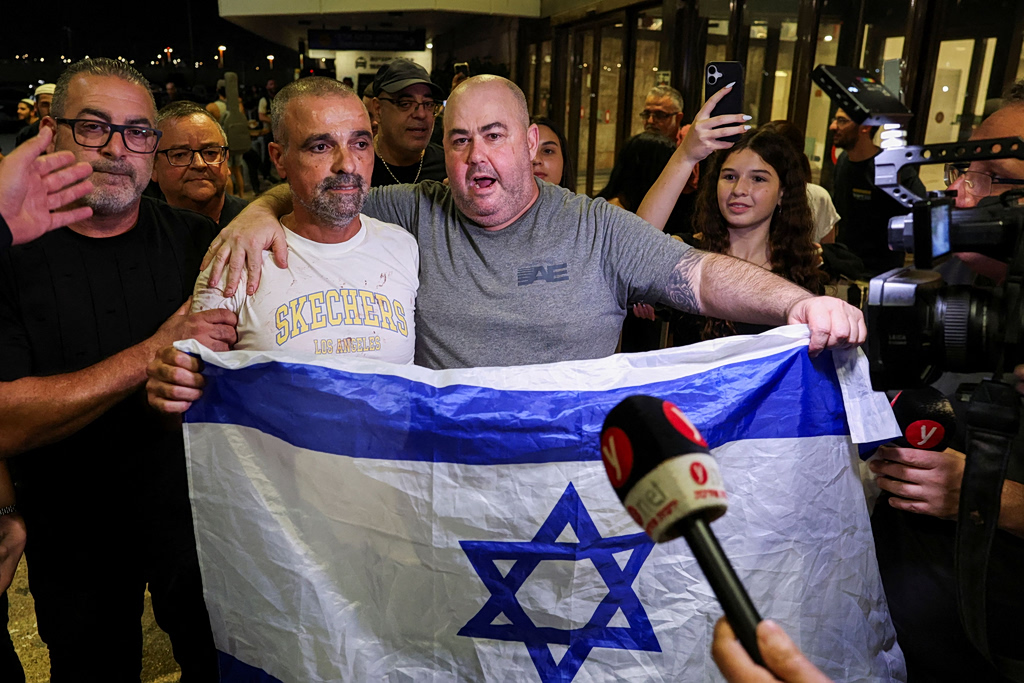
Yaniv Hayun, one of the men who helped incapacitate the attacker on the FlyDubai aircraft bound for Israel from the United Arab Emirates, which was diverted to Saudi Arabia following an emergency signal, holds an Israeli flag after arriving at the Ben Gurion International Airport, in Lod, near Tel Aviv, Israel, September 30, 2026. REUTERS/Ammar Awad
Once they had it under control, they issued a Squawk 7700, a radio signal indicating a general emergency. Seven minutes later, they changed the alert to a code signaling unlawful interference—used to describe attempts to jeopardize the safety of the airplane, like hijacking or hostage taking.
The pilots then steered the plane to an emergency landing in the Saudi city of Tabuk. About 170 passengers, almost all Israeli and many of them children, were safe and accounted for. Four Americans, all U.S.-Israeli dual nationals, were on the plane, said a State Department spokesman. All four were traveling on their Israeli passports.
Saudi authorities had the first crack at interviewing the passengers and crew. They initially assessed that the co-pilot tried to deliberately crash the plane, people familiar with the matter said. They said they don’t yet have a theory about a motive or whether others might have been involved.
India’s Embassy in Riyadh identified the pilot who was attacked as Smit Machchhar, calling him brave and saying he was receiving medical care. The identity of the attacking co-pilot wasn’t immediately known.
FlyDubai said it would suspend flights to and from Israel while the investigation into the incident continues.
The near-disaster sent a shudder through a region racked by three years of war and raised a host of troubling possibilities that officials in Saudi Arabia, Israel and the United Arab Emirates are just beginning to investigate.
Negotiations to end the war that Israel and the U.S. launched against Iran appear stalled, and anger runs high over Israel’s conduct in the war against Hamas in the Gaza Strip.
The U.S. has tightened its economic sanctions on Iran and bolstered its naval blockade by persuading countries including the U.A.E. to cut air links with the country. Iran’s top national-security official has warned that countries that block Iranian flights will lose the use of their own airports.
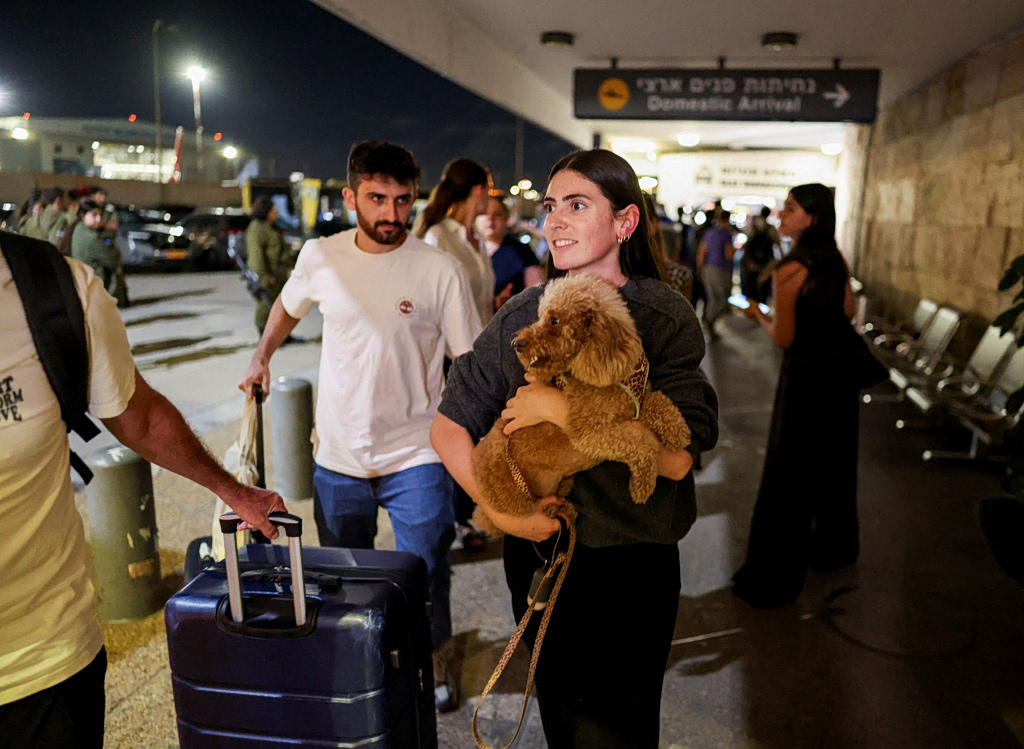
A woman carries a dog, as passengers who were on the FlyDubai aircraft bound for Israel from the United Arab Emirates, which was diverted to Saudi Arabia following an emergency signal, arrive at the Ben Gurion International Airport, in Lod, near Tel Aviv, Israel, September 30, 2026. REUTERS/Ammar Awad
The incident hit one of the most robust links between Israel and the outside world. While many Western carriers have repeatedly cut flights to Israel during the years of conflict, the U.A.E., which signed a diplomatic accord with Israel in 2020, has provided steady connections, with several flights each day between Tel Aviv and the international aviation hub of Dubai.
The event also delivered another blow to Dubai, whose important tourism and aviation earners have been shaken by thousands of Iranian attacks on the country and concerns about the ongoing war.
The scenario echoed other air disasters like the crashes of EgyptAir Flight 990 into the Atlantic in 1999 and Germanwings Flight 9525 into the French Alps in 2015, which some regulators attributed to actions by their first officers. The latter led to requirements that two crew members be in the cockpit at all times.
“The protocols to try to stop these things from happening in general work very efficiently. But when insiders are involved, inherently, the risk of bypassing protocols is there,” said Matthew Borie, chief intelligence officer and co-founder of Osprey Flight Solutions. “The vast majority of these post-9/11 security measures in the aviation industry are meant to deal with passengers—to stop people from being able to access the cockpit. But that assumes the people in the cockpit are part of the solution and not part of the potential problem.”
A former FlyDubai crew member said all pilots are subject to security screening before flights and have medical checks at least once a year.
FlyDubai’s budget flights from Dubai to Tel Aviv attract a consistent crowd of Jewish and Arab Israelis coming home from vacations, international workers coming in for stints, and a handful of business travelers. It isn’t unusual to see hippie travelers, families in orthodox clothing and women in hijabs on flights that also typically teem with kids.
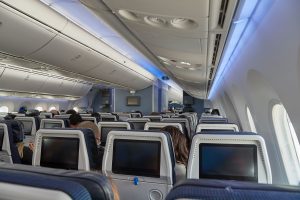
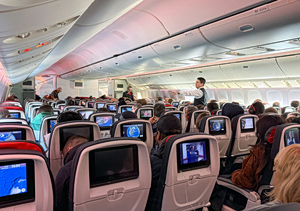
Passengers make their way through normal security in Dubai to a gate further back in the airport, then get bused across the tarmac to climb aboard the plane. By halfway through the 3½-hour flight, many are often slumped over their partners asleep.
Wednesday’s flight was bringing families home in the middle of the weeklong Sukkot holiday in Israel. Photos shared with the Journal showed strollers, children carrying colorful backpacks and parents among the passengers.
Flight-tracking data service Flightradar24 shows the plane took off shortly after 7 a.m. local time and began climbing to 34,000 feet. The first sign of trouble came about two hours and 15 minutes into the flight when the aircraft started to lose altitude.
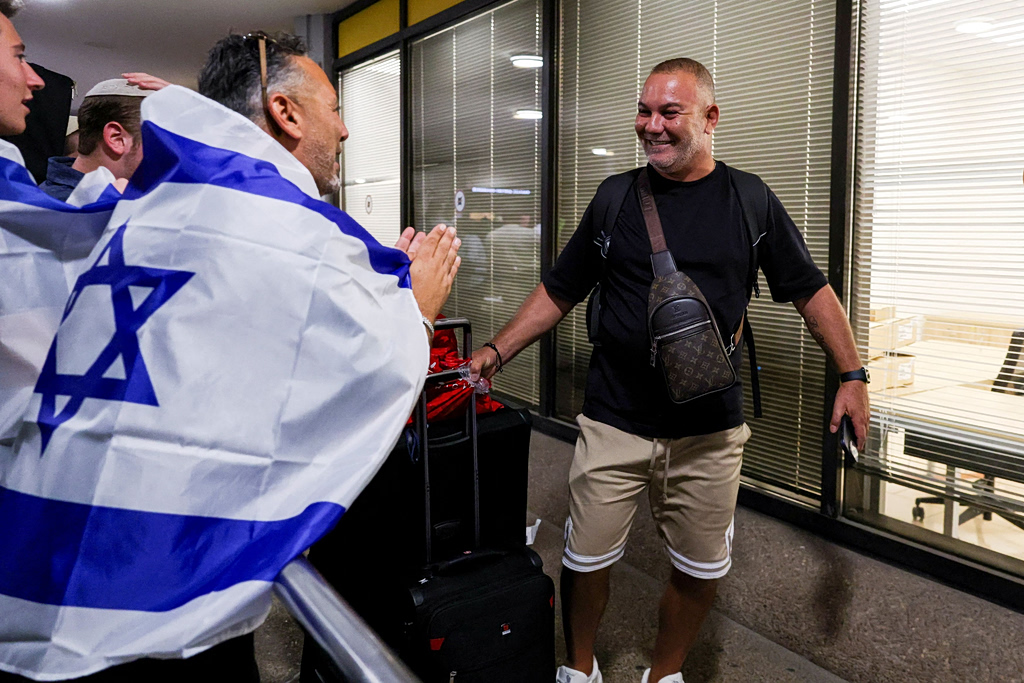
A man reacts, as he is being greeted by the gathered crowd, as passengers who were on the FlyDubai aircraft bound for Israel from the United Arab Emirates, which was diverted to Saudi Arabia following an emergency signal, arrive at the Ben Gurion International Airport, in Lod, near Tel Aviv, Israel, September 30, 2026. REUTERS/Ammar Awad
The plane hurtled into a nearly minute-long nosedive, plummeting almost 3 miles. The speed of the dive pushed the plane to the limits of its engineering. A section of the plane’s rudder—which controls side-to-side movements—was ripped from its tail, according to images of the aircraft and an official familiar with the initial investigation.
Italie gripped his seat and tightened his seat belt, wondering if there was a problem with the plane. The commotion in the cockpit, the passengers rushing forward and the new pilots taking charge all happened so fast, Italie said.
After the fight was over, doctors treated the injured, and one of the pilots was restrained, he said.
On the ground in Saudi Arabia, authorities questioned the passengers and crew, keeping them for about seven hours before the airline could bring in another plane to fly them onward to Israel.
As the new flight approached the airport in Tel Aviv, it checked in with the tower.
“Thank you for bringing our passengers safely back home,” the tower radioed back.
Write to Anat Peled at anat.peled@wsj.com , Benjamin Katz at ben.katz@wsj.com and Summer Said at summer.said@wsj.com
Corrections & Amplifications undefined About two hours and 15 minutes into the flight, the aircraft started to lose altitude. An earlier version of this article incorrectly said the aircraft started to lose altitude about one hour and 15 minutes into the flight. (Corrected on Sept. 30)