 Μake us preferred on Google
 MADISON, Wis.— Wayne Hsiung recently walked out of a Dane County courtroom to a reception that was unusual for a defendant charged with burglary.
Dozens of supporters lined a waiting area, raising signs with messages like “Compassion Should Never Be Punished.” Some came forward for hugs.
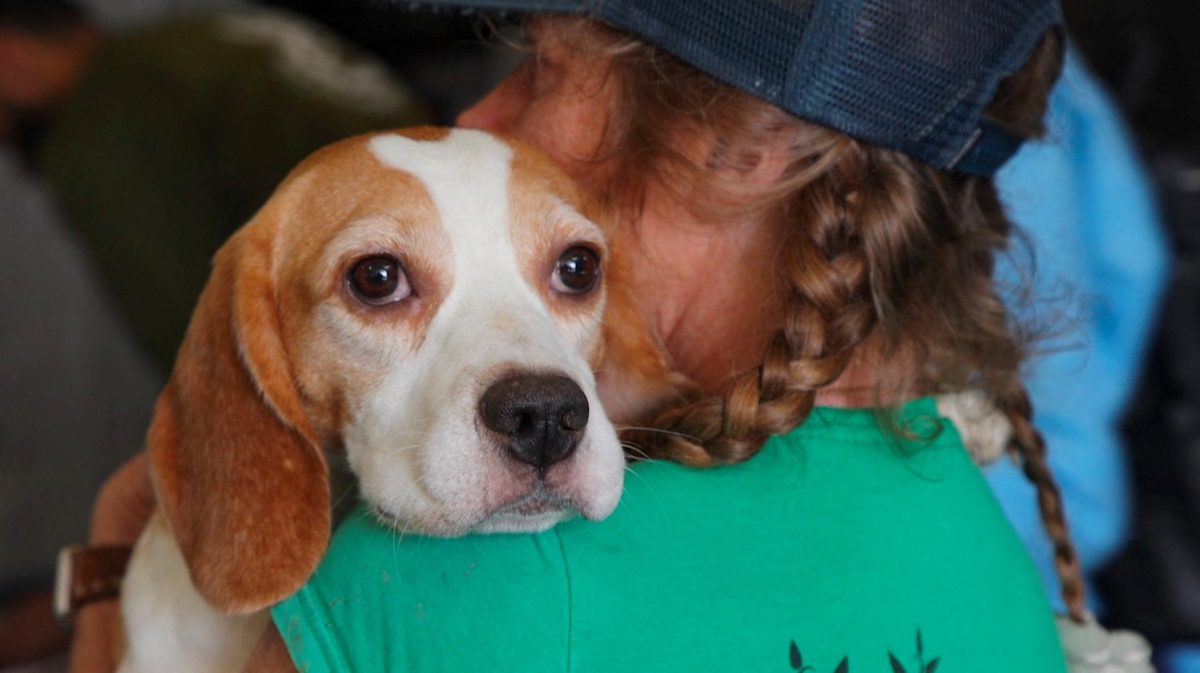
A woman holds a beagle rescued from Ridglan Farms, a commercial breeding facility that supplies dogs to animal testing laboratories, as the animals are being prepared for adoption, in Marshall, Wisconsin, U.S., May 4, 2026. In this still image obtained from a Reuters video. REUTERS/Eric Cox
Prosecutors allege Hsiung, a 44-year-old lawyer and co-founder of two California-based animal rights groups, entered a facility that breeds dogs for medical testing and stole property: beagles. Video of the incident—played in court—had already ricocheted across the internet. It shows Hsiung, in a dark jacket and tie, trying to pry open a metal door with a crowbar. Activists in white hazmat suits carry floppy-eared canines away as he waves papers at a police officer. “We have a legal right to rescue these animals,” he said before being detained.
The confrontation, the arrest, the courtroom forum and viral footage form the centerpiece of a new strategy.
Animal-rights groups have long broken into testing labs or what they call factory farms to “liberate” animals under the cover of darkness. But now, a prominent wing of the movement is adopting a different tack, called “open rescue”: They announce their plans and execute them in broad daylight, all but inviting arrest. This lets them fight charges in court and on social media, and argue publicly they are saving, not stealing, animals.
Hsiung has targeted dozens of facilities across the U.S. His latest—and largest—effort has catapulted rural Wisconsin into the national spotlight. The fallout has included lawsuits, political tussles, attention from influencers like Laura Loomer and Lara Trump , and more than a thousand activists—from across the nation—converging on a town of 900.
‘Lawlessness and vigilantism’
The friction centers on Ridglan Farms, tucked amid lush rolling hills in Blue Mounds, about 30 minutes west of Madison. For years, Ridglan has bred beagles for biomedical research that activists denounce as cruel but federal law protects.
“I would hope that most Wisconsin residents would see something like this and be turned off by the idea of breaking in using sledge hammers, using saws,” Jim Newman , a Ridglan Farms spokesman, told local media. Ridglan said its animals are treated well and accused Hsiung of encouraging “lawlessness and vigilantism.”
Hsiung was a law professor and securities lawyer before devoting himself to activism. He has tangled with authorities in multiple states and broadcasts his moves on social media, including to boldface followers like Loomer and the musician Moby. Just this past week, Hsiung’s profile grew when a California appeals court reversed his 2023 felony conviction for helping to take 37 hens from an egg farm.
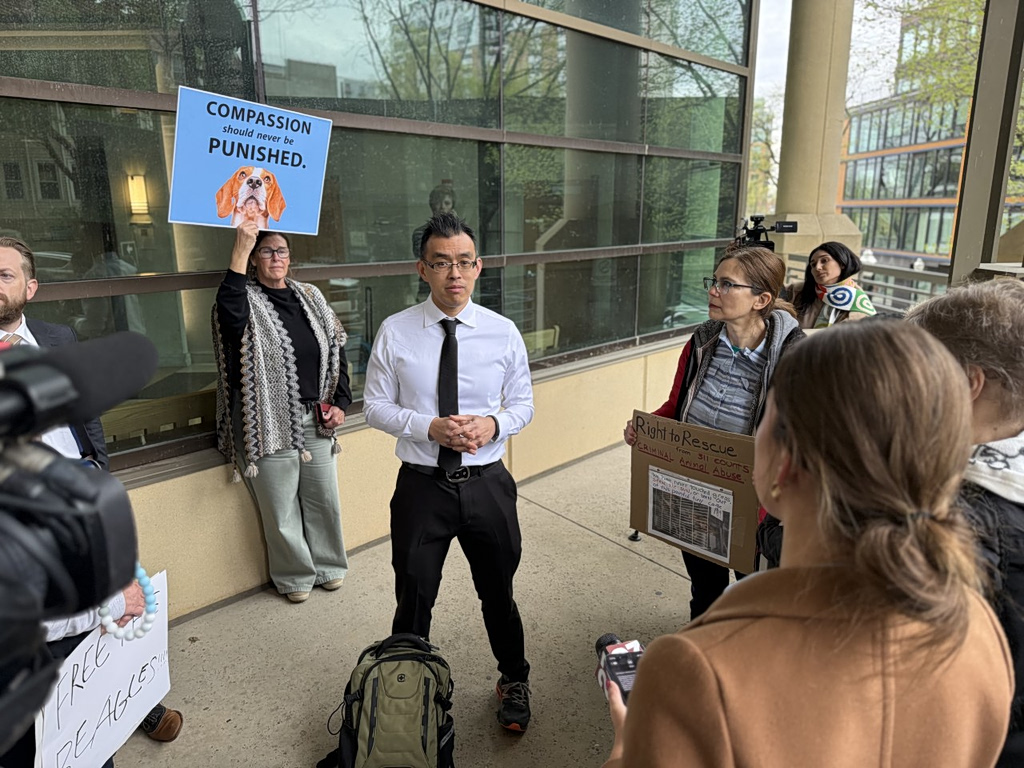
Wayne Hsiung speaking with supporters and media before a court appearance last week in Madison, Wis. Joe Barrett/WSJ
“As a lawyer, I think the legal argument based on the analogy of a dog in a hot car is compelling,” Hsiung said. “We have not just a right, but an obligation, to help them.”
Beagles are used in research partly for their size and even temperament. Hsiung first targeted Ridglan with a small nighttime raid in 2017, shooting video and taking three dogs. Ridglan dropped burglary and theft charges as the case was reaching trial in 2024, citing threats.
In 2025, following a petition by Hsiung and allies, a judge found probable cause that Ridglan had broken Wisconsin anticruelty laws, including conducting certain medical procedures without anesthesia and failing to provide adequate sanitation and ventilation.
Tim Gruenke , the La Crosse County district attorney, stepped in as special prosecutor, and moved forward with a potential case over one of the procedures.
Ridglan, which denied wrongdoing, offered a deal: It would close its breeding operation this coming July, keeping only its smaller testing operation open, in exchange for avoiding charges. Gruenke said this seemed better than what he might achieve at trial.
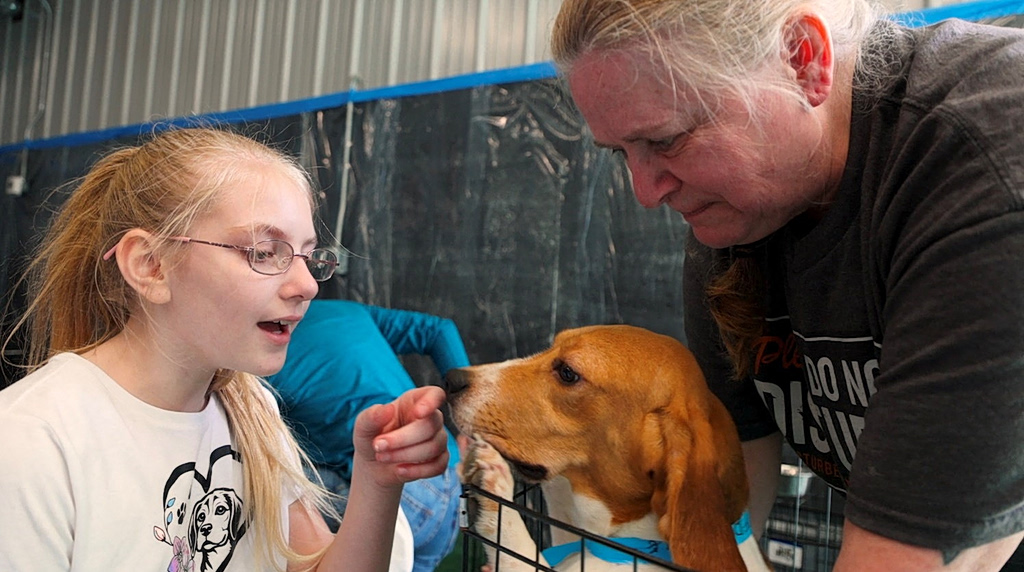
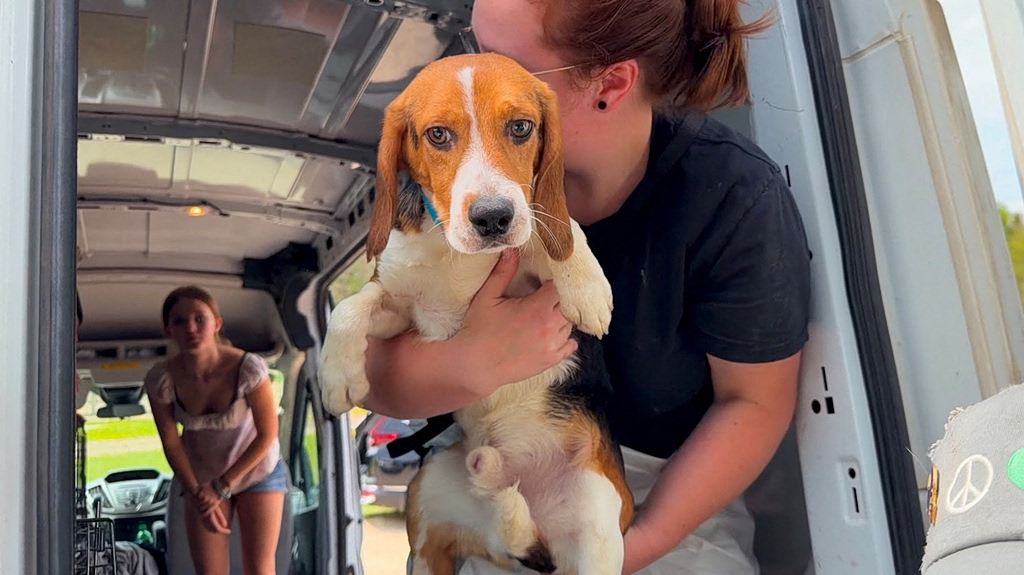
A girl pets a beagle rescued from Ridglan Farms, a commercial breeding facility that supplies dogs to animal testing laboratories, as the animals are being prepared for adoption, in Marshall, Wisconsin, U.S., May 4, 2026. In this still image obtained from a Reuters video. REUTERS/Eric Cox
“There are a lot of things that people say about these dogs that you could say about zoos and circuses and turkey farms. A lot of animals are not kept the way you’d want your pet kept,” he said. “But I don’t think that means that people have the right to try to just take the law into their own hands.”
Some activists hailed the agreement as a victory. Hsiung, however, said Ridglan was getting off easy in a deal full of potential loopholes.
So on March 15, he marched dozens of activists to the farm, where they cut a chain-link fence, broke into a building and took 22 beagles. Videos drew tens of thousands of hits.
Then in mid-April, Hsiung mobilized more than 1,000 supporters to try to remove the remaining 2,000 dogs. He previewed the mission in an interview with conservative commentator Tomi Lahren .
Ridglan was ready: Hay bales fortified the fence, and a freshly dug ditch—a foul moat—brimmed with animal waste. Hsiung was arrested for the March incident upon exiting his car. Law enforcement met protesters with tear gas, rubber bullets and zip ties, a scene his team posted on X.
Laura Loomer retweeted the post to her 1.9 million followers: “Terrible! Save the dogs!”
But another commenter shot back: “‘Peaceful Animal Lovers’ commit criminal trespass and attempt vigilante violence.”
That night, Lara Trump urged Ridglan in an Instagram video to accept a $1 million offer from animal-rights groups to rehome all 2,000 dogs.
‘We love you, Wayne’
In nearby Mount Horeb, known as the “Troll Capital of the World,” locals are caught between sympathy for the dogs and unease at the upheaval activists have brought. Peg Ginsberg recalls squad cars speeding past her Main Street watercolor studio the day the groups swarmed the facility. “I wish they weren’t there,” she said, of Ridglan. “But I wish it could be done some other way.”

Peg Ginsberg in her watercolor studio in Mount Horeb, Wis. Joe Barrett/WSJ
Activists have filed a lawsuit seeking class-action status against the sheriff and Ridglan, alleging excessive force. County supervisors have called for an investigation into the sheriff’s response, though he has said his deputies acted appropriately. In a statement, Ridglan said if anyone was injured, “the fault lies squarely” with Hsiung, who the company said led a “violent assault on our facility.”
Hsiung, who denies wrongdoing, plans to represent himself at trial. Meanwhile, the court commissioner presiding over the recent hearing reversed a bail provision that had barred him from Dane County, except to appear in court.
“I’m legal again,” Hsiung told supporters outside the courtroom.
“We love you, Wayne,” one cried out. “I love you too,” he replied.
In the meantime, that same week, Big Ranch Dog Rescue and the Center for a Humane Economy reached a deal to rehome 1,500 Ridglan dogs for an undisclosed sum.
Wayne Pacelle, president of the Humane Economy group, said negotiations preceded Hsiung’s two operations. Others credit Hsiung.
“I don’t think that we would be seeing Ridglan making the deal to give up the dogs without what happened with Wayne,” said Amy Van Aartsen, co-founder of The Marty Project, which promotes animal testing alternatives.