 Μake us preferred on Google
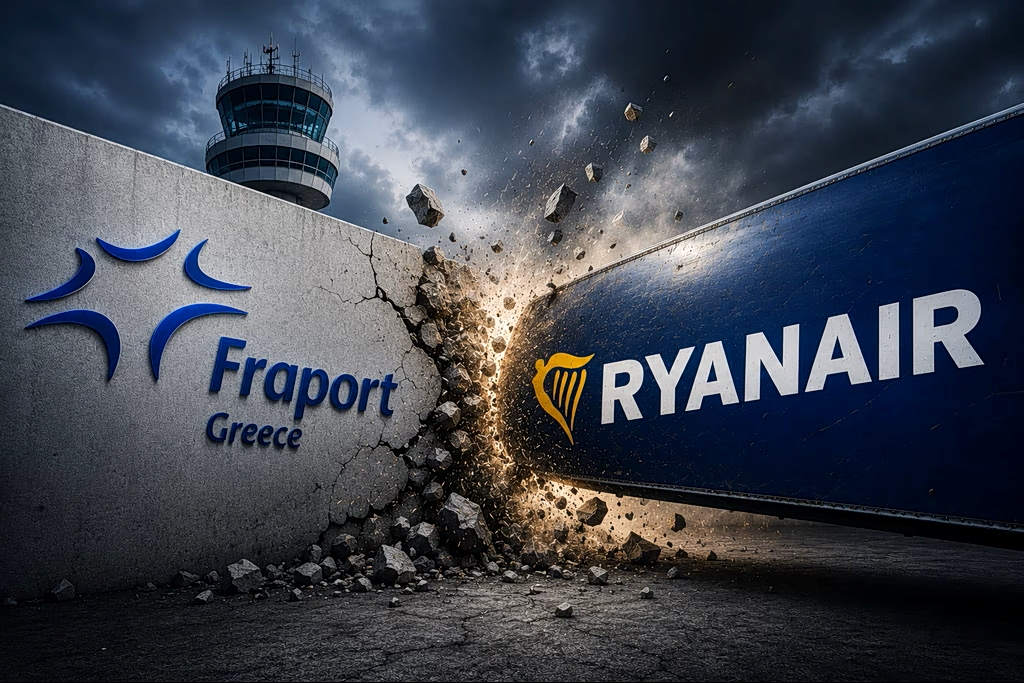
 Airport operator Fraport Greece on Friday issued a curt rejection of Ryanair’s claims over its decision to scale back operations in Greece, escalating a dispute that follows the airline’s announcement that it will close its Thessaloniki base during the upcoming winter season.
In a strongly worded statement, the majority German-owned airport operator described the Irish carrier’s arguments as “entirely unfounded and wholly pretextual,” insisting that the move reflects Ryanair’s own commercial strategy rather than airport pricing policies. It added that allegations regarding aviation charges and development fees set by the Greek state are “not valid,” arguing instead that the airline’s decisions are driven by profitability and network planning.
The dispute erupted after Ryanair announced in Athens that it would withdraw three aircraft from Thessaloniki and cut 12 routes across Greece, warning of a loss of around 700,000 seats and a projected 45% reduction in winter traffic at the northern airport. The airline also confirmed wider reductions in its Greek network, including the suspension of seasonal operations at the Chania and Heraklion bases on Crete.
Ryanair’s chief commercial officer said the airline had previously accounted for roughly 90% of Thessaloniki’s international winter traffic and accused Fraport Greece of increasing airport charges by about 66% compared with pre-pandemic levels. He argued that capacity was being shifted to markets such as Albania, regional Italy, and Sweden, where lower fees and policy incentives support winter demand.
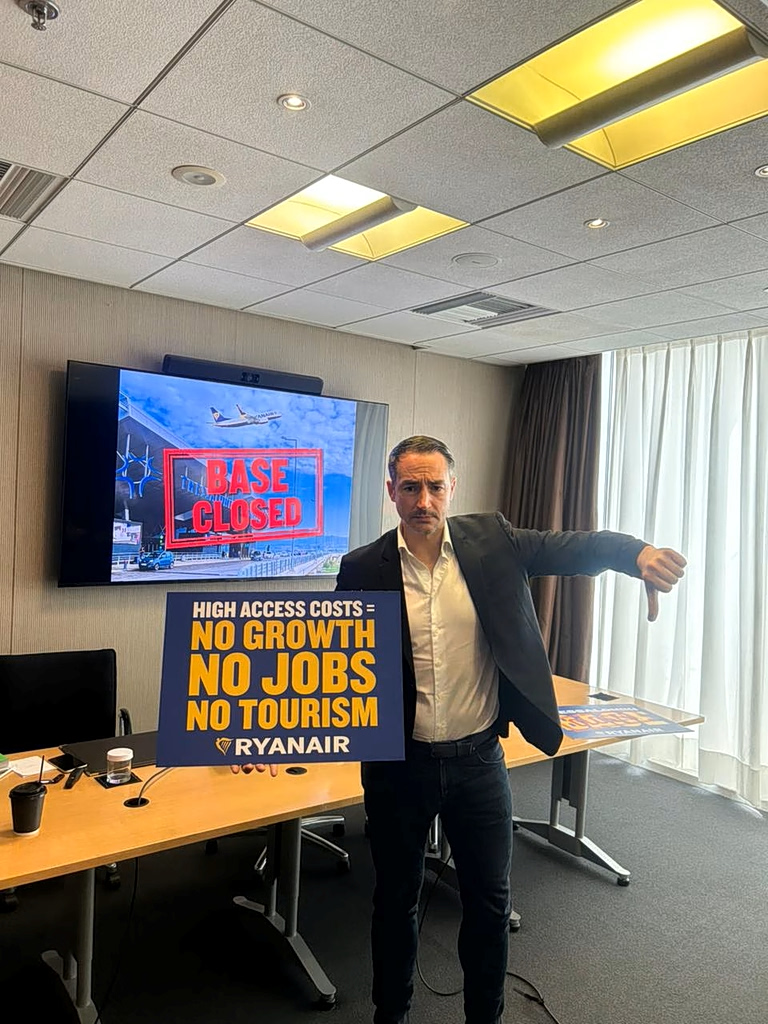
Fraport Greece countered that Thessaloniki’s Makedonia Airport remains a key hub served by more than 40 airlines, connecting northern Greece to over 90 destinations in 33 countries. It highlighted investments exceeding €100 million in infrastructure upgrades and said passenger traffic has risen by around 40% during its management period, describing the airport as structurally upgraded and capable of handling growing demand.
The confrontation comes amid a broader pattern across Europe in which Ryanair has repeatedly reduced capacity or threatened withdrawals over airport fees and aviation taxes, including recent disputes in Germany, Denmark, and Spain. Industry analysts often describe the airline’s approach as a recurring negotiation strategy aimed at securing lower operating costs across its network.
Separately on Friday, Ryanair employees in the country called for dialogue between authorities, unions, and local stakeholders, warning that winter reductions could result in staff being forced to choose between relocation and unpaid leave, with potential impacts on job security in affected bases.