WASHINGTON—After days of threats to launch a new offensive against Iran, President Trump is once again trying to achieve through diplomacy what he has yet to accomplish through war.
The question is whether Trump’s Gulf partners can make enough headway in the days ahead to reopen the Strait of Hormuz to shipping, at least temporarily, and lay the groundwork for eventual nuclear talks.
Previous efforts on both fronts have failed for months, though there were initial signs of progress Sunday on reopening the waterway. Oman and Iran noted they were making progress.
Trump told reporters Sunday that the U.S. would engage in talks beginning Monday afternoon. He said that he had been prepared to launch the biggest military attack since World War II but had been talked down by U.S. allies.
“We were all set to go, but when the allies asked to call it off, you got to sort of say, ‘well, let’s see,’” he said.
Still, if talks falter as they have in the past, Trump could once again fall into a familiar cycle of reviving his military threats shortly after he shelved them.
“He is trying his hand now at a diplomatic solution to avoid military escalation. But there’s no clear path, either diplomatically or militarily, to get Trump to a place where he can declare victory,” said Vali Nasr, an Iran expert at Johns Hopkins University.
This cycle has destabilized the Middle East and complicated the Trump administration’s domestic agenda. Iran in recent weeks has carried out attacks on a number of U.S. allies in the region, including Jordan, Bahrain and Kuwait, while its proxies in Iraq have launched drones at Saudi Arabia.
Iran’s ability to essentially shut down the Strait of Hormuz has pushed up the price of gasoline and forced the U.S. and other counties to eat into their oil reserves. Meanwhile, Republicans in Congress, with just three months until the midterm elections, have pressed the White House to better articulate the goals for the Iran war and explain how it will end.
That concern was underscored when three U.S. soldiers were killed in an Iranian missile attack against their base in Jordan, bringing the total to 18 service personnel killed in action since February.
When he ordered attacks on Iran in late February, Trump began the war with limited international support, and public opinion polls that showed many Americans hadn’t been convinced that Tehran presented an urgent nuclear threat.
Trump sought to reassure a restive public that rising gas prices wouldn’t last long, projecting that the conflict could be over in four to six weeks. His reservoir of support, abroad and at home, has shrunk as the war has entered its sixth month.
Trump’s supporters said that his drumbeat of threats and visible impatience had encouraged a flurry of diplomatic activity that could result in a long-sought agreement that will finally bring the war to a close.
Trump wrote in a social-media post Saturday night that Iran and other Middle East countries were imploring him to cancel his attack because the “perimeters of a deal” had been hammered out.
Trump delivered that message after speaking with Saudi Crown Prince Mohammed bin Salman . Trump on Sunday said that he asked him, “Would you rather have us do this or not?” Trump said the crown prince replied, “We would much prefer a deal as opposed to an attack because you don’t know where these attacks lead.”
But Trump didn’t call Israeli Prime Minister Benjamin Netanyahu , the staunch ally with whom he launched the war and remains the loudest voice in the president’s ear for more military action.
There were initial signs of a diplomatic opening Sunday.
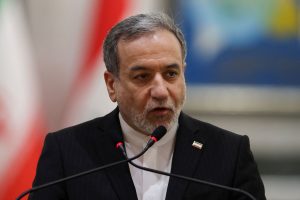
Iranian Foreign Minister Abbas Araghchi said talks with Oman about a mechanism for ships to traverse the Strait of Hormuz was “nearing completion and in their final stages,” according to Iranian state media. Left unsaid was whether Tehran is prepared to permanently drop its demand that it should be able to collect tolls from transiting commercial vessels and if those negotiations would lead to a fully reopened waterway.
Araghchi also called his Saudi counterpart, Prince Faisal bin Farhan, to discuss further de-escalatory measures, according to a readout from Riyadh.
Trump’s critics say the president’s abrupt twists and turns reflect his unhappiness with his remaining military and diplomatic options and don’t reflect a carefully calibrated strategy.
“His flailing is a terrible blow to U.S. deterrence,” said Daniel Shapiro, a senior Pentagon official during the Biden administration who also served as U.S. ambassador to Israel under President Barack Obama . “No one believes anything he says—not allies and certainly not our Iranian adversaries.”
The latest chapter in the conflict began in June when the U.S. negotiated a memorandum of understanding with Iran only to see it collapse amid conflicting interpretations of how to unlock shipping in the Strait of Hormuz.
After Iranian forces fired on several commercial vessels, Trump denounced the country’s leaders. By early July, Iranian leaders whom Trump had once praised as “very smart” were being derided as “scum” with whom he no longer wanted to engage.
As diplomacy receded, Trump reimposed economic sanctions and directed the U.S. military to resume its naval blockade. Small scale airstrikes were followed by Trump’s threat last week t o escalate military action targeting infrastructure such as bridges and energy plants.
“We just want to win,” Trump said Friday as U.S. military action appeared imminent. “And you know at some point, they’re going to say, ‘We just can’t take it anymore.’”
Trump’s statement came as U.S. Central Command prepared options to launch a major offensive against Iran’s missiles, defense industry and other sites. Military analysts said the U.S. had the ability to carry out punishing attacks in Iran.
But Iran sought to head off the U.S. offensive by warning that it could lash out against Arab Gulf states that cooperated with U.S. military plans, spurring fears that energy infrastructure in the Gulf could come under fire.
As the prospect of military action approached, Trump met Tuesday with Netanyahu, who has long cast Iran as a major threat. But the Israelis didn’t have the last word.
Saudi Defense Minister Khalid bin Salman met the next day with Vice President JD Vance and with Trump. Those meetings followed joint Saudi and U.S. strikes against Iran-backed militias in Iraq. The Saudi message was that Iran’s proxies had been weakened and that it was now time to de-escalate, according to a person familiar with the meetings.
Then on Saturday night, the Saudi crown prince followed up during a phone call in which he urged dialogue to reduce escalation in the region, according to Saudi state media and Saudi officials familiar with the matter.
The diplomatic pathway has insulated Trump from the risks of major military actions, at least for now. But diplomacy carries its own risks, including that Iran may view Trump’s vacillation as a reason to try to maximize its leverage in the talks.
“Negotiating a resolution that preserves freedom of navigation won’t be quick or easy,” said Suzanne Maloney, vice president for foreign policy and an Iran expert at the Brookings Institution. “It’s not obvious that this administration has either the bandwidth or the attention span needed.”
Write to Michael R. Gordon at michael.gordon@wsj.com , Alexander Ward at alex.ward@wsj.com and Philip Wegmann at philip.wegmann@wsj.com