 Μake us preferred on Google
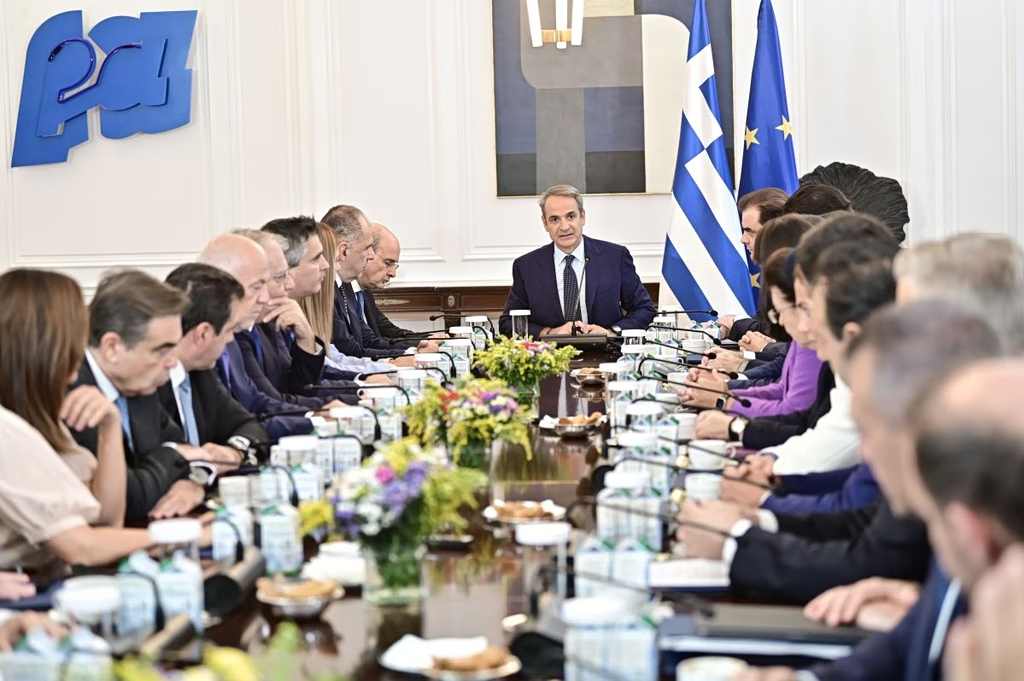
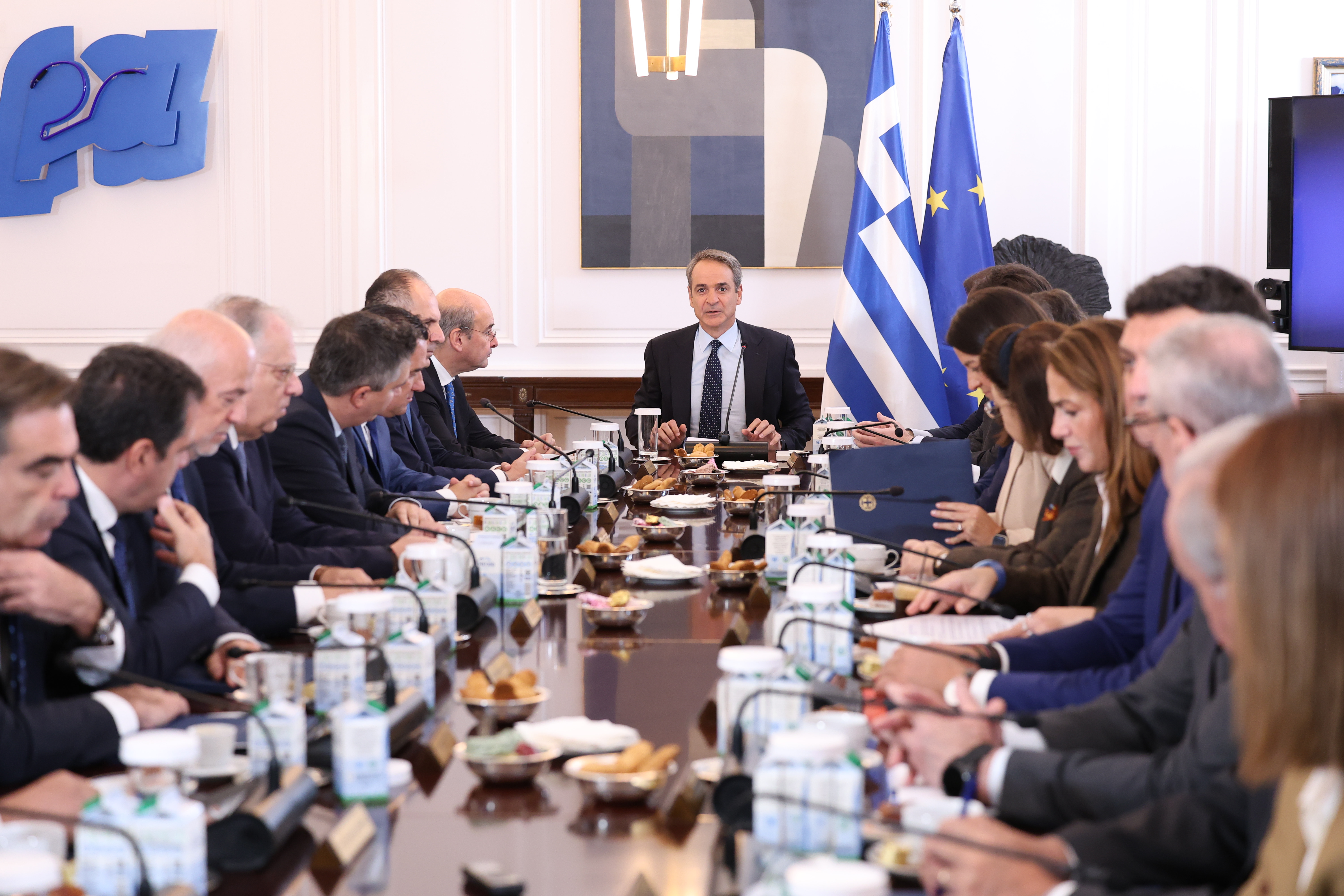
With the next general election looming in the horizon, Prime Minister Kyriakos Mitsotakis urged his ministers Monday to press ahead with 90 government priorities, reiterating existing commitments on wages, housing and infrastructure rather than announcing new policies. Speaking at a Cabinet meeting, Mitsotakis emphasized the government’s record and the work remaining before the end of its term. He also acknowledged the financial pressures facing Greek households and reiterated Athens’ opposition to the Turkey-Libya maritime agreement.
Rising Living Costs
Addressing the economic impact of international instability, Mitsotakis acknowledged that many Greek households were struggling with rising living costs, while stressing the limits of what individual governments could do to counter global economic pressures. “This is a global upheaval that no national policy can respond to,” he said. “I know that many of our households are being tested.” The prime minister said his government was doing what it could to ease the pressure, citing financial reserves that he attributed to prudent economic management.
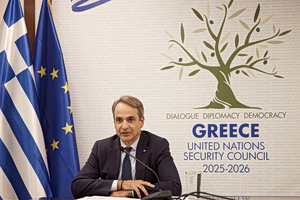
He also returned to a proposal he had raised at the United Nations Security Council for a global maritime ceasefire, intended to protect commercial shipping routes disrupted by international conflicts. Mitsotakis argued that restoring access to critical trade routes could help contain rising costs worldwide.
Turkey-Libya Maritime Agreement
Mitsotakis also returned to the Turkey-Libya maritime agreement, which he had addressed Thursday at the U.N. Security Council in New York. The agreement has faced opposition from Greece, the European Union and other countries, which dispute its legality under international maritime law.
At Monday’s Cabinet meeting, Mitsotakis reiterated that maritime claims contrary to the law of the sea have no legal force.
“They do not change the situation on the ground or affect our strategic plans,” he said.4
Government Priorities Before the Elections
Turning to domestic policy, Mitsotakis told ministers that the government intended to serve its full term without slowing down the pace of its legislative agenda as elections approach. He mentioned 90 priorities to be completed before the end of the current parliamentary term, drawing on existing policy commitments and projects already underway. “Our work is our passport to credibility,” he said, describing the government’s record as its best response to what he called the opposition’s relentless negativity.
Among the commitments he reiterated was a further increase in the minimum wage, with a target of €1,000 by early 2028, alongside tax measures previously announced at the Thessaloniki International Fair.
The government also plans to expand the Digital Work Card system, which records employees’ working hours, and introduce additional protections for people working through digital platforms.
On housing, Mitsotakis pointed to existing programs aimed at bringing vacant properties onto the rental market, developing housing through public-private arrangements and converting unused military sites into residential developments.
He also referred to ongoing infrastructure projects, including the Thessaloniki Flyover highway and the planned completion of another 25 kilometers of the Northern Crete Highway.
In education, the government’s commitments include renovating another 500 schools, preparing for a new national high school graduation qualification and completing student housing projects at Panteion University in Athens and in Tripoli.
Other priorities include expanding preventive health care, upgrading the Diavgeia government transparency platform, connecting local planning offices to the national land registry and increasing the use of technology in court administration and building inspections.
The government also intends to improve the 112 emergency alert system, strengthen traffic monitoring and establish additional police units to address domestic violence.
Mitsotakis referred to plans to complete marine park initiatives, advance urban planning and undertake projects to address water shortages.
In defense, he cited the expected delivery of seven additional Romeo naval helicopters and plans for domestic drone production.
The prime minister urged ministers to maintain the pace of implementation through the end of the parliamentary term, presenting the completion of existing commitments as the measure of the government’s performance ahead of the elections.
Source: TO BHMA