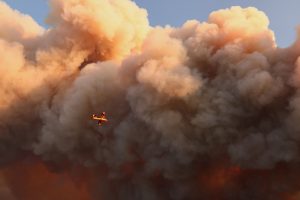
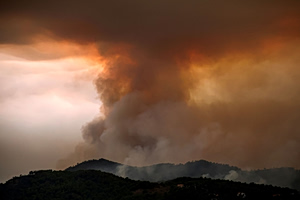
Some of the largest wildfires to sweep through Europe since World War II had an unusual spark: an exceptionally wet winter. That turbocharged vegetation growth, which then collided with some of the driest, hottest weather on record.
The result was a massive tinderbox.
It exploded in recent days as devastating wildfires ripped through regions of France and Spain, forcing more than 300,000 people to evacuate.
In southwestern France, in the region around the city of Bordeaux, more than 100,000 acres have burned. The fire has moved quickly through the region’s sprawling pine forests, forcing more than 220,000 residents and vacationers to evacuate at the height of the tourist season.
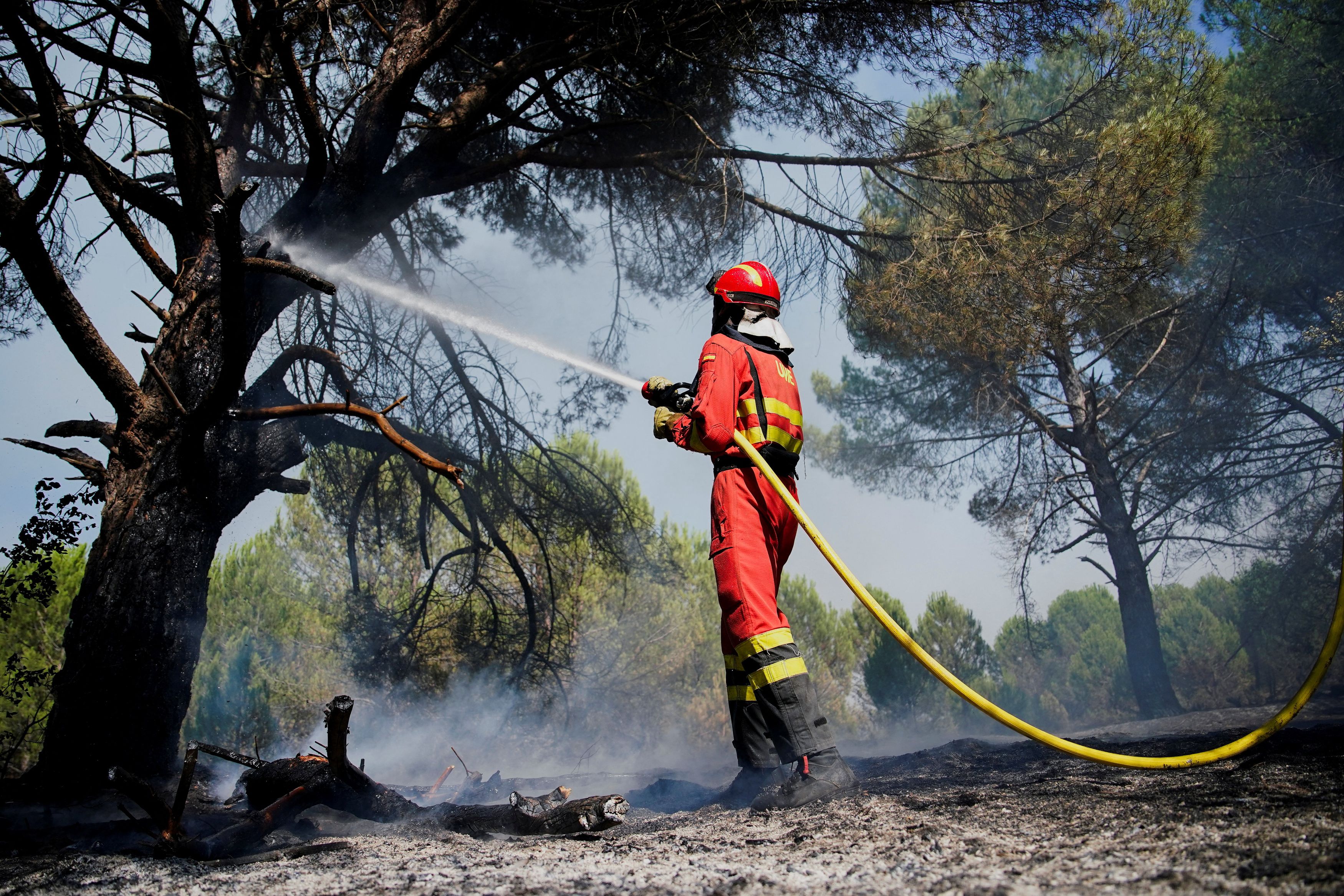
A member of the Military Emergencies Unit (UME) puts out a fire in San Martin de Valdeiglesias, Madrid, Spain July 26, 2026. REUTERS/Ana Beltran
In Spain, the fires have destroyed more than 370,000 acres so far this year. Isabel Díaz Ayuso , the leader of Madrid’s local government, earlier this week described the Madrid wildfires as perhaps “the worst natural catastrophe in Spain’s history.”
The intensity of the fires has created large, fire-fueled thunderstorms, known as pyrocumulonimbus clouds, for the first time in France’s recent history. The clouds, which have been observed during wildfires in Canada and Australia, are created by intense heat that lifts hot smoky air and causes the water vapor to condense into ash. The clouds can generate lightning, further spreading the fires.
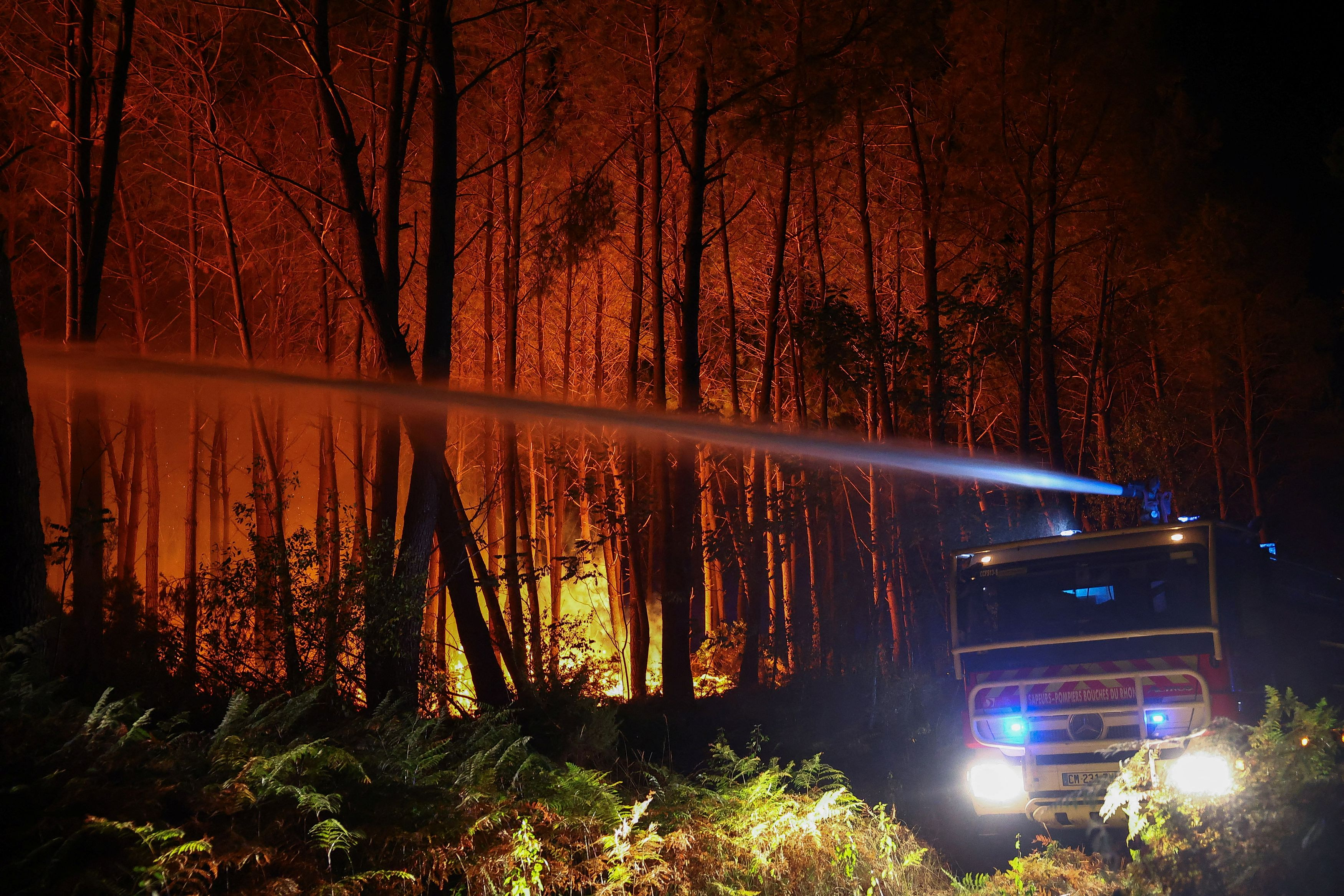
A fire engine works to extinguish flames, as a wildfire burns near Lacanau, Gironde, amongst worsening drought conditions following a heatwave and water shortages across much of France, July 25, 2026. REUTERS/Abdul Saboor
Rising temperatures in Europe set the stage for the extreme weather, scientists say. Europe is the world’s fastest warming continent. Temperatures in Europe are already 2.5 degrees Celsius warmer than in the preindustrial era, compared with around 1.4 degrees for the Earth on average.
“They are two faces of the same coin,” said Francesca Di Giuseppe, fire forecast coordinator at the European Center for Medium-Range Weather Forecasts. “You go from extreme wet to extreme dry.”
Multiple heat waves have hit Europe in recent months. June was especially brutal, with temperatures exceeding 104 degrees Fahrenheit in some places. It was the warmest June ever recorded in Western Europe.
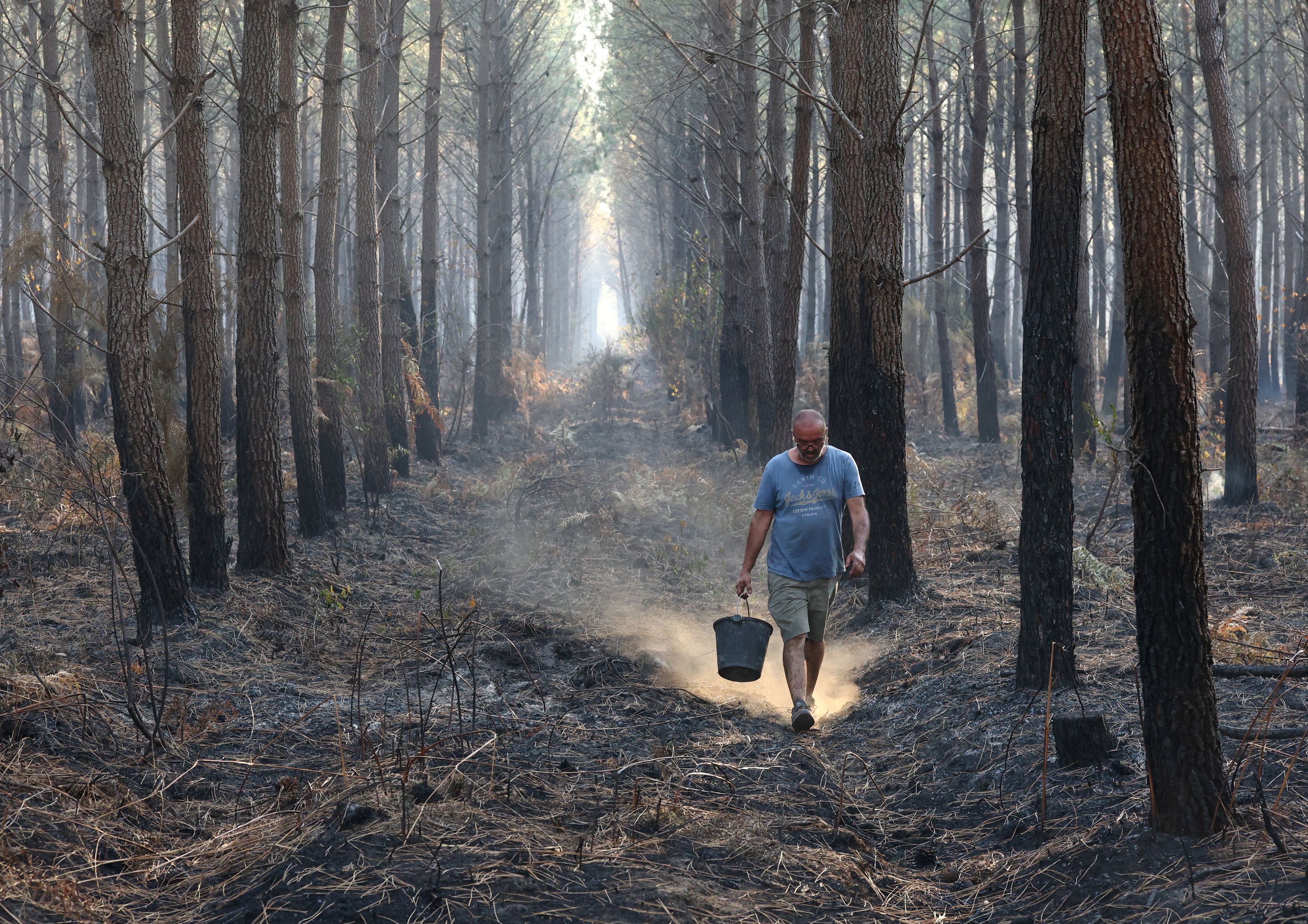
A volunteer carries a bucket of water to cool the gound in a burnt forest amid drought conditions following a heatwave and water shortages across much of France, in Lanton, Gironde, France July 28, 2026. REUTERS/Yves Herman
“Everything points to the summer of 2026 being the warmest in recorded meteorological history in Spain and France,” said Javier Martin-Vide, a climate specialist and professor at the University of Barcelona.
Warmer air absorbs more water, drying out vegetation. And rising temperatures also mean that Europe’s wildfire season is getting longer, with officials saying that the current one could continue until early November.
Another factor behind Europe’s intensifying fires is the growing amount of wild vegetation in Europe. Many young people have left rural communities to work in towns and cities, abandoning farmland that historically provided some of the best protection against fires. Fields and forests have been left unmanaged, with shrubs and plants growing where livestock once grazed.
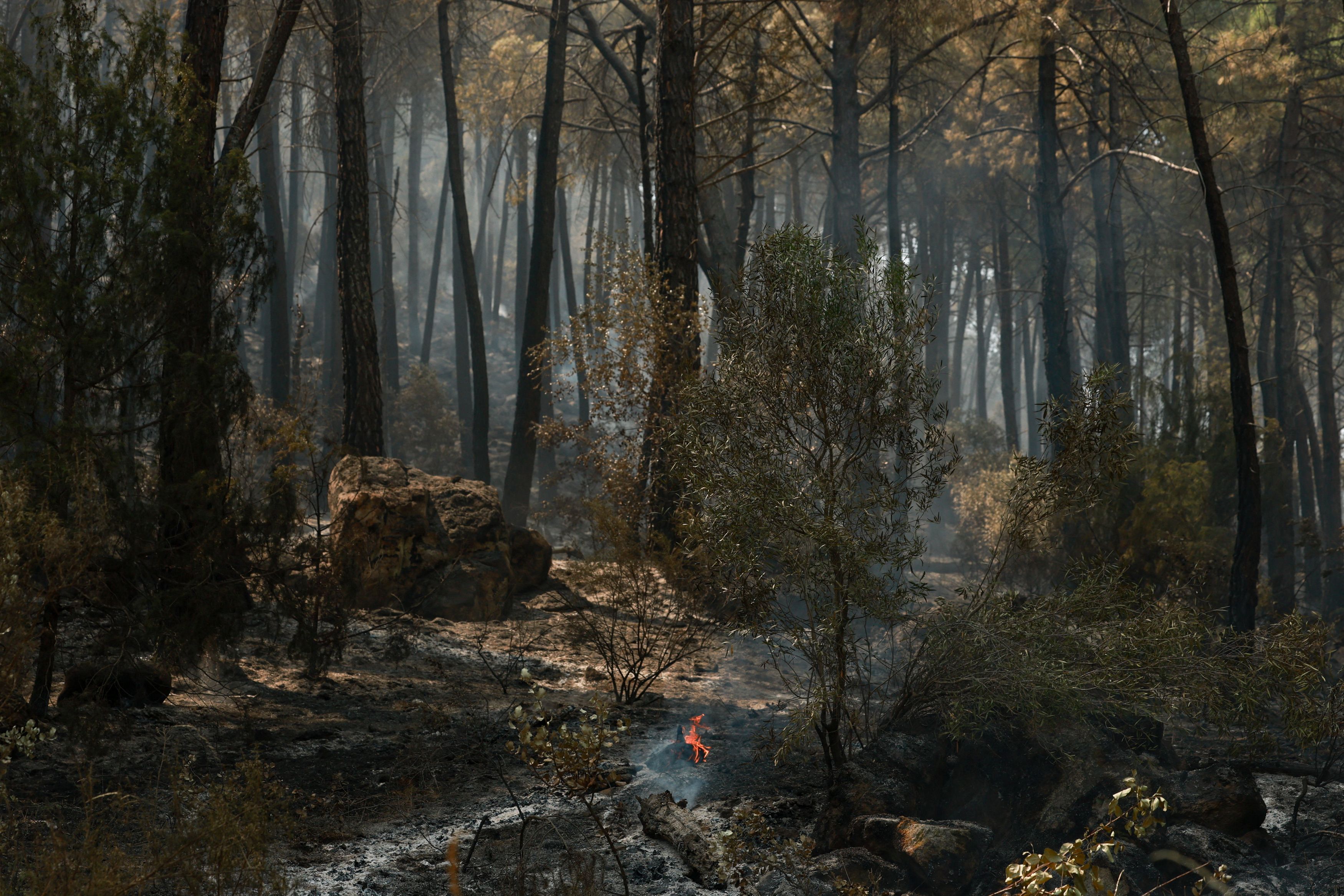
Fire restarts in the forest in the area of the of the village San Martin de Valdeiglesias, as wildfires continue to affect the provinces of Avila and Madrid, Spain, July 28, 2026. REUTERS/Violeta Santos Moura
Some parts of Europe, such as Catalonia in northeastern Spain, have as much forest cover now as they did at any time in the past 100,000 years, according to estimates by Víctor Resco de Dios, a forestry expert at the University of Lleida.
“We have a huge amount of gasoline in our forests, which is why they burn so violently. This fuel isn’t so much the trees themselves, but rather what lies beneath them—such as undergrowth, shrubs, and leaf litter,” said Resco de Dios.
The active fires near Madrid started last week as three separate fires, spread uncontrolled and eventually merged into a single megafire. The wildfires threatening Madrid carried about as much energy as 29 of the bombs dropped on Hiroshima, said Resco de Dios.
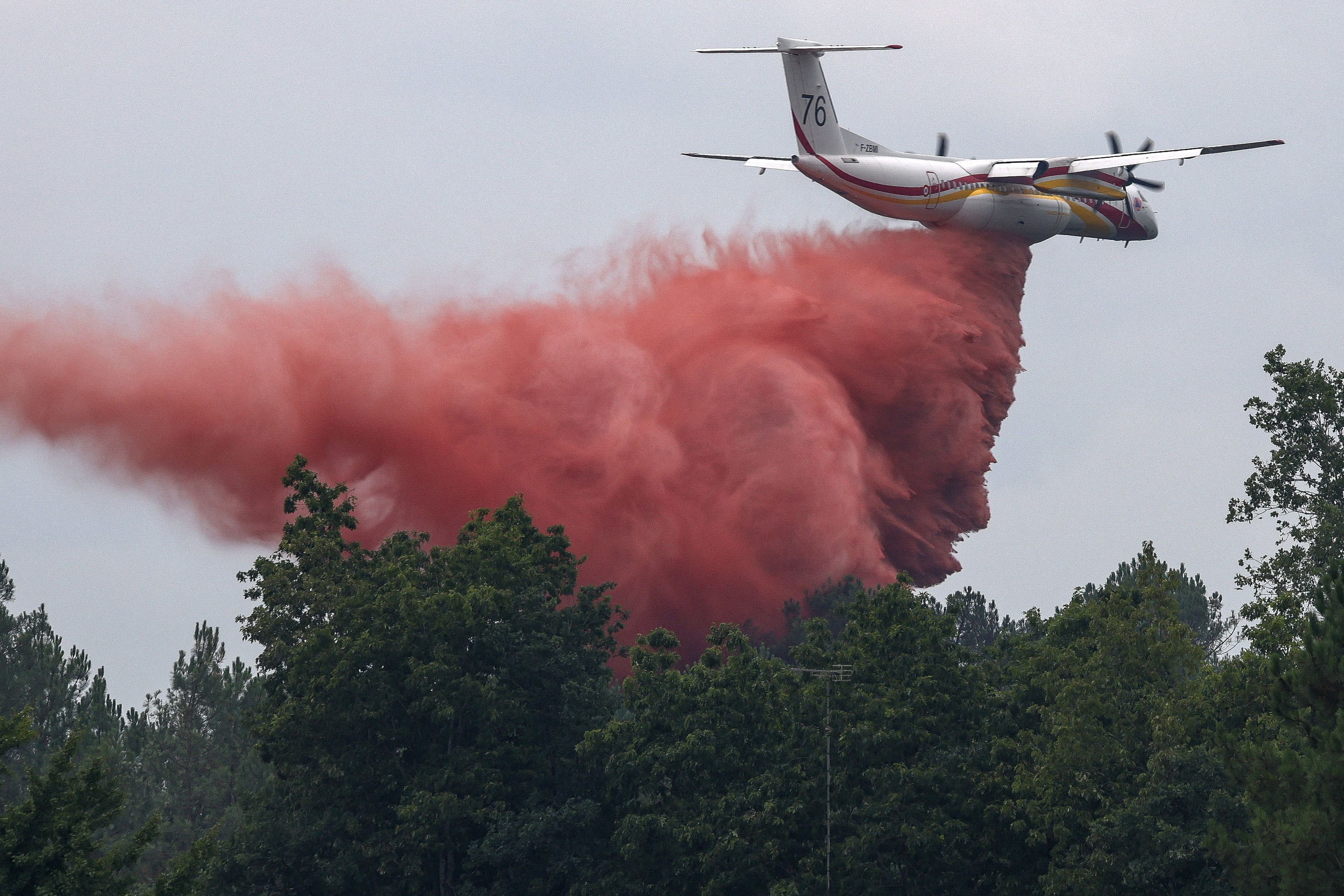
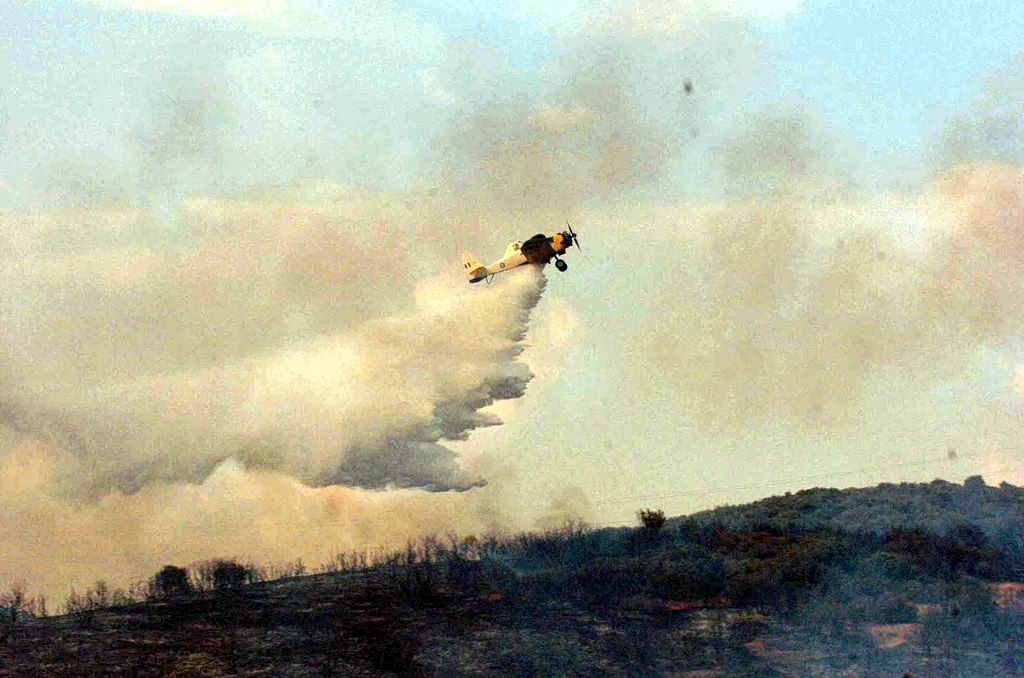
A plane drops fire retardant as efforts to battle wildfires continue amid drought conditions following a heatwave and water shortages across much of France, in Marcheprime, Gironde department, France, July 27, 2026. REUTERS/Florion Goga
Firefighters made some progress taming the flames, allowing several thousand people to return to their homes on Tuesday. But Spanish officials warned that a new heat wave and strong winds expected this week could complicate the emergency response.
“We are turning the tide and are beginning to see the light at the end of the tunnel in the fight against these fires,” Spanish Prime Minister Pedro Sánchez said on Tuesday, while cautioning that there were “complex days and hours ahead.”
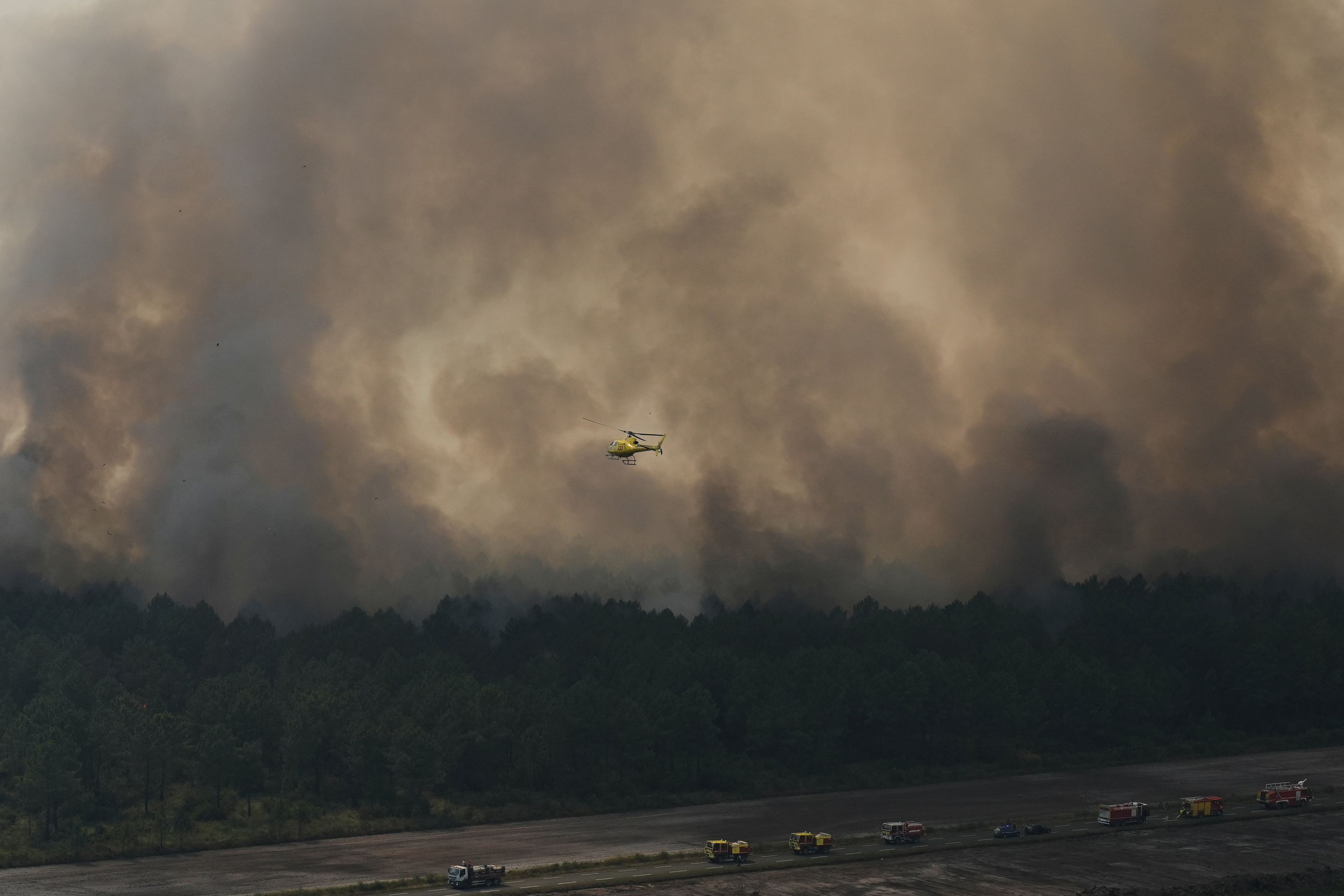
Firefighters and their fire engines line a road as they attempt to extinguish a fire burning near Ares, during wildfires in the area of southwestern France, Tuesday, July 28, 2026. Baz Ratner/Pool via REUTERS
Write to Margherita Stancati at margherita.stancati@wsj.com , Noemie Bisserbe at noemie.bisserbe@wsj.com and Ed Ballard at ed.ballard@wsj.com