 Μake us preferred on Google
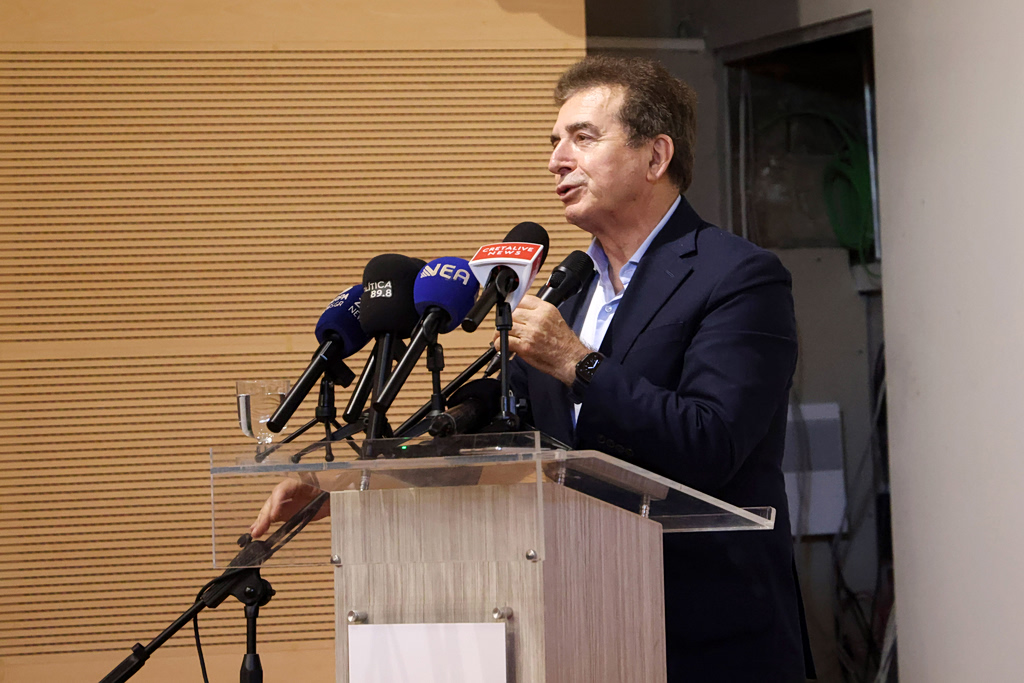
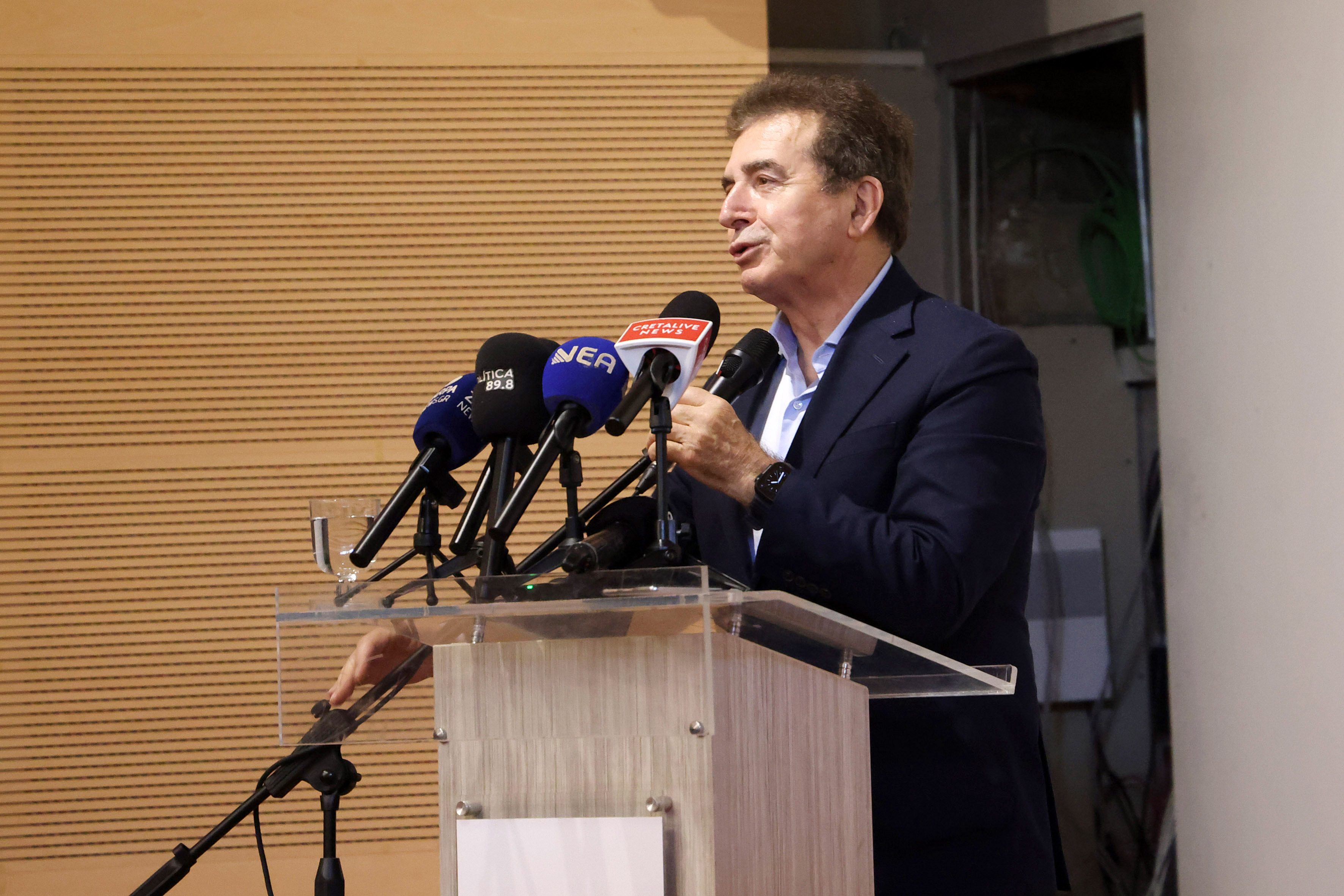
Greece’s specialized organized crime unit is preparing to bring more cases to light, Citizen Protection Minister Michalis Chrysochoidis said Thursday, adding that investigators would not rule out the involvement of public officials in criminal activity.
Speaking on ERTnews’ “At the Center” program on October 29, Chrysochoidis discussed the unit’s two-year record, its investigations into major tax fraud cases involving the Pizza Fan and Horiatiko businesses, and its efforts to tackle organized crime, violence at sporting events and other security concerns.
He said any public officials found to be involved in criminal activity would be referred to prosecutors.
Greece’s organized crime unit reports thousands of arrests
Chrysochoidis described the Directorate for Combating Organized Crime, commonly known as the “Greek FBI,” as a highly effective service modeled in part on its American counterpart. He said its creation had been a personal ambition and a central political objective.
The unit’s personnel receive specialized training and undergo annual evaluations, although they are not covered by a separate salary scale, he said.
Over its first two years, the service has dealt with 5,459 people accused of crimes, resulting in 3,254 arrests and 814 cases of pretrial detention, according to figures cited by the minister. It has also dismantled 259 criminal organizations.
Chrysochoidis said the unit’s remit extends beyond financial crime to include homicides, drug trafficking, extortion and major robberies. As an example, he cited the dismantling of an entire gang that attempted to rob a bank in Tithorea, central Greece.
Tax fraud investigations took 18 months
Addressing questions about how major tax fraud schemes involving Pizza Fan and the bakery chain Choriatiko had operated for years without detection, Chrysochoidis said the cases had been under systematic investigation for a year and a half before they were uncovered.
“An unorganized state cannot dismantle organized crime,” he said, explaining the rationale behind creating a dedicated service.
Establishing the directorate required extensive legal preparation, including the drafting of its founding framework, he added.
Public officials could face prosecution
Chrysochoidis said the investigations were conducted under prosecutorial supervision and involved dozens of investigative actions, including intercepted communications, undercover operations, accounting and financial audits, and cooperation with the relevant authorities.
He did not rule out the possibility that public officials could be implicated in the cases.
“Dozens of actions have been carried out, and some people may emerge from them,” he said, adding that anyone identified through the investigation would be referred to a prosecutor.
The minister acknowledged that criminal networks had infiltrated various public services, raising concerns about information leaks. However, he said investigators had managed to protect the operation and keep it largely confidential until its completion.
He also signaled that further developments were expected in other serious cases currently under investigation.
Minister defends police approach to public safety
Responding to criticism that the government’s law-and-order policy can lead to excessive policing, Chrysochoidis said security was a fundamental constitutional right.
He said the aim was for citizens, including young people returning home late at night, to feel safe in their neighborhoods and for everyday life to remain peaceful.
On demonstrations, he stressed that the police’s role was to protect the right to assemble, not to break up gatherings. While acknowledging that the use of tear gas and clashes were undesirable, he said officers had a duty to protect the lives of both citizens and police personnel, as well as property from groups causing damage.
Chrysochoidis expressed optimism that the upcoming anniversaries of the 1973 Athens Polytechnic uprising and the 2008 killing of teenager Alexandros Grigoropoulos would pass without violence. He said the overwhelming majority of demonstrators were peaceful, while those seeking confrontations were under close surveillance.
He also credited the legal framework and the work of the organized crime unit inside fan clubs with improvements in efforts to combat violence at sporting events.
Kasidiaris gathering exposes legal gap, minister says
Chrysochoidis also addressed a gathering held by Ilias Kasidiaris at a hotel in Thessaloniki on October 28, Greece’s national holiday commemorating its entry into World War II.
He said police had asked judicial authorities to prohibit the event, but the president of the Thessaloniki Court of First Instance ruled that there was no legal basis for banning a gathering in a privately owned, enclosed space.
“It is illegal for the police to cancel it,” Chrysochoidis said, describing the situation as a legal impasse that may require legislative action.
Police nevertheless banned all outdoor gatherings in the surrounding area to prevent clashes between opposing groups.
The minister said he agreed with those who believed the event should not have been permitted and called for a clear political and legislative solution to prevent similar situations in the future.
“The ‘Kasidiaris phenomenon,’ and all the ‘Kasidiarises,’ is very dangerous, and we risk bringing back horrific phenomena that we experienced 10 years ago,” he said, warning that authorities needed clear rules and effective tools to respond to such events.