
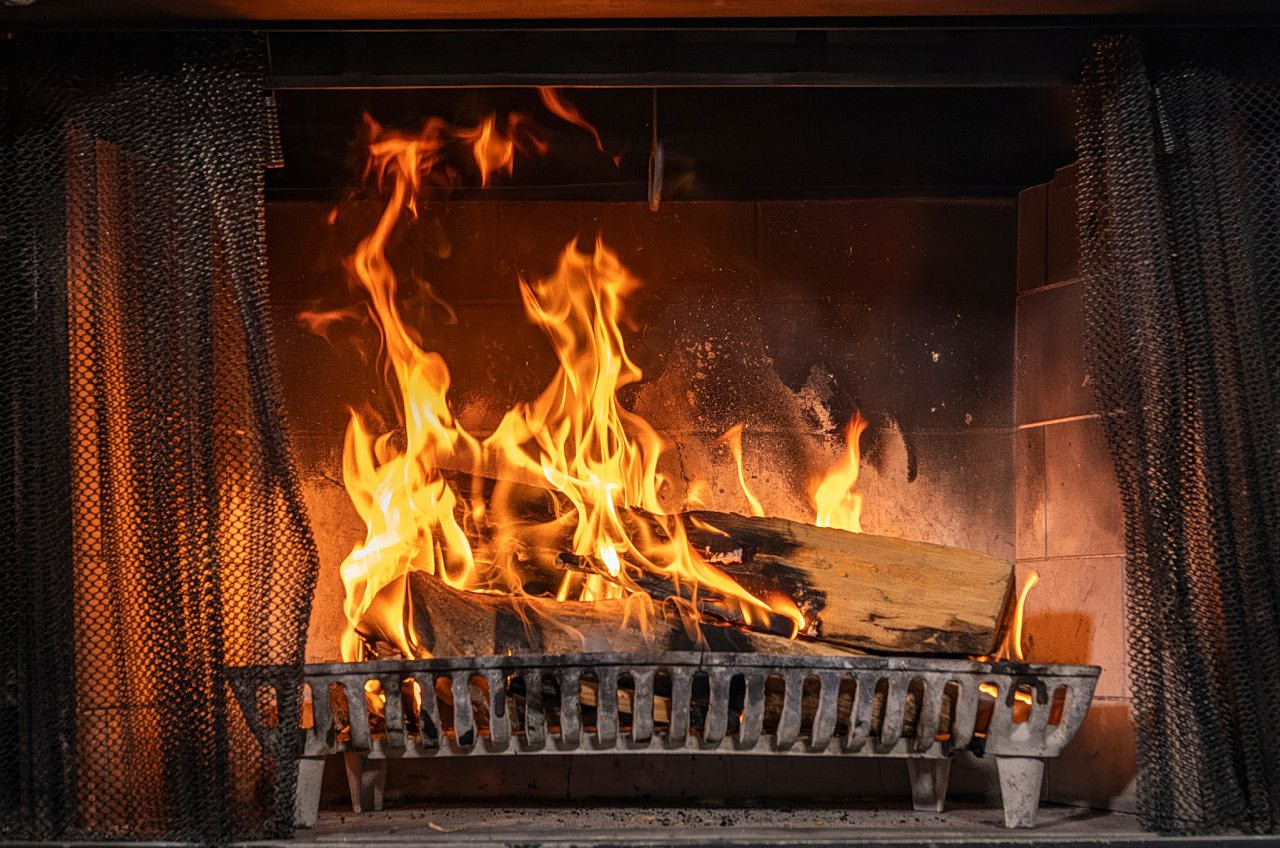
A sought-after feature in high-end homes has long been a primitive void in the heart of the great room: the wood-burning fireplace.
“There is absolutely a preference toward wood-burning fireplaces, particularly in luxury homes,” says Bill Fister, general manager at the Chimney Doctor, a Colorado chimney-inspection and fireplace-repair company.
But between tightening restrictions, the age-old labor of maintenance and homeowners with no experience at the hearth, the traditional wood-burner risks transitioning from a household staple to a high-status relic.
“Wood-burning fires are a vanishing art,” says Park City-based interior designer Kristina Lawrence. She estimates that while 90% of her clients want a wood-burning fireplace in theory, only about 50% of her projects include one. “People realize it’s a hassle, or they are simply not allowed.”
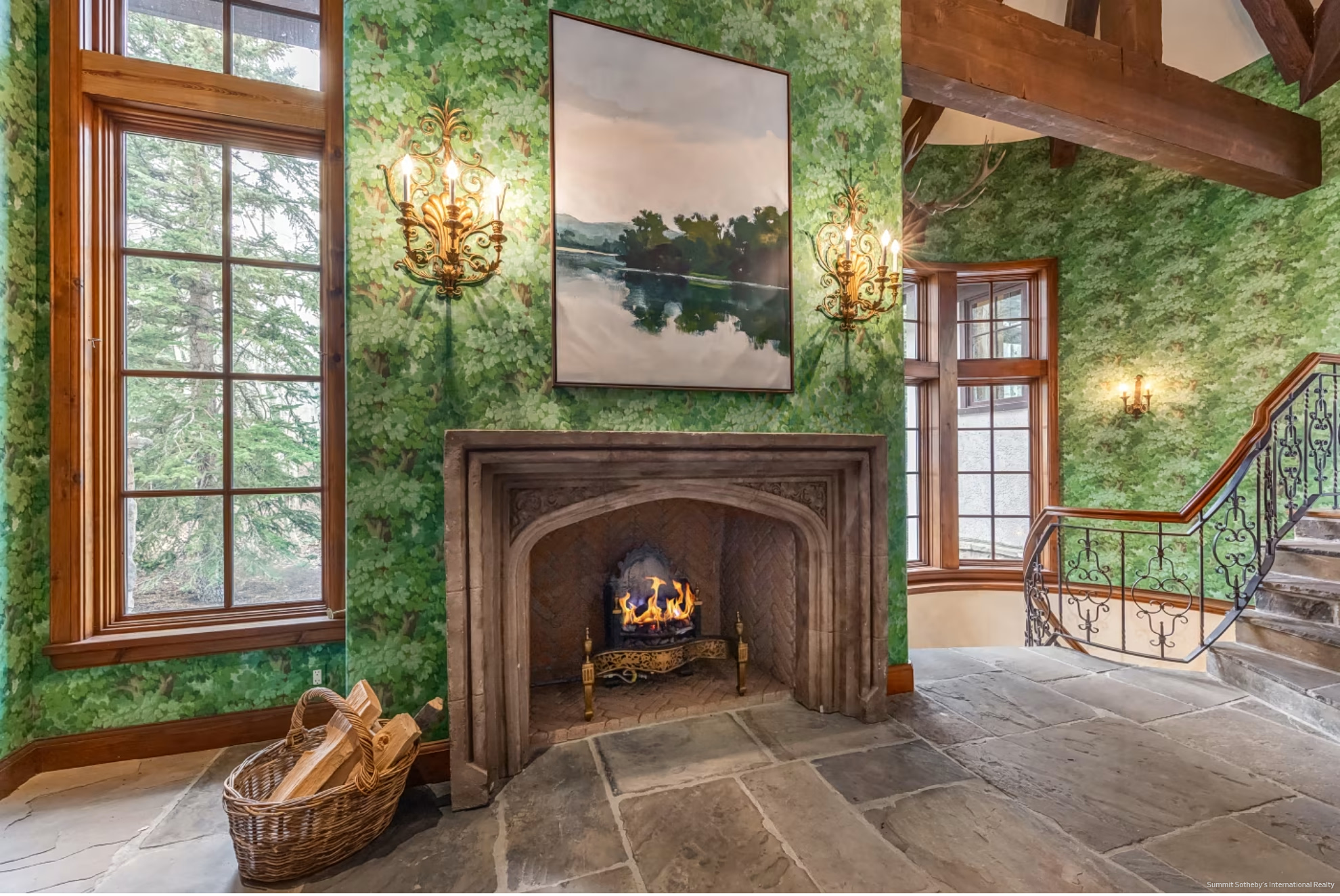
A fireplace is consistently among the most-searched amenities by home buyers nationwide, according to Zillow. But while convenience leans toward the automated ease of gas, many wealthy homeowners prefer the sensory trifecta of real fire: the scent, the rhythmic crackling and the living warmth that a faux flame simply can’t mimic. “The more high-end the property is, the more the homeowner typically wants it,” says Katherine Koriakin of Wyoming’s GYDE Architects.
Choosing a wood-burning fireplace is a lifestyle choice, says Bill Ligety of Summit Sotheby’s International Realty in Park City. “I had a client who said, ‘At night, I want a glass of red wine, I want my feet up and I want to hear the crackle of the fireplace and see the lights of the snow groomers going by,’” he says. Ligety and his business partner Abbi Martz are currently listing a $12.75 million home built in 2001 with 11 working fireplaces. Only one, in the primary bathroom, is gas-only.
Park City, Utah | Asking price: $12.75 million
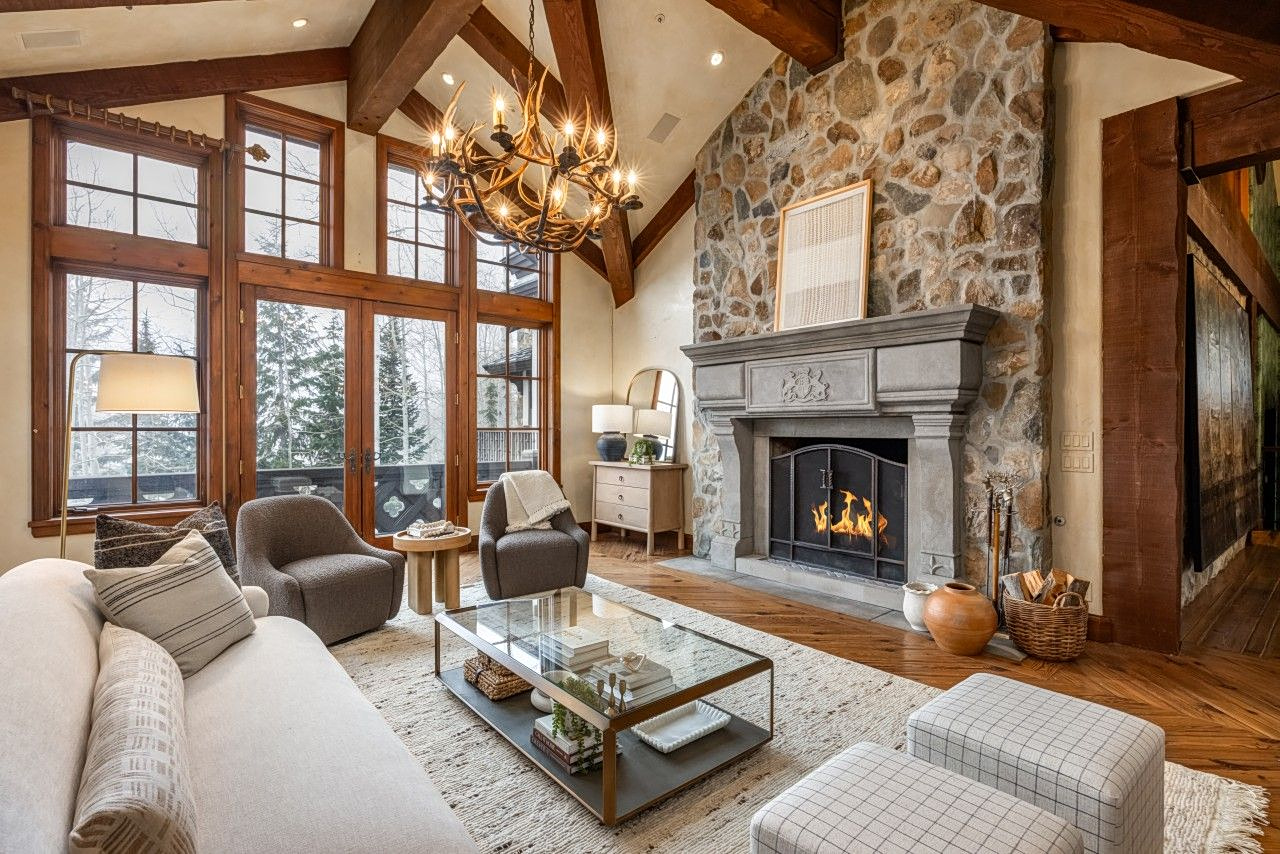
Many clients want fireplaces for sentimental reasons. “A wood-burning fireplace brings together all the elements of nostalgia,” says Martz. “A fireplace becomes a centerpiece where families gather.”
But a growing number of U.S. municipalities now prohibit wood-burning fireplaces in new construction. These regulations largely aim to mitigate the environmental and health risks arising from fine particulate matter emissions and other airborne pollutants.
In some Utah communities, Lawrence says, an existing wood-burning fireplace is grandfathered in while new installations are prohibited. That means switching to gas could result in forfeiting the wood-burning right forever. When remodeling, she says she presses wood-burning owners, “Are you sure, are you sure, are you sure you want to get rid of it?’”
Even when a wood-burner is technically permitted, construction hurdles can push homeowners toward alternatives, says Maren Baker, an Idaho interior designer. For example, finding a skilled mason in a small town can be difficult and expensive.
And once a wood-burning fireplace is built, air-quality alerts or high-fire risks can trigger temporary usage bans. “There is a possibility you may not even be able to start a fire when you want to,” Baker says.
Meanwhile, the mechanics of a hearth can be a mystery for homeowners raised in climate-controlled homes. The skills required for a successful burn—including knowledge of wood quality, structure, air flow and kindling strategies—aren’t intuitive.
The lack of skill is more than just frustrating; it’s a safety concern. Ligety recalls an instance where a Park City client’s three-level townhome burned to the ground after renters mismanaged a fire. “People who don’t know how to use a wood-burning fireplace can get carried away,” he says. “They start off with a little fire, they think, ‘Let’s throw on a few more logs.’ Then it gets out of control.”
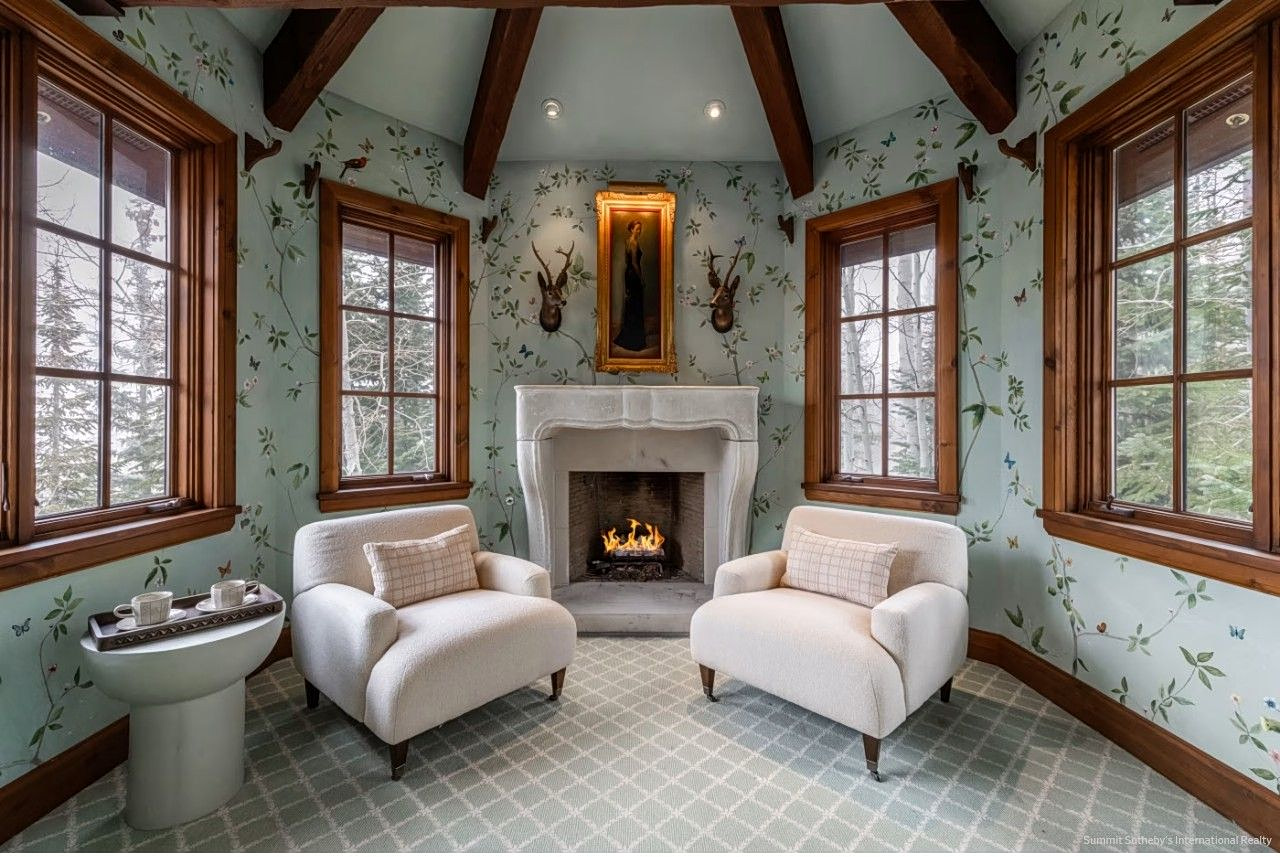
While many owners want a wood-burner in theory, they rarely want the work. The romantic image of the homeowner chopping wood often collapses under the practical reality of soot, ash and spiders in the wood pile, Lawrence says.
“It’s totally about the cozy ambience,” she says. “No one has ever said to me, ‘I want to chop my wood, light my fire and clean out all those ashes.”
A popular compromise is the gas starter, which helps a homeowner to ignite real logs. In areas where wood-burners are banned, some install high-tech water-vapor units that use water, mist and lights to mimic the visual of fire without the smoke.
But in the most exclusive tier of the market, fireplace labor is simply outsourced as a concierge service. Lawrence says many of her clients have their property managers bring in wood, stack it properly in the fireplace and clean up afterward.
In Utah, at Deer Valley’s Stein Eriksen Lodge, for instance, unit owners and guests can enjoy a real fire without lifting a finger. As a complimentary service, bell staff can be dispatched to place the kindling and light the match. They then depart, leaving behind the heat, crackle and aroma. Fire’s out? Housekeeping handles the cleanup, of course.
Write to Jessica Flint at Jessica.Flint@wsj.com