While the artillery rhythms of Ukraine consume the world’s headlines, the collapse of Gaza’s skyline, whispers of war over Taiwan and an actual conflict in the wider Middle East, a quieter and more decisive frontier is forming, slowly, almost invisibly, at the top of the world. It is not framed in the conventional language of […]
As Greece confronts demographic decline and regional instability, it holds an underutilized opportunity with immense cultural and geopolitical implications across the Levant
Politics’ basic instinct continues to lead it to perpetually reproduce client networks which (it believes) secure it an archaic legitimacy through lawlessness.
Yesterday was the tenth anniversary of the controversial 2015 referendum
Greek-French philosopher Cornelius Castoriadis wrote that a society exists only insofar as it creates for itself a world of meanings. Institutions are not merely structures; they are sustained fictions—real only as long as people believe in them. By that measure, the world order has already ceased to exist.
By leveraging diasporic geopolitics, rising powers such as China, India, and Turkey have managed to enhance their geopolitical strategies and expand their sphere of influence. Greece is lagging in this area of government efficiency.
As if handing out subsidies to creatures like that wasn’t bad enough, they were stealing them, too
This op-ed is part of To BHMA International Edition’s NextGen Corner, a platform for fresh voices on the defining issues of our time
When we shake the sand from our towels and leave the beach behind, nothing in the world will have changed. The loneliness, the digitized interactions, the frictionless yet faceless convenience—they’ll all still be waiting
The UN Charter was signed, on 26 June 1945 in San Francisco, and was supposed to mark the start of a new era after the death and destruction of World War II.
This opinion piece is part of To BHMA International Edition’s NextGen Corner, a platform for fresh voices on the defining issues of our time
Tempi still has its audience; it may be smaller than it once was, but it's still out there
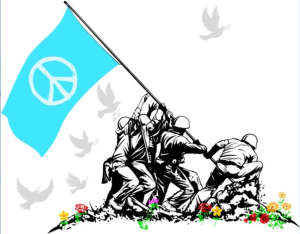
In the smoke and shrapnel of the war now raging between Israel and Iran, the world confronts more than a regional conflagration. This is no mere border skirmish or tit-for-tat exchange. It is the violent eruption of a long-brewing storm—one that signals the collapse of a global framework once held together by diplomacy, deterrence, and […]
This opinion piece is part of To BHMA International Edition’s NextGen Corner, a platform for fresh voices on the defining issues of our time.
Starting a war is easy. Silencing the guns again is far more difficult. This sobering truth runs like a red thread through today’s global conflict zones. In Gaza, Ukraine, Sudan - and now in the war between Israel and Iran - diplomacy is proving incapable of ending open hostilities through peaceful means.
This opinion piece on UNOC 3 is part of To BHMA International Edition’s NextGen Corner, a platform for fresh voices on the defining issues of our time.
If Turkey has decided to make life difficult for us, there’s an excellent way to respond: by making life difficult for Turkey, too.
The Laboratory for the Study of the Greek Language at The Ohio State University has launched p.GLOS, an open-access publication series hosted by OSU’s Knowledge Bank. The series features scholarly works on any period or aspect of the Greek language, from its prehistoric roots to modern usage, embracing both theoretical and pedagogical approaches.
This op-ed is part of To BHMA International Edition’s NextGen Corner, a platform for fresh voices on the defining issues of our time.