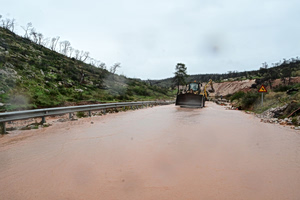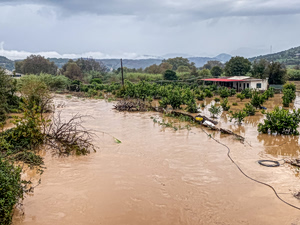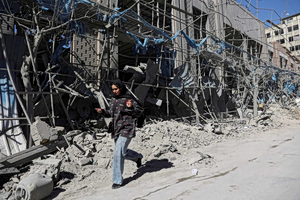

A rare and violent tornado swept through the northern Greek city of Alexandroupoli late on Saturday, causing extensive damage to homes, businesses and public infrastructure, while narrowly avoiding loss of life. Wind gusts reached speeds of up to 130 kilometers per hour, according to officials.
Euthymios Lekkas, head of Greece’s Earthquake Planning and Protection Organization and a professor of geology, said the phenomenon was intensified by the climate crisis, which has made extreme weather events more frequent, intense and long-lasting. Speaking to public broadcaster ERTnews, Lekkas explained that the tornado formed due to the convergence of different air masses and strong atmospheric instability, with conditions further amplified by the marine environment of the northern Aegean Sea.
He noted that winds originating from central Aegean areas gained additional strength over nearby islands before hitting the urban fabric of Alexandroupoli, creating powerful vortices within the city. Gusts reportedly reached force 12 on the Beaufort scale, uprooting trees and turning large objects into dangerous projectiles.
Lekkas stressed that while such phenomena are not entirely new to the region, their growing intensity poses serious risks, particularly in densely built urban areas. He called for updated, localized civil protection planning to address not only extreme weather, but also other natural hazards.
Alexandroupoli Mayor Giannis Zamboukis confirmed severe damage across the city, including the uprooting of a majority of trees in some areas and significant destruction at the local airport, where training aircraft were overturned. Dozens of compensation claims have already been filed, as the municipality moves to declare a state of emergency and continues damage assessments.