 Μake us preferred on Google
 The Independent Power Transmission Operator of Greece (IPTO) has completed the construction phase of the southern Cyclades electricity interconnection, a major infrastructure project integrating the islands of Santorini, Folegandros, Milos, and Serifos into the mainland power system via Attica.
This marks the fourth and final stage of the broader Cyclades interconnection project. Since 2018, several islands—including Paros, Mykonos, Syros, and Naxos—have already been directly linked to the high-voltage grid, while submarine cable links between Evia–Andros and Andros–Tinos have also been upgraded as part of the same phased expansion.
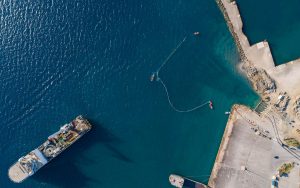
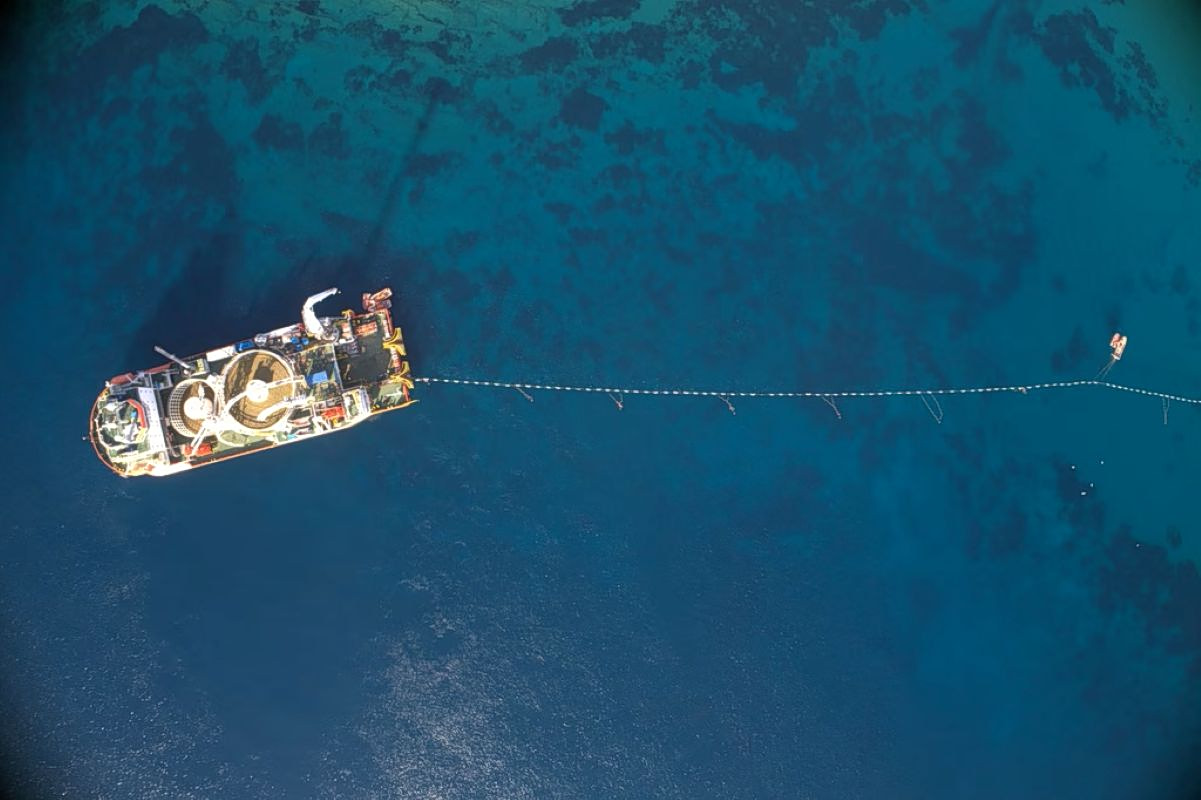
The southern Cyclades interconnection spans around 294 kilometres of 150 kV submarine and underground cables, laid in places at depths exceeding 500 metres. IPTO also built four fully digital GIS substations to link the transmission system with local island networks, alongside a Static Var Compensator (SVC) on Santorini to enhance voltage stability during peak demand.
Valued at 385.7 million euros, the project is now in its final testing and commissioning phase after construction completion, and is seen as a key step in strengthening the islands’ energy security, particularly during the high-demand summer tourism season.
The new transmission lines will be gradually integrated into Greece’s national electricity grid, starting with Santorini, in order to ensure operational stability during the rollout and to accommodate ongoing seasonal demand pressures. Full energization of the entire interconnection is expected within the coming months.
By linking the Cyclades more closely to the mainland grid, the project effectively ends the long-standing energy isolation of several islands. It is expected to support more sustainable development and enhance the region’s tourism capacity, while also delivering significant environmental benefits through the gradual decommissioning of oil-fired local power plants.
The resulting reduction in CO₂ emissions, along with lower system-wide costs—including reduced Public Service Obligation charges—will ultimately benefit consumers across Greece.