 Μake us preferred on Google
 Several ancient pyramidal structures scattered throughout Greece, something very rare in the rest of Europe, continue to intrigue researchers despite decades of study. Unlike the colossal and renowned pyramids of Egypt, these remnants of these monuments differ in form and purpose, yet remain shrouded in mystery, with scholars divided over their origins, age and function.
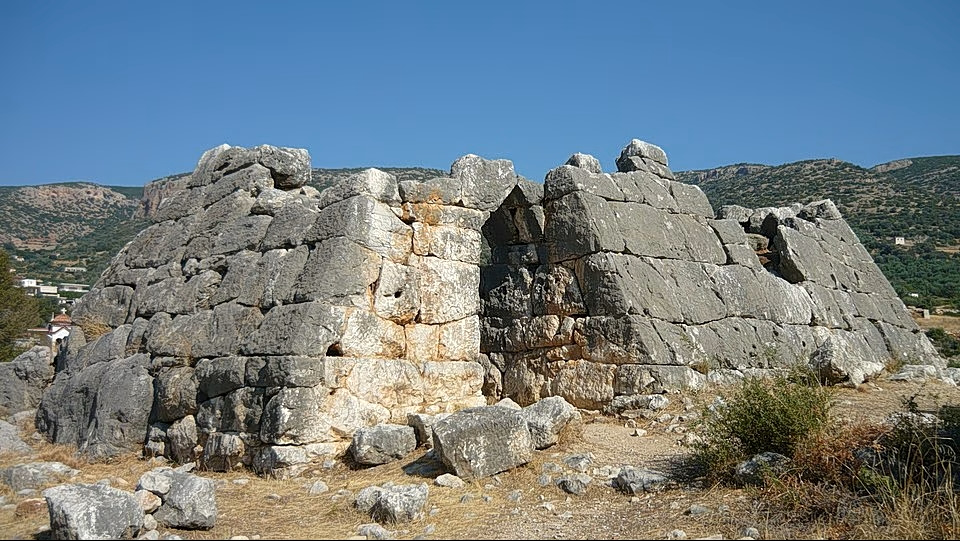
One of the most notable examples, the Pyramid of Elliniko, stands in the Argolis plain (today’s Argolida prefecture in the southern Peloponnese province) near the village of Elliniko, along an ancient route that once connected ancient Argos with the settlement of Tegea in nearby Arcadia. The surrounding area of Kefalari is known for its lush landscape and historical landmarks, adding to the monument’s significance.
References to the structure date back to antiquity. The ancient Greek traveler Pausanias described a pyramid-like structure adorned with carved shields, linking it to a legendary battle between mythical Proetus and Acrisius. According to his account, the site may have served as a communal burial place for fallen warriors.
However, the monument’s dating remains highly contested.
In 1991, a research team led by Prof. Ioannis Liritzis applied an innovative dating method, concluding that the structure could date back to the mid-to-late 3rd millennium BC—potentially making it older than previously believed and even rivaling early Egyptian pyramids.
These findings sparked strong reactions within the academic community. Classicist Mary Lefkowitz challenged the conclusions, suggesting that the analyzed materials may have been reused from older buildings and that earlier archaeological research had been overlooked. Liritzis, in turn, defended his methodology, arguing that it had been misinterpreted.
Further skepticism has been expressed by archaeologist Adamantios Sampson, who maintains that the structure was built atop earlier foundations from the early Helladic period and should, instead, be dated to the Classical or Late Classical era based on its masonry.
Despite ongoing research, the original purpose of such pyramid-like constructions remains uncertain. Theories range from their use as signal towers and temples to funerary monuments or even astronomical observatories.
Today, the Pyramid of Elliniko remains largely unknown to the wider public and exposed to gradual decay, as calls grow among experts for further study and preservation of one of Greece’s most enigmatic archaeological sites.