 Μake us preferred on Google
 The music of the FIFA World Cup tells a story of cultural shifts, commercial ambition, and global superstardom. But how did the tournament evolve from El Rock del Mundial in Chile in 1962—the first official World Cup song—to Shakira’s record-shattering Waka Waka (This Time for Africa) in 2010, a phenomenon that has surpassed four billion views and sold more than 15 million copies worldwide?
For the first six World Cups, from 1930 to 1958, FIFA focused almost exclusively on sporting and organizational matters. Entertainment played little role. That changed after the success of the first official Olympic anthem at the 1960 Rome Olympics, which demonstrated the potential of linking live sporting drama with the music industry.
The breakthrough came in Chile in 1962, when Los Ramblers released the energetic rock ’n’ roll anthem El Rock del Mundial, the first official song in World Cup history. Four years later, England’s tournament introduced World Cup Willie by Lonnie Donegan, named after the lion mascot that became the first official World Cup mascot.
Mexico 1970, won by Pelé’s legendary Brazil, embraced local flavor through Fútbol México 70, while West Germany 1974 featured Fußball ist unser Leben (“Football Is Our Life”), performed by the German national team itself before lifting the trophy.
In Argentina 1978, FIFA commissioned renowned composer Ennio Morricone, whose orchestral piece El Mundial was performed by the Buenos Aires Symphony Orchestra. Spain 1982 added classical prestige through Plácido Domingo’s Mundial ’82, while Mexico 1986—the World Cup of Diego Maradona—was accompanied by Arrow’s upbeat El Mundo Unido Por Un Balón.
A turning point arrived in Italy in 1990. Un’estate Italiana (Notti Magiche), composed by Giorgio Moroder and performed by Edoardo Bennato and Gianna Nannini, redefined what a World Cup song could be. The momentum continued in France 1998, where Ricky Martin’s La Copa de la Vida (The Cup of Life) transformed the genre and firmly connected the tournament to global pop culture.
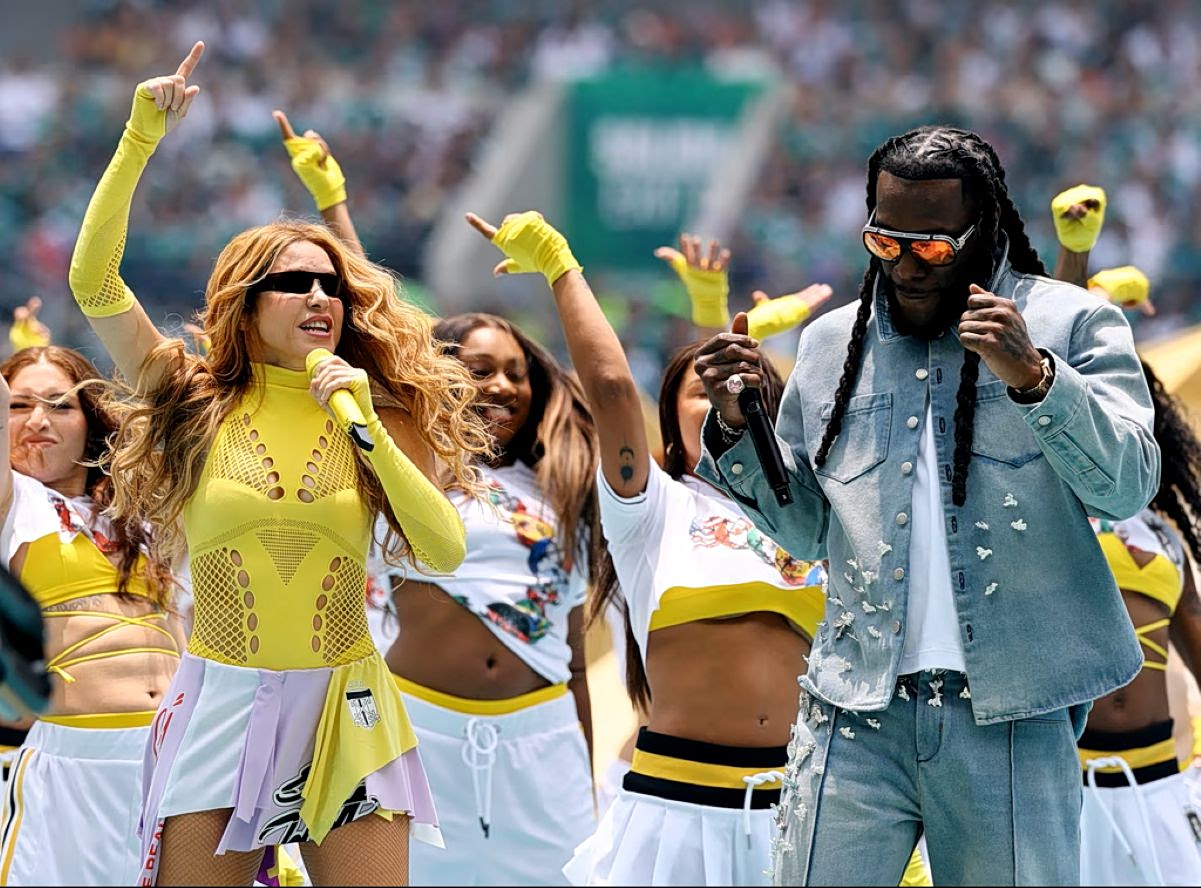
The 2000s elevated that formula. Vangelis provided the memorable official anthem for the 2002 World Cup, while Shakira stole the spotlight in Germany 2006 with Hips Don’t Lie. Four years later, she cemented her place in football history with Waka Waka, creating the most successful World Cup song ever and proving that football’s soundtrack could become as iconic as the tournament itself.