
 Μake us preferred on Google
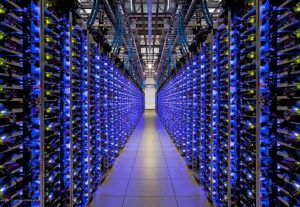
 Against the backdrop of steadily rising demand for digital infrastructure, as well as Greece’s strategic ambition to establish itself as a regional hub for technology and data, procedures for large-scale investments in the data center sector are beginning to accelerate. In this context, another step has been taken in Eastern Attica, as the Region of Attica recently gave the green light for the development of a major data center.
More specifically, the Regional Council issued a positive opinion on the Environmental Impact Assessment of a project with an initial budget of approximately €300 million. The project concerns the Olive Data Center, to be developed on a 6.23 hectares site in the Municipality of Spata–Artemida by the company GRECO MI.
An integrated data center ecosystem
The facility is not being treated as an isolated piece of infrastructure, but as part of a broader network of installations that will form Greece’s emerging data center “ecosystem,” creating a unified system for data storage and processing. At the same time, other similar investments are being recorded in the wider area, at various stages of development.
According to the study reviewed by the Region of Attica, total investment interest in data centers in Attica alone is approaching €1 billion, clearly reflecting the strong interest of international technology giants in investing in Greece.
Investments in Eastern Attica
Within this rapidly developing landscape, a standout project is the Hermes–B data center by French company DATA4 in Paiania, which forms part of a broader data center development plan in Eastern Attica. The investment amounts to €300 million and, in its second phase, could reach €500 million. The project is being developed on a site of more than 75 stremmas and предусматриes the creation of three data centers with a combined capacity of 90 MW, with completion targeted for early 2027.
At the same time, Microsoft’s data center investment is also at an advanced stage. It is being developed within the “Petra Gyalou-Voulia-Prokalisi” Business Park in the Municipality of Spata–Artemida and forms part of the approved strategic investment plan titled “Investment in Data Centers in Greece” under the Special Spatial Development Plan for Strategic Investments (ESCHASE). This data center will be part of a broader complex of approximately 85 stremmas planned by Microsoft in Eastern Attica, with a total capacity of 25 MW and a completion target of 2028.
In the same geographic corridor, other major investments are also taking shape, such as “Data in Scale,” a joint venture between UAE-based DAMAC (55%) and Greece’s Public Power Corporation (PPC/DEI) (45%). The first phase of the investment, worth €150 million, includes infrastructure with a capacity of 12.5 MW, with the potential to expand to 25 MW. In Attica, the U.S.-based Digital Realty is also active, already operating three data centers in the region and one more in Crete.
The energy challenge of data centers
However, this explosive expansion of data centers, combined with the rapid growth of artificial intelligence and the digital economy, is creating unprecedented demand for electricity. Today, the total installed capacity of data centers in Greece is estimated at only a few dozen megawatts. If the investment plans currently underway or in the pipeline are implemented, this capacity is expected to multiply, exceeding 1 GW before the end of the decade.
“Behind the meter”: the strategic response
Faced with this new reality, the key challenge is adapting without placing further strain on Greece’s already pressured electricity grid. To this end, the government’s energy team is promoting the development of large, energy-autonomous infrastructures that will operate “behind the meter,” such as PPC’s planned investment in Western Macedonia.
There, PPC is designing a 300 MW Mega Data Center, with the potential to expand into a 1,000 MW Giga Data Center. The project is expected to meet its energy needs through local clean energy production, without direct reliance on the national power system. The company is already in discussions with hyperscalers, as a binding agreement must be secured before the investment can proceed.
The main advantage of the “behind the meter” approach is that it does not burden the national electricity system, as it does not require new transmission lines, substations, or costly upgrades. At the same time, it allows for the utilization of surplus green energy, which is currently often curtailed due to grid constraints.
The water-intensive nature of data centers
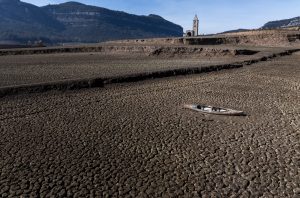
Beyond their high energy consumption, data centers are also highly water-intensive. In this context, Greece’s water utility EYDAP is planning, through the major upgrade project “Psytalia 3.0,” to produce significant quantities of recycled water for industrial use. A large data center can consume anywhere from hundreds of thousands to several million cubic meters of water per year, particularly in warm climates such as Greece’s, as water is mainly used to cool servers through cooling towers and evaporative systems.
Local opposition and appeals to the Council of State
In any case, the development of data centers has not proceeded without tension. The major challenges associated with their installation have already triggered reactions from local communities. Residents and local organizations in Eastern Attica have filed appeals with the Council of State, calling primarily for the preparation of cumulative impact studies assessing the combined effects of the planned facilities, as well as an evaluation of the carrying capacity of the wider area.
At the same time, they have raised concerns about continuous noise, impacts on the local microclimate, increased consumption of energy and water, and fragmented licensing procedures which, they argue, bypass institutional consultation and undermine quality of life.
Source: OT