 Μake us preferred on Google
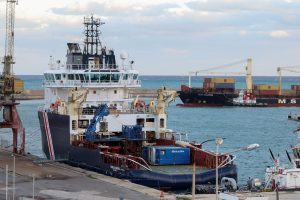
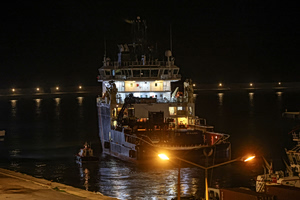
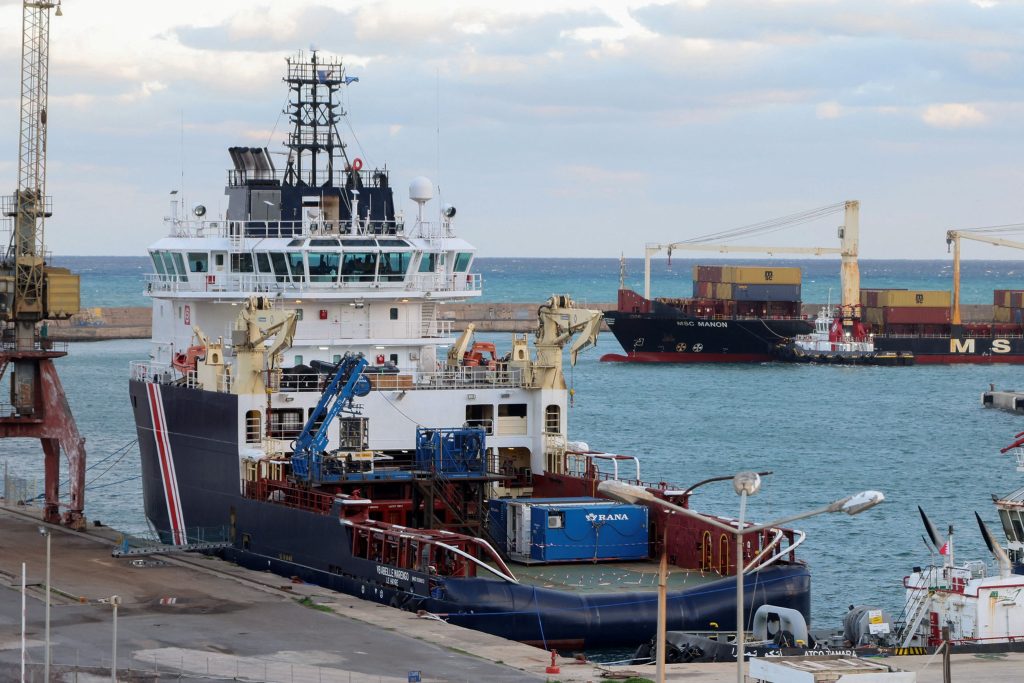
Greek Foreign Minister George Gerapetritis met with opposition party leaders on Saturday, Nov. 14, amid mounting political scrutiny of the government’s handling of the electricity interconnection between Greece and Cyprus and Turkey’s objections to maritime surveys associated with the project. The meetings at the Foreign Ministry came as the French vessel Abeille Marengo continued survey operations in international waters for the Great Sea Interconnector, a planned undersea electricity cable linking Greece and Cyprus.
The discussions focused on a diplomatic note sent by France to Ankara last week, informing Turkish authorities of the planned operations. Although the communication explicitly stated that it was not a request for permission, opposition leaders questioned why Turkey had been notified at all and what implications that might have for future maritime activities.
Several called for greater transparency and assurances that the project would proceed without compromising Greek and Cypriot sovereign rights. One opposition leader refused to attend his scheduled meeting, dismissing the consultations as a publicity exercise.
PASOK Warns of a Dangerous Precedent
PASOK leader Nikos Androulakis, the first opposition leader to meet with Gerapetritis, acknowledged the project’s importance to Greece and the European Union but questioned the decision to notify Turkey. He described the interconnection as a project of considerable geopolitical and energy significance, while warning that the diplomatic handling of the surveys could have consequences beyond the immediate operation. “International law does not require a third country to notify Turkey, and doing so risks setting a damaging political precedent,” Androulakis said. “What will happen from now on with similar projects or marine scientific research in the Aegean and eastern Mediterranean?” the PASOK leader asked.
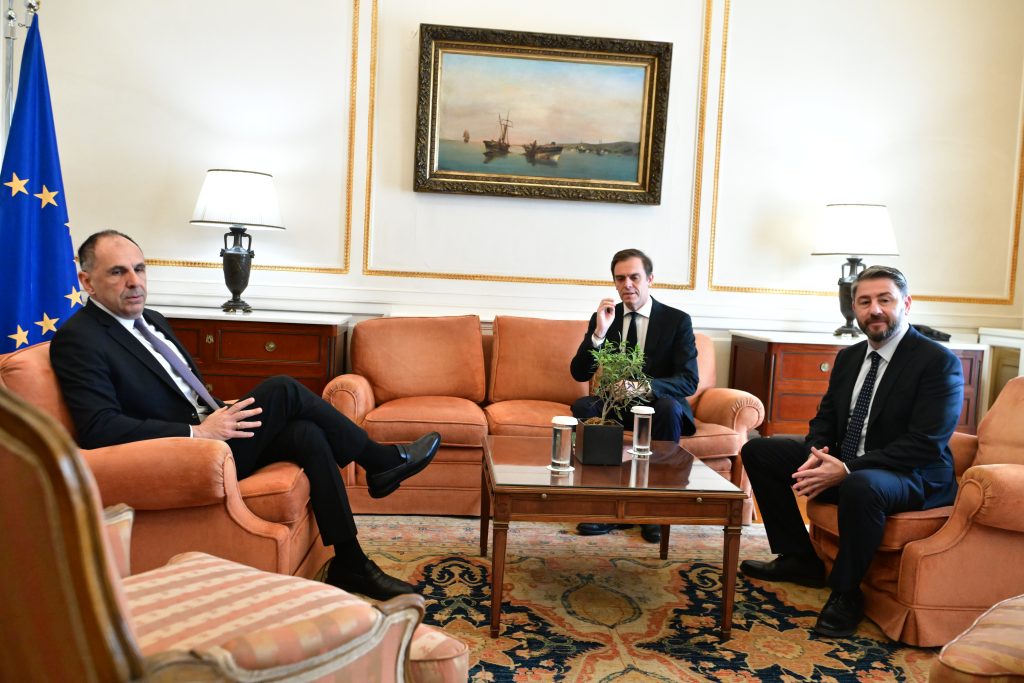
Foreign Minister George Gerapetritis (left) meets with PASOK leader Nikos Androulakis (right) at the Foreign Ministry in Athens on Saturday, Nov. 14, 2026, as part of a series of briefings with opposition leaders on the Greece-Cyprus electricity interconnection project and the government’s diplomatic handling of the dispute. (Tatiana Bolari/Eurokinissi)
The French note was sent after the project had received authorization from Greece and Cyprus. It described the notification to Ankara as a diplomatic courtesy, not a request for permission. Turkey subsequently issued its own maritime notice and told the French vessel it had Ankara’s consent to proceed, although the surveys were being conducted under Greek authorization. The distinction has become a point of contention, with opposition leaders questioning whether notifying Turkey, regardless of the wording, could establish an unwelcome precedent.
Androulakis said the Greek government and the European Union must ensure that the cable project is completed with full respect for the sovereign rights of Greece and Cyprus.
He also welcomed the decision to brief opposition leaders. After the meeting, Androulakis and PASOK lawmaker Dimitris Mantzos declined to discuss the confidential details of their conversation with the foreign minister.
Communist Party Leader Criticizes Wider Regional Strategy
Dimitris Koutsoumbas, general secretary of the Communist Party of Greece (KKE), went further, opposing both the notification to Turkey and the project itself, which his party views as part of a broader contest involving major economic interests. “All signs point to extensive bargaining over our country’s sovereign rights,” Koutsoumbas said after meeting Gerapetritis.
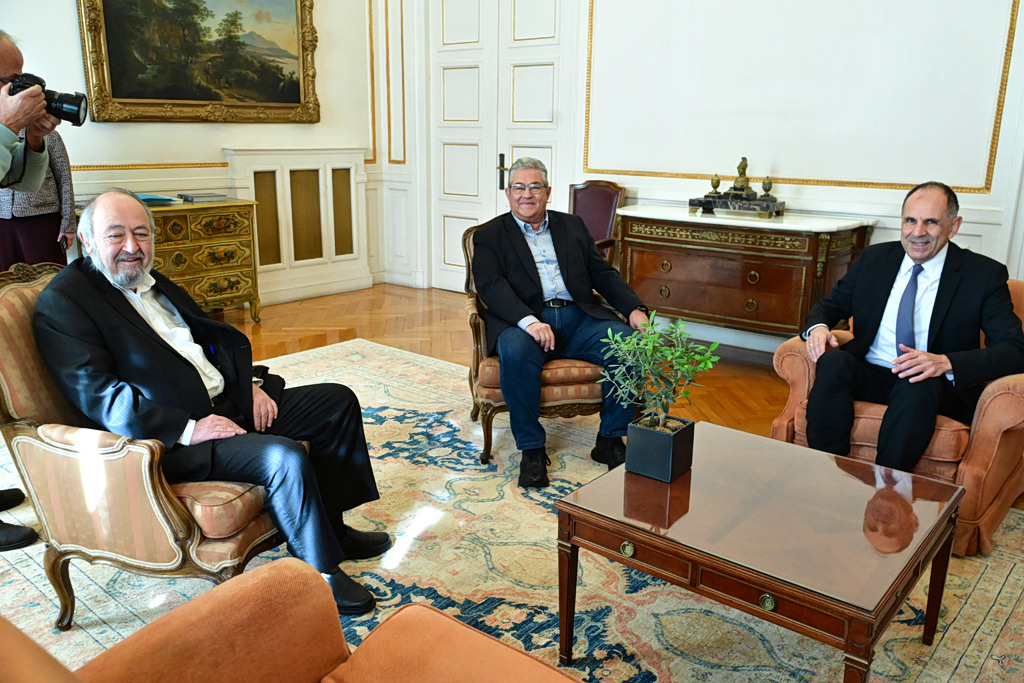
Foreign Minister George Gerapetritis (right) meets with Communist Party (KKE) leader Dimitris Koutsoumbas (center) at the Foreign Ministry in Athens on Saturday, Nov. 14, 2026, as part of a series of briefings on the Greece-Cyprus electricity interconnection project and the government’s diplomatic handling of the dispute. (Tatiana Bolari/Eurokinissi)
The Communist Party general secretary argued that the French diplomatic note allowed Turkey to assert jurisdiction over an area of the Greek continental shelf and accused the government of downplaying the implications.
Koutsoumbas also warned that competition among economic and geopolitical interests could deepen tensions and increase the risk of military conflict in the Mediterranean.
He told reporters that he had been informed about the communication received by the Greek Foreign Ministry from the French side but did not discuss the note’s precise wording.
Opposition Calls for Transparency and Caution
Rena Dourou, parliamentary group leader for SYRIZA, demanded that the government release the French diplomatic note, arguing that citizens were entitled to know how the issue had been handled. She said SYRIZA would not give the governing New Democracy party a blank check on matters involving sovereign rights. She noted that excerpts of the French communication had already appeared in the media and insisted that the full document should be made public. “All of us, and above all the citizens, must know,” she said.
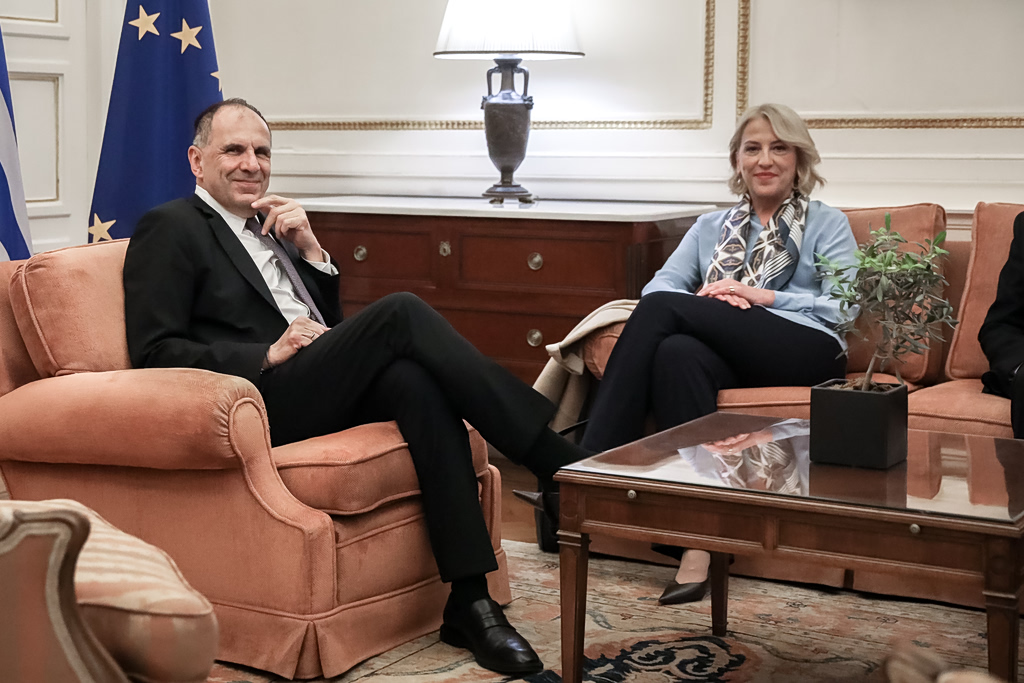
Foreign Minister George Gerapetritis (left) meets with SYRIZA parliamentary leader Rena Dourou at the Foreign Ministry in Athens on Saturday, Nov. 14, 2026, as part of a series of briefings with opposition figures on the Greece-Cyprus electricity interconnection project and the government’s diplomatic handling of the dispute. (Tatiana Bolari/Eurokinissi)
Dourou also renewed a call for a meeting of political party leaders, pointing to Turkey’s continued promotion of its “Blue Homeland” doctrine, which asserts expansive Turkish maritime claims in the Aegean and eastern Mediterranean.
Zoe Konstantopoulou, leader of Plefsi Eleftherias, also welcomed the briefing but warned against complacency in responding to Turkey’s actions. Konstantopoulou said she had raised several questions during her meeting with Gerapetritis and received answers. Nevertheless, she argued that Greece needed to remain vigilant and avoid ambiguity in its diplomatic language. “Every word counts, every formulation carries weight, and hesitation or ambiguity is neither acceptable nor forgivable,” she said. Konstantopoulou accused Turkey of pursuing a longstanding strategy of asserting its claims through unilateral actions, stressing that Greece must not make concessions on matters of sovereignty or sovereign rights.
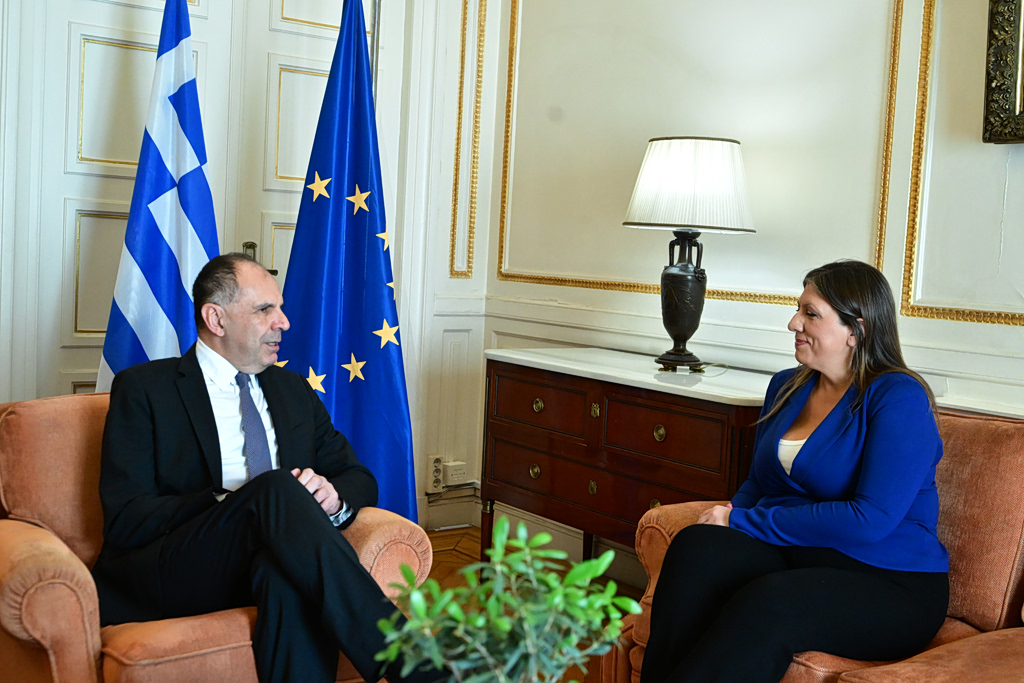
Foreign Minister George Gerapetritis (left) meets with Freedom Sailing party leader Zoe Konstantopoulou at the Foreign Ministry in Athens on Saturday, Nov. 14, 2026, as part of a series of briefings with opposition leaders on the Greece-Cyprus electricity interconnection project and the government’s diplomatic handling of the dispute. (Tatiana Bolari/Eurokinissi)
Kyriakos Velopoulos, head of the populist far-right Elliniki Lysi party, refused to attend his scheduled meeting, dismissing the process as a publicity exercise. In a statement, the party dismissed the meetings as a political stunt, accusing the government of failing to provide meaningful information on an important national issue.
Gerapetritis Says Surveys Will Continue Under Greek Authorization
Following the meetings, Gerapetritis reiterated that the French vessel was conducting its surveys with Greek authorization. “The French survey vessel is in international waters and is continuing its survey work solely on the basis of Greek authorization and the Greek NAVTEX,” he said.
The foreign minister did not announce any change to the project’s arrangements.
The surveys are expected to continue for several months, with the vessel eventually moving into waters off Cyprus.
Source: TO BHMA, in.gr