 Μake us preferred on Google
With the recent story of I Mouria still fresh in my mind, and the debate surrounding Greece’s cultural heritage—and the importance of preserving the city’s landmark establishments—I’m wondering where to begin when it comes to Mr. Loukidelis.
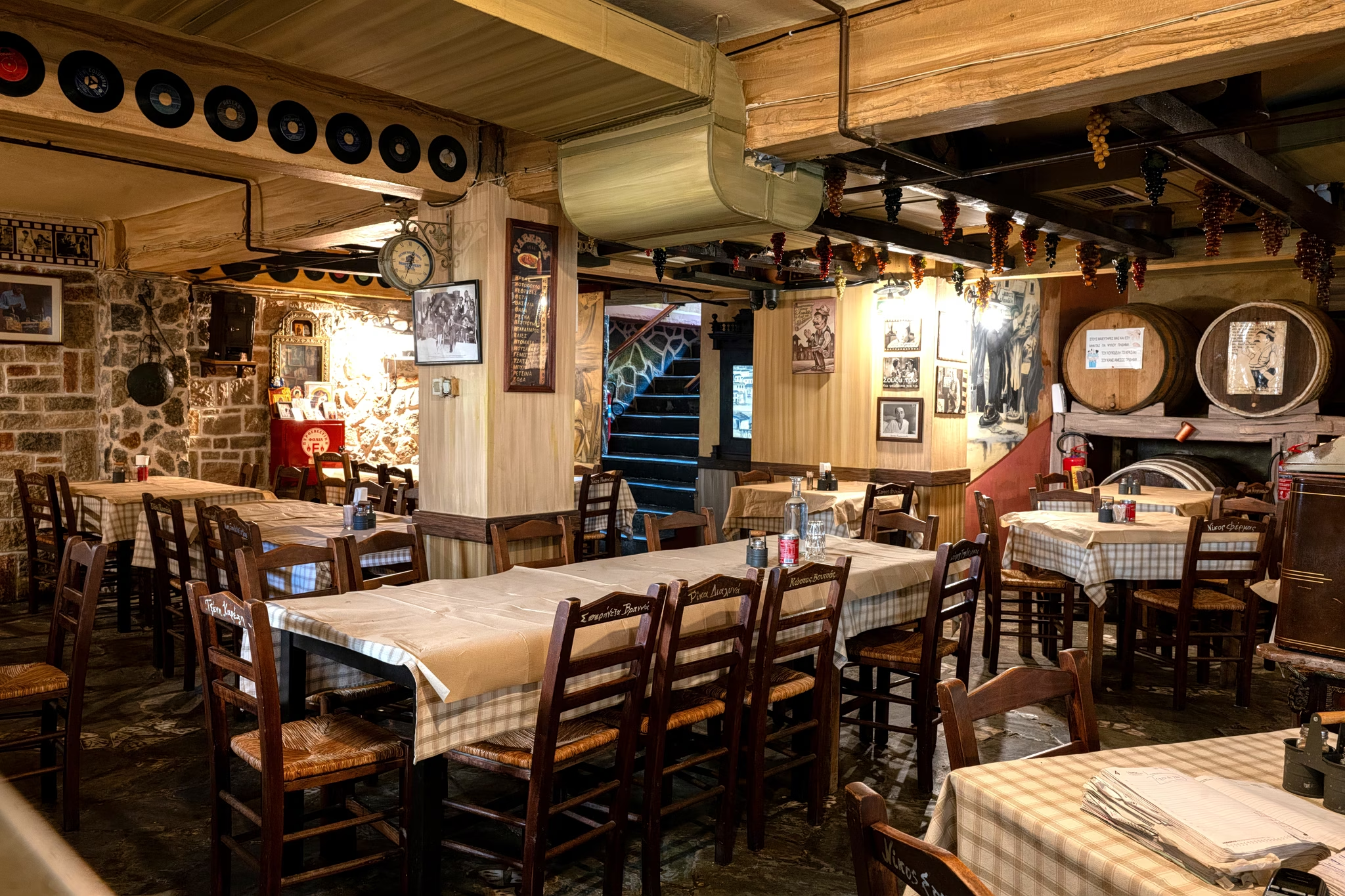
There are so many stories to tell. Whichever way you look at it, its history feels as though it has been lifted straight from a classic black-and-white Greek movie. Much like the films whose photographs decorate the barrels and walls of this underground koutouki, home to one of the oldest tavernas in Nea Filadelfeia, a suburb in northwestern Athens.
The Loukidelis family bought this basement space in the 1960s with money sent by the brother of their grandfather, Stelios, who had emigrated to Canada. They, too, were refugees. Originally from Pergamon, in Asia Minor (present-day Turkey), the family had arrived in Filadelfeia from the Greek island of Lesbos, determined to start their lives all over again.
“Back then, the government gave every refugee family a house and a job so they could make a living. We were given a grocery store—the shop right above us,” Michalis Loukidelis, Stelios’ grandson, tells me.
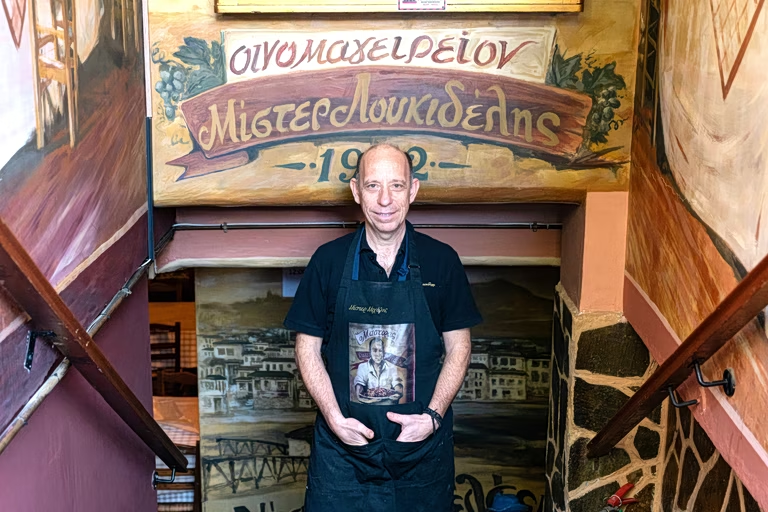
Michalis Loukidelis has been a master of the kitchen at this historic taverna for 40 years. A lifetime of cooking. Photo: Alexandros Alexandris
The entire family struggled to make ends meet through that little grocery store. It sold wine straight from the barrel and canned goods, and not much else. Occasionally, it would also serve workers finishing their shifts at the nearby construction sites, who stopped in for a glass of wine before heading home.
After the war, however, business slowed down. The grocery store was no longer enough to support the family, and Stelios had to find another way to make a living. The money sent from Canada helped transform the basement into a taverna, and his two sons, Vyron and Anestis, joined the business. The first took care of everything out front, in the dining room, while the second ran the kitchen.
The pots and pans went on the stove, and they have been writing the story of Mr. Loukidelis ever since.
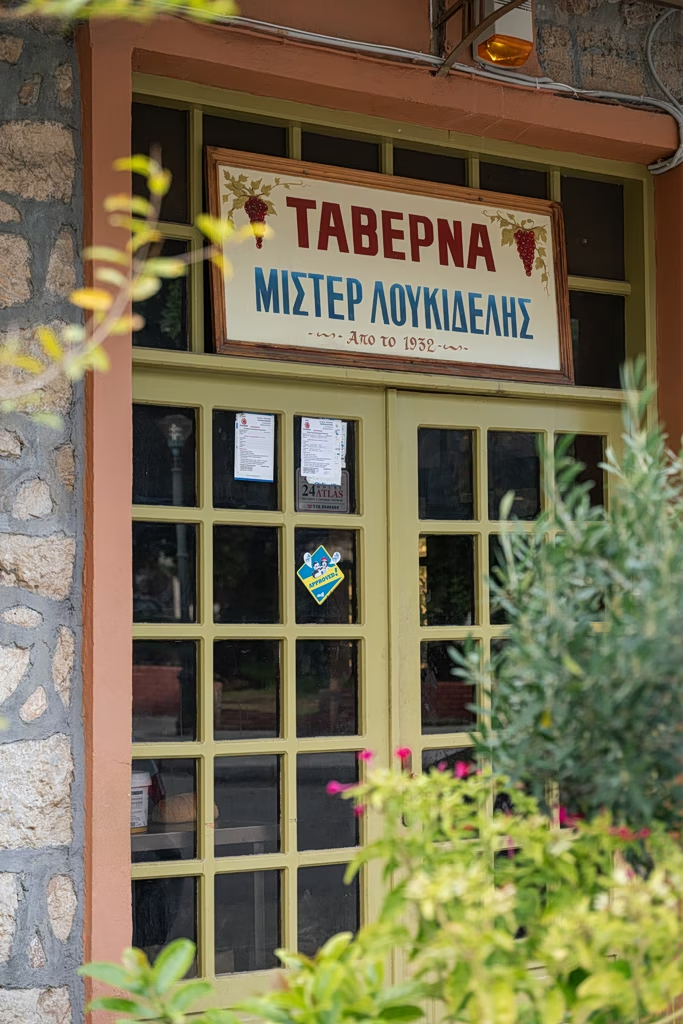
Stelios Loukidelis’ old grocery store. His grandchildren would eventually turn it into a taverna, serving customers from spring until the first autumn rains. Photo: Alexandros Alexandris
Some things never change
“When we first started, all we had was a pot and a frying pan,” Michalis tells me as he shapes the burger patties by hand. Everything is homemade. I watch him add oats to the ground meat mixture, along with bread. Cooking is his passion. He tells me so, although I can see just how much pleasure he takes in what he does.
“I’m waiting for the weather to finally cool down so I can change the menu. That’s how we do things here. We add and remove meze dishes so we don’t get bored.”
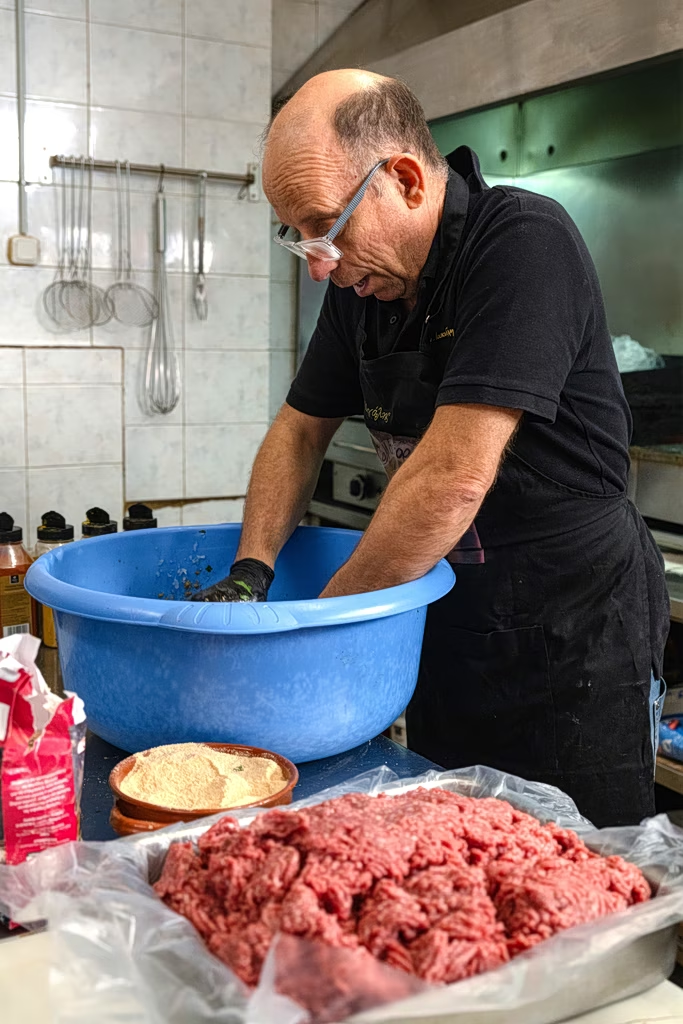
Michalis even shared his recipe for the homemade patties served at Mr. Loukidelis. There are no secrets in his kitchen; he’s happy to share everything. Photo: Alexandros Alexandris
Some specialties, of course, have remained unchanged since the very beginning.
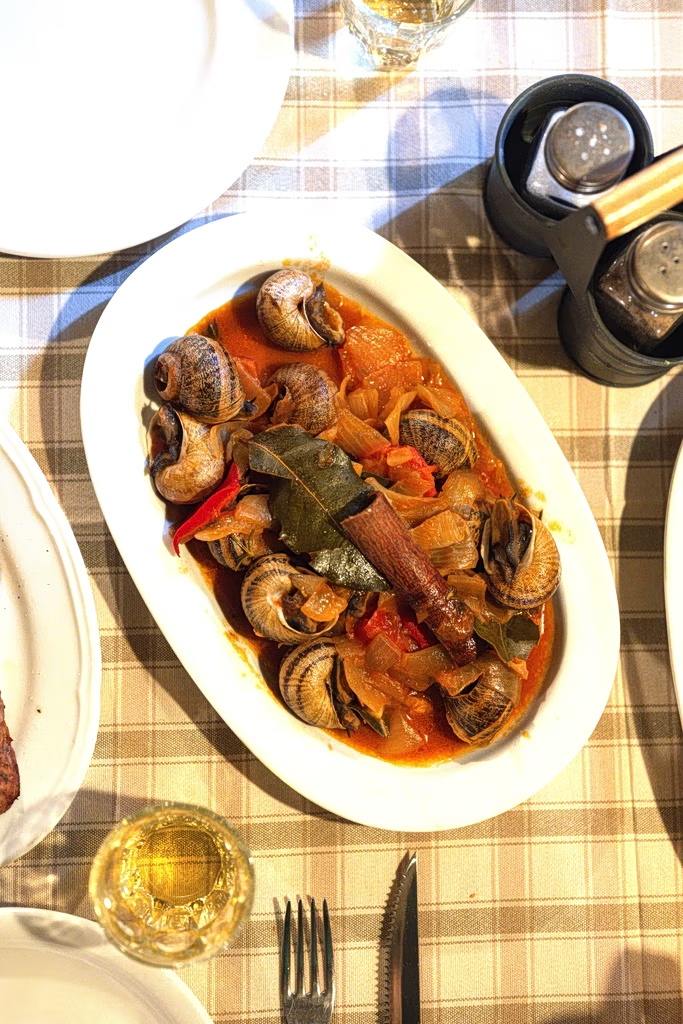
Take the snails, for example. Uncle Anestis used to prepare them according to a traditional Constantinopolitan recipe, with onions, cinnamon, allspice, garlic, bay leaves, and fresh rosemary. This dish has never disappeared from the Loukidelis menu.
As Grigoris stirs the onions and spices in the enormous pot, letting them soften and release their aromas before adding the snails, the fragrance rising from the kitchen is positively intoxicating.
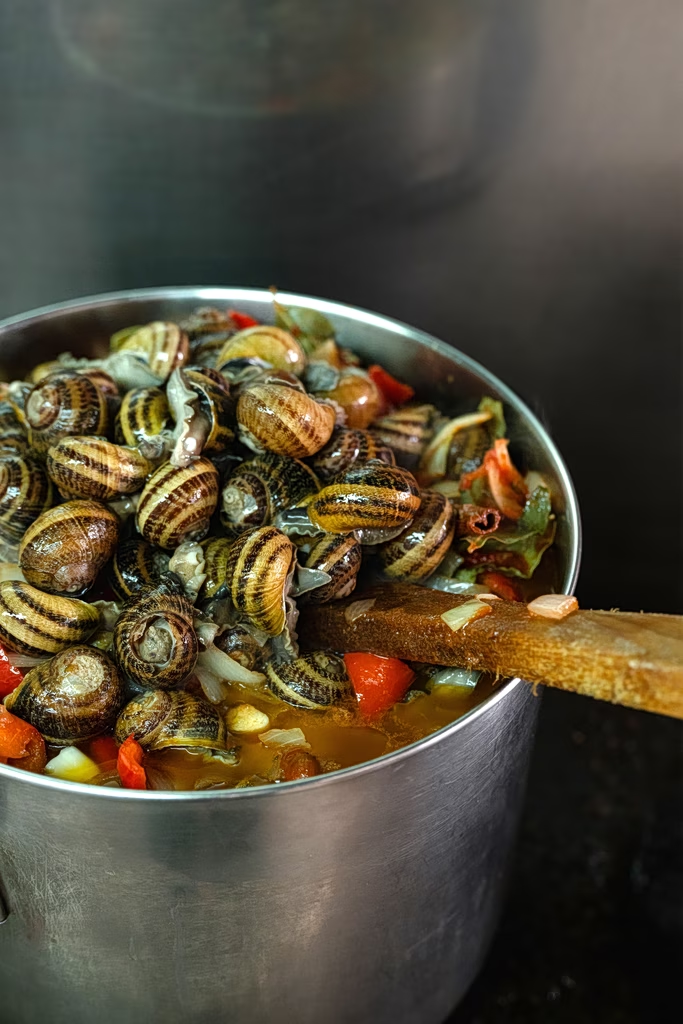
Loukidelis’ snails, cooked with cinnamon, allspice, bay leaves, and fresh rosemary. The aroma of the sauce is simply unforgettable. Photo: Alexandros Alexandris
Anestis also used to cook lamb tongues and brains—proper delicacies for those who appreciate traditional Greek food—as well as fava (a creamy yellow split-pea purée) and giant beans.
There weren’t many dishes, but each was packed with flavor.
“He also prepared the giant beans using a Constantinopolitan recipe, just as our grandfather had made them, with cinnamon and bay leaves. At first, customers found it a little strange. But we’ve kept the recipe exactly as it was. We don’t change it. And by now, everyone knows it and loves it, even though it’s different from what they’re used to.”
A little taverna with a big reputation
Nea Filadelfeia has always been a refugee neighborhood, deeply connected to its soccer stadium and to AEK Athens, one of Greece’s most beloved soccer clubs. Its athletes and club officials were once worshiped like gods, yet they could still be found walking the neighborhood streets and sitting in little tavernas, celebrating their victories like ordinary people.
Vyron knew them all, and they loved him. They would come to his family’s establishment to enjoy the meze that Anestis brought straight from his frying pan.
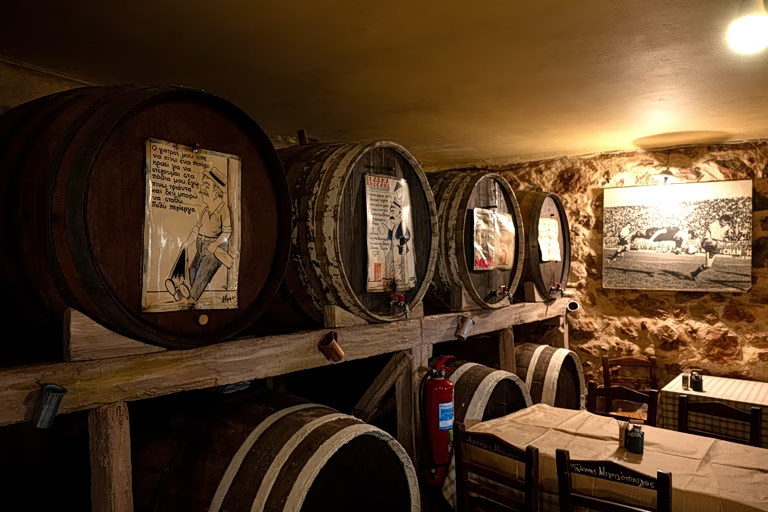
The tavern’s barrels are filled with wine made by the family themselves. Photo: Alexandros Alexandris
“Michalis Menidiatis was also very fond of my father. He owned a plot of land and, after the war, used to bring various vegetables here and sell them in the square across the street. My father helped him out, and later, when he was performing at Fantasia, he always made sure we had a table right up front.”
Menidiatis was soon joined by other popular Greek folk singers, some of the biggest names in Athens’ nightlife. Their photographs still decorate the walls of Mr. Loukidelis today. They, too, have become part of the taverna’s history, reminders of the many years that have passed within these walls.
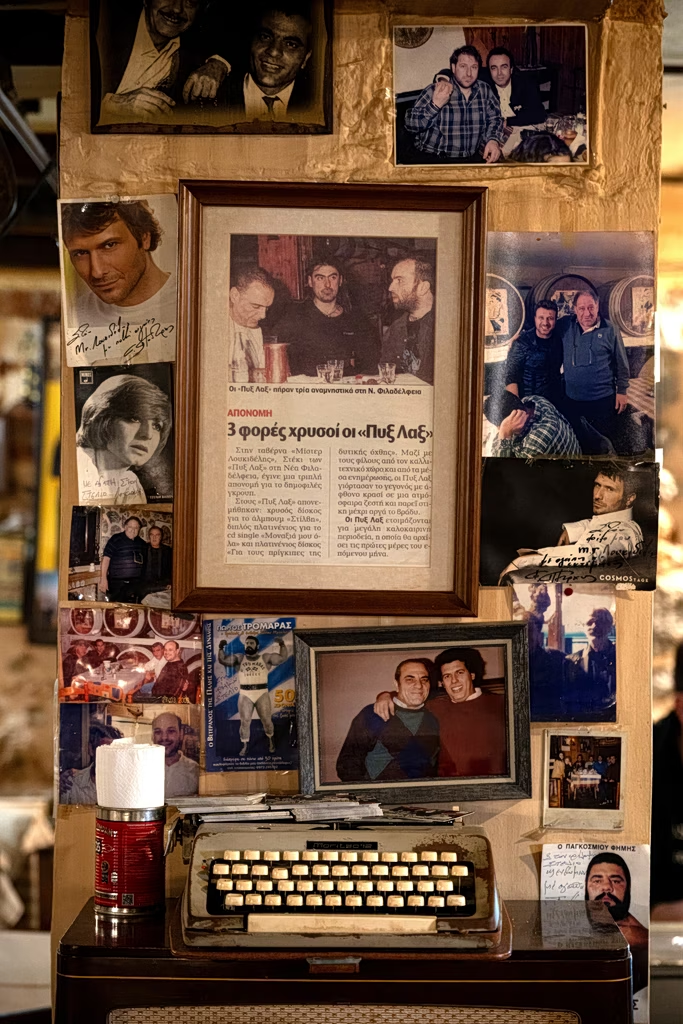
Famous performers and athletes have all taken their seats at Loukidelis’ tables. Photo: Alexandros Alexandris
“Kazantzidis was also one of our best customers. At one point, he launched his own ouzo brand, which he sold in Thessaloniki. We brought it into the shop, and we were the only taverna in Filadelfeia that stocked it. He really appreciated that. He used to come here to eat, but only at lunchtime. He preferred to avoid the crowds.”
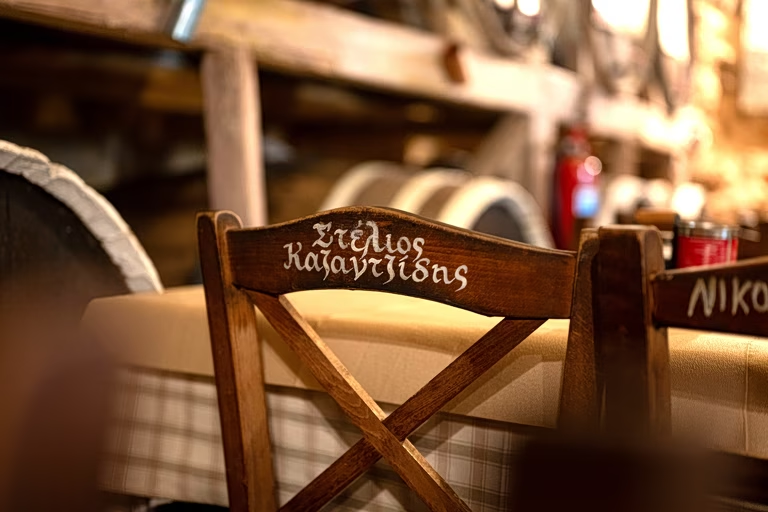
Stelios Kazantzidis greatly appreciated Vyron Loukidelis and used to visit the taverna, mainly during lunchtime. Photo: Alexandros Alexandris
Michalis has endless stories to tell, just as he and his brothers have spent countless hours in this establishment, which has never really known holidays, celebrations, or days off.
“We’ve always been a family business. At first, my father, my mother, my uncle, and my eldest brother, Stelios, worked here. The other three boys were still little, and my sister, Anastasia, looked after us. In 1986, my brother Giannis and I joined the business, and in 1990, the youngest of us, Nikos, came on board.”
They all grew up here, sharing everything the business brought with it: the happy moments and the difficult ones.
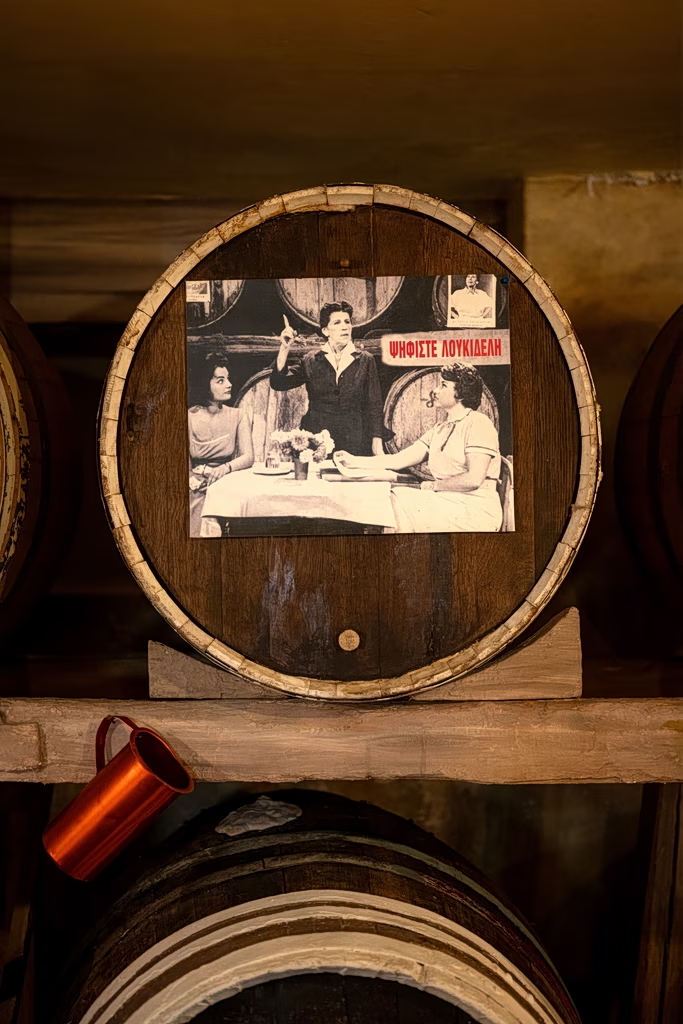
The legendary Greek film ‘I Kyria Dimarhos’ (Mrs. Mayor), starring Georgia Vasileiadou, was filmed in this underground taverna in Nea Filadelfeia. Photo: Alexandros Alexandris
“This is where the film I Kyria Dimarhos, starring Georgia Vasileiadou, was shot. And this is where AEK’s basketball team came to celebrate after winning the European championship,” Michalis tells me, pointing to the yellow-and-black jerseys bearing the players’ signatures.
Walking through the place feels like visiting a museum, one that preserves the history of postwar Athens on its walls, chairs, barrels, and, naturally, around its tables.
Even the food carries a sense of history. The meze dishes Michalis prepares with such speed and skill are steeped in memories and traditions from a Greece that no longer exists, yet somehow remains alive through its cuisine.
Flavors you’ll never forget
Michalis has plenty to boast about when it comes to his pies.
There’s the Mykonos cheese pie, made with authentic kopanisti, the island’s intensely flavored, peppery cheese, along with Cretan xygalo, a tangy, creamy cheese, and malaka, a soft, fresh cheese traditionally used in Cretan cooking. It has a rich, almost molten filling wrapped in crisp, golden pastry.
Then there’s the twisted country-style greens pie, bursting with aromas, and the phyllo rolls filled with pastourma, the intensely spiced, air-dried cured beef that releases its unmistakable fragrance the moment it hits the frying pan.
Michalis is a true master of the frying pan. Not one of his pies leaves behind the slightest trace of excess oil.
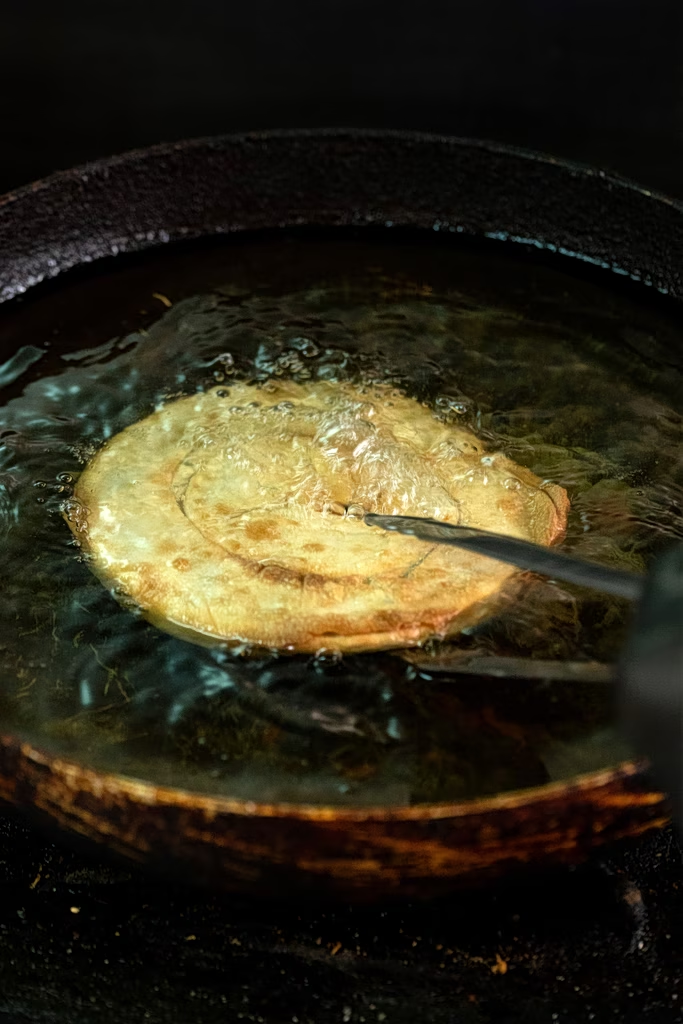
Michalis is a master of the frying pan. His pies come out perfectly crisp, without a trace of greasiness. Photo: Alexandros Alexandris
His fried cod is equally light, despite the fact that it comes with a seriously potent serving of skordalia, the traditional Greek garlic dip made with potatoes or bread.
“Men who have had a fight with their wives come here to eat fried cod with skordalia. Then they go home with peace of mind, because they know their wives won’t come anywhere near them!”
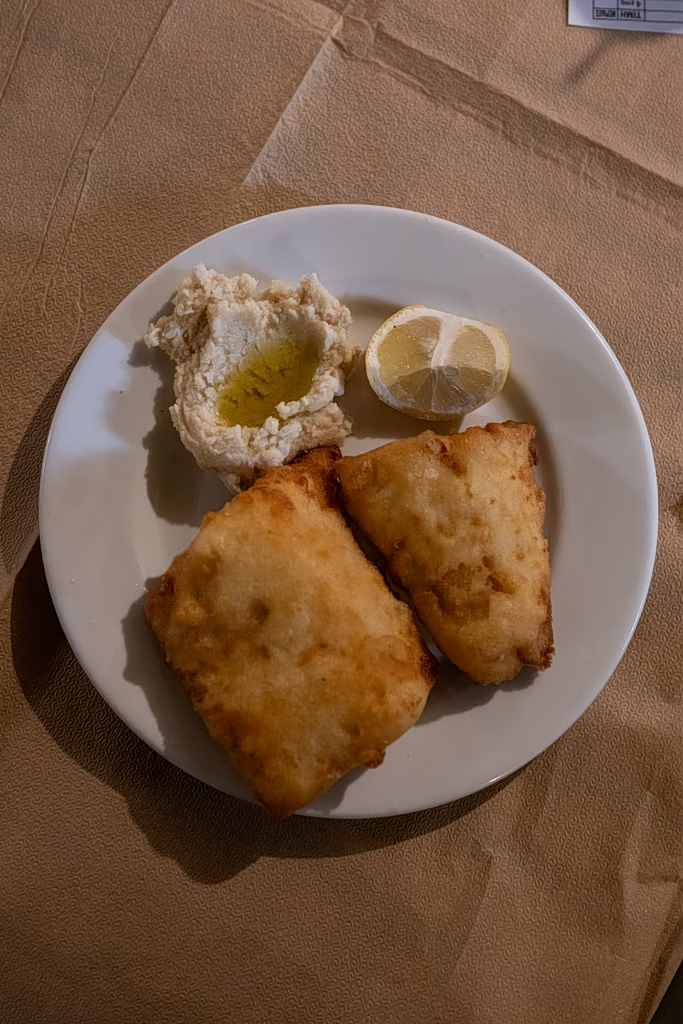
Fried cod with an explosive serving of skordalia. The secret weapon of married men who’ve had an argument with their wives. Photo: Alexandros Alexandris
But of all the dishes on his menu, the one Michalis is proudest of is the ameleita—grilled sweetbreads, a traditional Greek delicacy made from animal glands. On the menu, they even bear his uncle Anestis’ name.
“They’re one of our best meze dishes. We can barely keep up with demand. The problem is that I can’t find them anymore. I go down to Athinas Street, in central Athens, and even there they’re not always available. The flavor is incredible, whether you have them grilled or fried. They’re addictive.”
We had ours grilled. Michalis cooked them patiently, giving them just the right amount of time over the heat, then drizzled them with olive oil and lemon juice, added salt and pepper, and served them with wine straight from the barrel.
“This is ours, too. All the wine is ours. Customers fill their own little carafes straight from the barrel.”
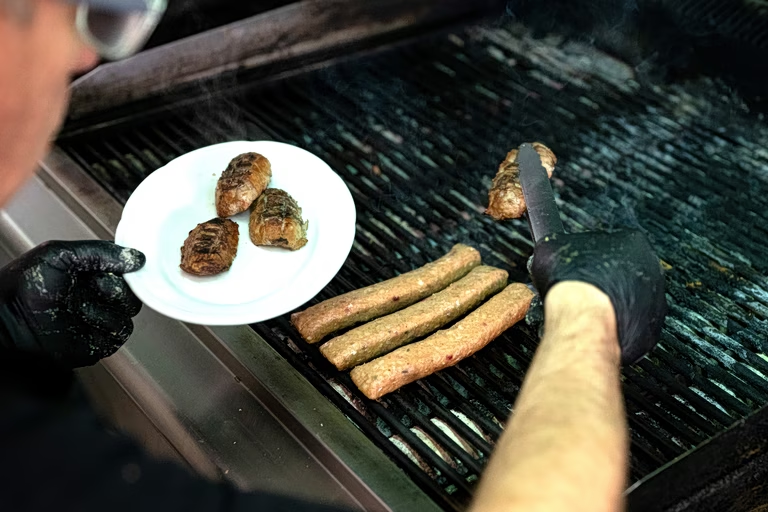
Grilled sweetbreads: an incomparable meze. Photo: Alexandros Alexandris
At a time when haute cuisine is rediscovering its roots and embracing the use of every part of the animal, this humble dish is proof that Greek cooking has always understood, almost instinctively, that the greatest flavors are often hidden in the most unassuming ingredients.
Much like the greatest stories can be tucked away in basement establishments that most people might overlook.
But is it really possible that there are people in this city who know nothing about the history of one of its oldest tavernas? People who might drive along Dekeleias Avenue every day without ever turning onto Georgiou Papandreou Street to discover the little koutouki that raised an entire family and is now entering its fourth generation?
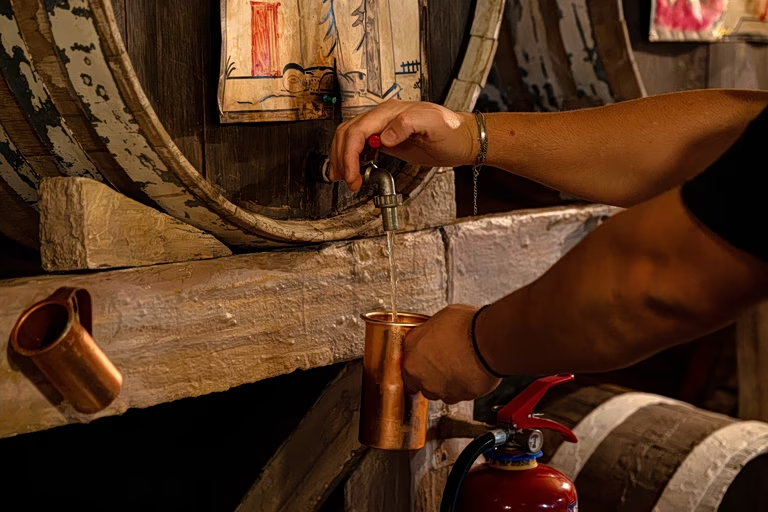
Customers pour their own wine straight from the barrel. The little carafes are constantly being filled and emptied. Photo: Alexandros Alexandris
A story that continues
“In 2020, my eldest brother, Stelios, retired. The rest of us got together to decide what to do next. The four of us might have argued at work, but outside the business we’re very close. Our parents gave us so much love, and that love stayed with us. So, together, we decided to leave the business to him because he was the first one to start working here, back in the 1970s.
“Loukidelis will remain with Stelios and his children, his two boys, because we appreciate everything he has contributed over the years. He was the one who managed the business and made sure that the fruits of our collective hard work were shared fairly among all of us.”
The story of Loukidelis feels like a movie script, right down to its final scene. Except, of course, the film hasn’t ended yet.
The recipes at Loukidelis are passed down from one generation to the next. Today, the taverna’s kitchen is run by Vyron Loukidelis, Michalis’ nephew. Photo: Alexandros Alexandris
Michalis still comes in every morning to lend a hand in the kitchen, although his nephew Vyron has now taken over its day-to-day operations.
“Next year I’ll retire. I’m counting the days,” he tells me.
I look at him somewhat incredulously. I can only imagine how difficult it must be to leave behind something that has been part of his everyday life for almost his entire existence.
“Before my mother passed away, she told me: ‘Michalis, you’ve lost your youth. Be careful not to lose your old age, too.’ I worked all the time. There was no other way. Now it’s time for me to rest.”
Fortunately, this is not where the story ends. Loukidelis will continue to live on, right here on the same corner in Filadelfeia. The upstairs taverna will welcome guests during the summer, while the underground koutouki will open its doors when the cold weather arrives.
The same passion will remain in the kitchen, along with the meze dishes that so many people have fallen in love with and that many more will continue to discover.
The historic I Mouria in Exarchia may be gone, but thankfully, Mr. Loukidelis will be here for many years to come.