 Μake us preferred on Google
A week before federal regulators issued a dramatic “ground stop” triggering a weekend of travel chaos across the US, the Department of Transportation announced it was phasing out the use of floppy disks in American air traffic control towers.
“Good news, America: floppy disks are out, 21st-century tech is in,” US transportation secretary Sean Duffy proclaimed. “The greatest nation in the world deserves a state of the art air traffic control system, and under President [Donald] Trump, we’re delivering just that.”
Duffy, a former lumberjack and reality TV star, is trying to upgrade the country’s crumbling air traffic control infrastructure with $12.5bn in funding he secured from Congress last year.
But on Saturday, he confirmed that a router being installed “at a remote location” by contractor L3Harris had triggered a data overload that threatened a system-wide meltdown. He then practically begged lawmakers for tens of billions of dollars in emergency funding.
“This is a bipartisan moment,” he said, arguing that decades of underfunding had left the US aviation system saddled with obsolete technology dating back to the 1970s and 1980s. “How long are we gonna wait, America?”
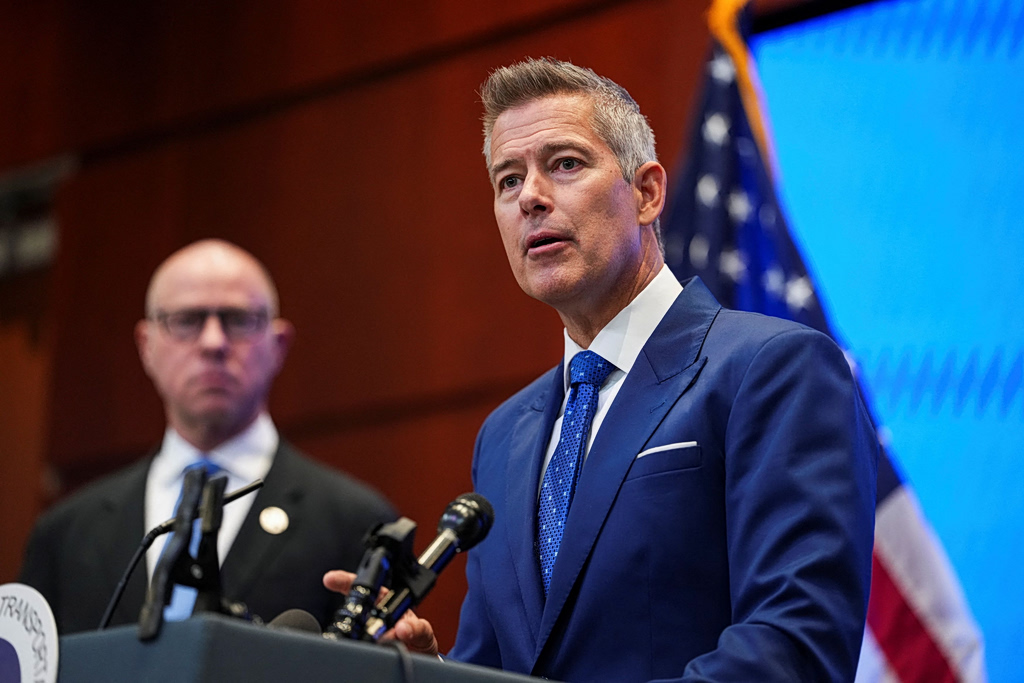
Administrator of the US Federal Aviation Administration (FAA) Bryan Bedford listens, as US Secretary of Transportation Sean Duffy speaks during a press conference after the FAA issued a national ground stop yesterday, at the Department of Transportation in Washington, DC, US, November 14, 2026. REUTERS/Eric Lee
Friday’s drama comes after a series of similar episodes that have forced local airspace closures. In September, a communications outage at an air traffic control hub in Philadelphia grounded hundreds of flights on the east coast after a fibre-optic cable was severed by a construction crew.
That followed weeks of disruption at Newark Liberty International Airport last year caused by a combination of failing telecommunications hardware, air traffic controller shortages and runway construction.
Several senior Democrats have blamed Duffy, a former Republican congressman, and the Trump administration for this weekend’s travel chaos.
House minority leader Hakeem Jeffries on Friday described the groundings as “the latest in a series of unacceptable air travel incidents under the Trump Administration’s failed leadership”.
On Saturday, New York state’s Democratic governor Kathy Hochul posted on social media that “Sean Duffy must resign, or President Trump must remove him immediately”.
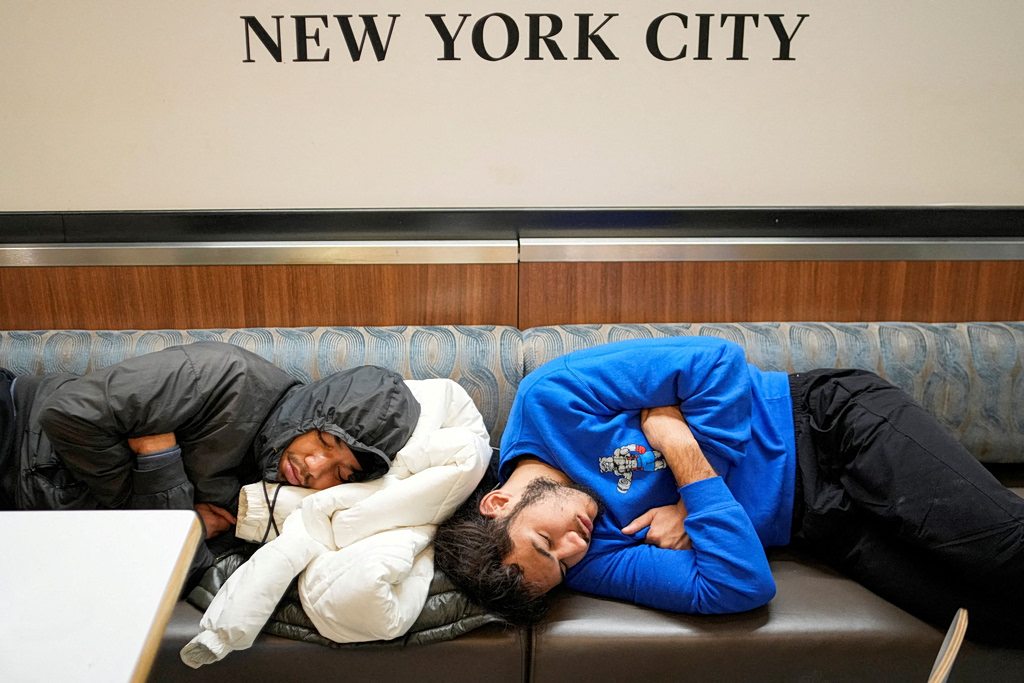
People rest in a hallway at Newark Liberty International Airport after the US Federal Aviation Administration (FAA) lifted a nationwide ground stop issued earlier due to “extraordinary circumstances and safety reasons,” following reports of serious air traffic control communication issues, Newark, New Jersey, US, November 14, 2026. REUTERS/Eduardo Munoz TPX IMAGES OF THE DAY
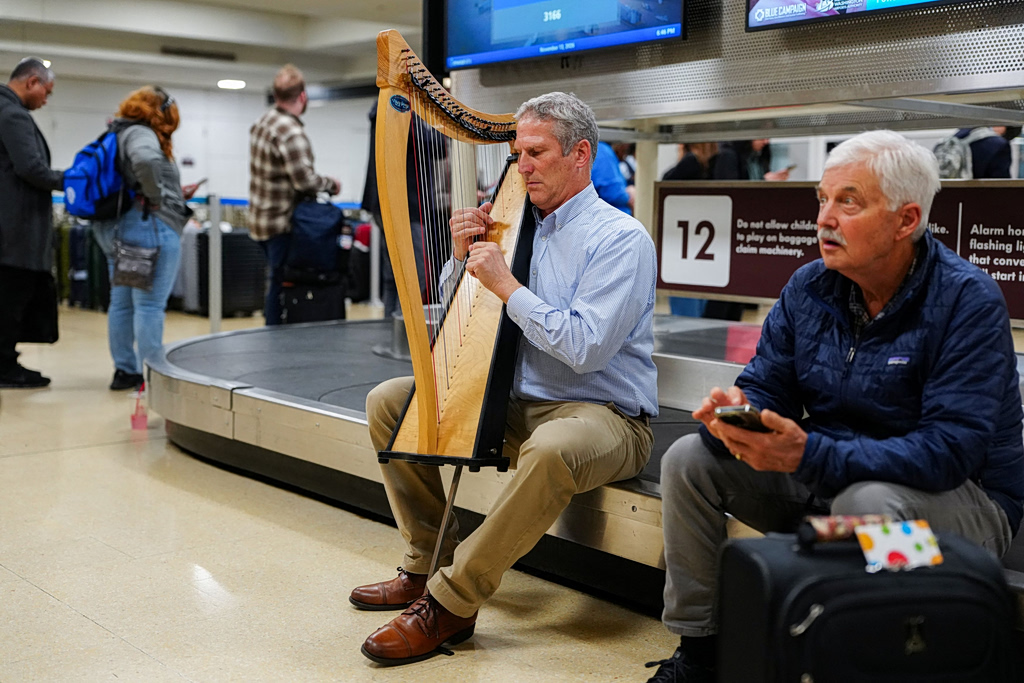
Robert Easton, whose flight to Boston was canceled, sits on a baggage carousel playing his harp as passengers wait after the US Federal Aviation Administration issued a national ground stop “due to extraordinary circumstances and reasons for safety” following the agency’s earlier report of serious air traffic control communications issues, at Ronald Reagan Washington National Airport in Arlington, Virginia, US, November 13, 2026. REUTERS/Aaron Schwartz TPX IMAGES OF THE DAY
But many aviation experts share Duffy’s belief that Congress is ultimately responsible for the parlous state of America’s aviation system due to decades of politicking and neglect.
William Voss, a former senior FAA official, points out that most developed countries have freed their aviation systems from direct political control over budgets by switching to a funding model based on user fees, an innovation that was pioneered by New Zealand in the 1980s.
“The US is almost the only major air navigation service provider who does not rely upon user fees,” said Voss. “Your appropriations are not driven by need, they’re driven by tax policy, and so the system keeps getting worse.”
He noted that the Federal Aviation Administration’s capital budget for air navigation facilities and equipment has remained broadly flat for decades, which — combined with inflation and a boom in air travel — has amounted to severe real-term cuts.
Voss, a former deputy director of the FAA’s Air Traffic Safety Oversight Service, added that the meagre funds for the aviation system routinely fall prey to petty haggling. “We’re having this important conversation and all the conversations that are being had in Congress are: ‘I have a guy that tells me he needs a new couch in his break room’ or ‘Why isn’t there a weight room in the Philadelphia tower?’ I mean, literally, that’s the conversations that are being had.”
Robert Poole, director of transport policy at the Reason Foundation think-tank, said that proposals to remove budgetary authority from Congress “create a huge storm of opposition”.
“They have the authority to decide what the priorities are going to be and which places are going to get an upgraded control tower or a new airport terminal or whatever and these are powers that Congress does not want to give up,” said Poole.
He added that members of Congress also tended to ally with air traffic control unions to oppose the consolidation of facilities that would free up more funds for a system-wide upgrade.
But this was rejected by Nick Daniels, president of the National Air Traffic Controllers Association, who told the FT before Friday’s groundings that he’d “never seen something showing me that facility consolidation could fund the system”.
“It is very minimal savings over the long term when you talk about having to move hundreds and thousands of people hundreds and thousands of miles to do the same job,” said Daniels.
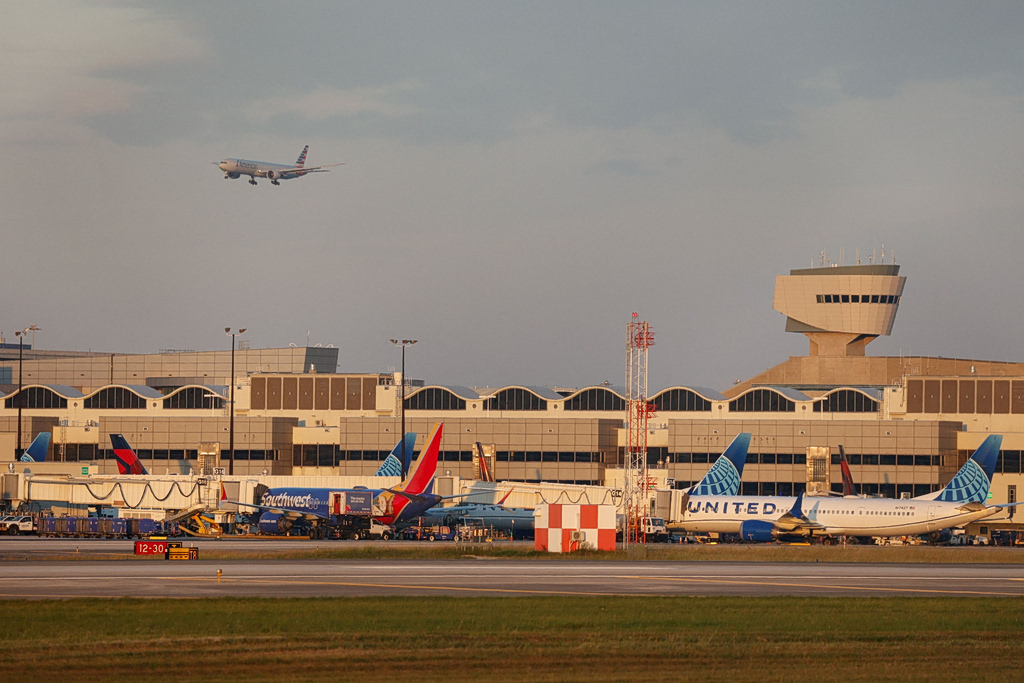
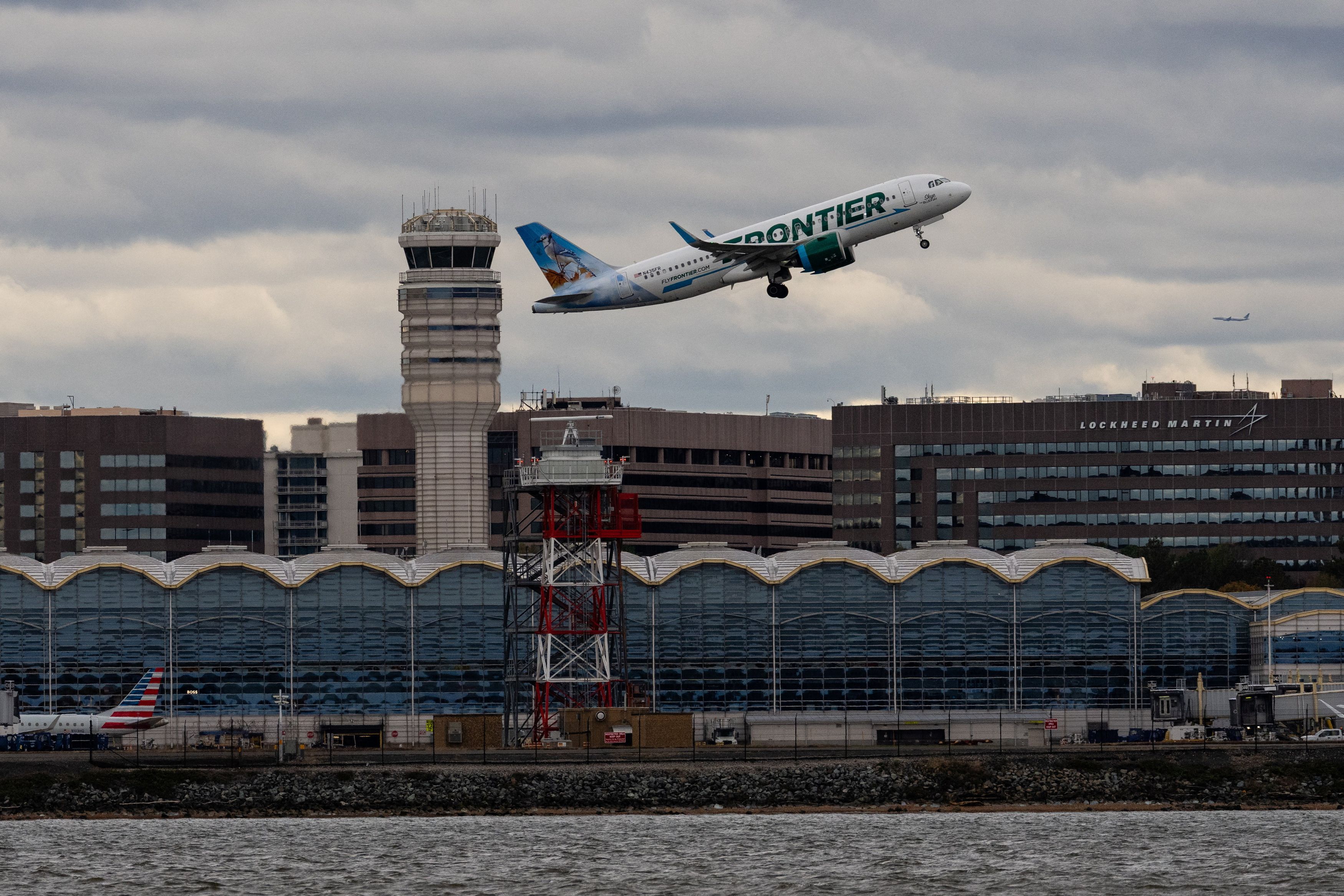
An airplane flies at Miami International Airport after the US Federal Aviation Administration issued a national ground stop “due to extraordinary circumstances and reasons for safety” following the agency’s earlier report of serious air traffic control communications issues, in Miami, Florida, US, November 13, 2026. REUTERS/Marco Bello
During his press conference on Saturday, Duffy highlighted how US air traffic controllers still use paper flight strips — records used to co-ordinate and manage aircraft movements — which he described as “1970s technology”.
Poole of the Reason Foundation noted that Canada, which has a user fee system, finished its upgrade to electronic flight strips in 2009, while the US is scheduled to complete its own upgrade around 20 years later because it relies on “dribs and drabs” in annual Congressional budget allocations.
Christopher Sununu, the head of Airlines for America and the former Republican governor of New Hampshire, said there was strong “bipartisan support” for funding a wholesale upgrade of the system, which he described as “held together with string and duct tape”.
He said that of the proposed $30bn upgrade, around $10bn of the next tranche would go towards fixing physical control towers, while another $10bn would go towards a “common automation platform” software that will work across the entire air traffic control system.
In the immediate aftermath of Friday’s groundings, Duffy upped his funding ask from $30bn to $50bn: “How many more times does this have to happen for Congress to give the money to fix it?”
But some observers worry the issue will inevitably be dragged into congressional battles over the most controversial aspects of Trump’s second term. On Friday evening, Democratic Senator Brian Schatz of Hawaii suggested the FAA upgrade could be paid for at least in part from funds reserved for US Immigration and Customs Enforcement, better known as ICE.
In September, the Government Accountability Office, a congressional watchdog, raised concerns about Duffy bypassing regular procurement and implementation rules as he attempts to squeeze decades worth of upgrades into a few years.
This points to a divided America, caught between a wider structure that moves too slowly and a transportation secretary who some fear is moving too fast.
“What happened this weekend is not Duffy’s fault, it’s the system’s fault,” said Poole. “But just throwing a bunch of money at it all at once, as he wants to do, is not the solution.”