 Μake us preferred on Google
Cyberattacks on supermarket refrigeration systems and blood banks, hoax bomb threats targeting airlines and schools, and now a major Microsoft outage disrupting essential services across dozens of countries. The past couple of weeks have offered plenty of reminders of how easily everyday life can be disrupted, even if the causes are very different. The Microsoft outage was caused by technical problems, not a cyberattack, while the bomb threats were hoaxes. But what happens when a disruption is serious enough to leave people without electricity, clean water, communications or access to basic supplies?
That is the scenario behind the European Commission’s latest emergency preparedness guidelines, which urge households to keep a 72-hour survival kit containing enough essentials to get through the first three days of a crisis without outside assistance. So what exactly should go into that backpack, and how much does it cost to put one together in Greece?
What Should a 72-Hour Survival Kit Contain?
The idea is straightforward: Keep a backpack stocked with essential supplies that can cover your basic needs for three days if an emergency disrupts everyday life.
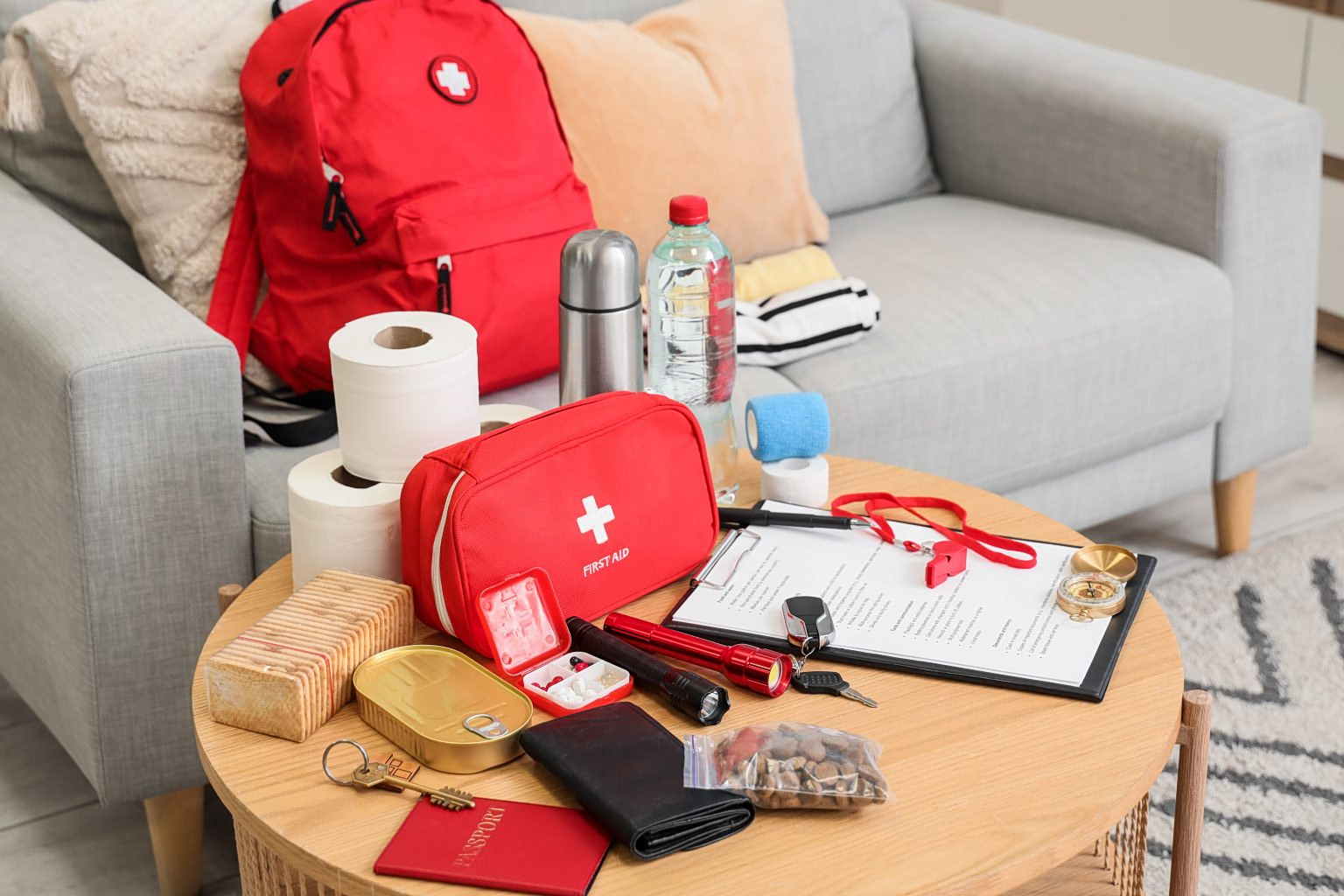
According to the European Commission’s guidelines, a 72-hour emergency kit should contain:
- Driking water and food: Enough to meet basic needs for three days.
- Medication: Essential medicines that may be difficult to obtain during an emergency.
- Hygiene supplies: Basic personal hygiene products.
- A flashlight and batteries: For situations where electricity is unavailable.
- A portable radio: To receive information and updates if regular communications are disrupted.
- Important documents: Essential personal identification and other necessary paperwork.
- Cash: For circumstances in which electronic payment systems are not functioning.
The aim is to have these supplies readily available rather than having to search for them when an emergency occurs.
How Much Does a Survival Kit Cost in Greece?
For those who would rather purchase an emergency backpack than assemble one themselves, ready-made survival kits are already available on the Greek market. Prices start at approximately €100 and can exceed €400, depending on the size of the backpack, the quality of its contents and the range of emergency supplies included. A growing number of survival kits are also being advertised online.
Households can also put together their own kits using the essential items identified in the European Commission’s guidelines.
Why Are the First 72 Hours So Important?
The European Commission’s recommendations are based on the possibility that emergency services and critical infrastructure may not be immediately available following a major disaster or other crisis. Electricity and water supplies could be interrupted, communications networks might fail, and rescue teams may struggle to reach affected areas. The 72-hour recommendation is intended to help people meet their basic needs while public assistance is being mobilized. It does not mean that emergency services will necessarily take three days to respond.
The guidelines cover a range of scenarios, including natural disasters, extreme weather, large-scale cyberattacks, hybrid threats and armed conflict. Not every emergency requires the same response, however. An earthquake, a cyberattack and a military strike present different dangers and may call for different protective measures.
The emergency backpack is also just one part of the Commission’s broader preparedness guidelines, presented by Hadja Lahbib, the EU commissioner for equality, preparedness and crisis management, at the European Civil Protection Forum. Alongside the recommendation for 72-hour self-sufficiency, the guidelines address three other areas: teaching emergency preparedness in early childhood and primary schools, ensuring that preparedness measures account for the needs of people with disabilities, and improving how authorities communicate risks and emergency information to the public. The guidelines are nonbinding and form part of the EU’s wider Preparedness Union Strategy, which aims to improve how governments, communities and individuals anticipate and respond to crises.
Does Greece Have an Emergency Kit Plan?
Unlike several other European countries, Greece does not currently have a comparable national preparedness plan, according to sources familiar with the matter.
The Hellenic Red Cross did, however, publish instructions on how to prepare a 72-hour emergency kit.
Elsewhere in Europe, authorities have already introduced public information campaigns encouraging households to prepare for emergencies. Sweden published a comprehensive guide titled “In Case of Crisis or War” in November 2024, while the Czech Republic has developed an information campaign known as “72 h,” focused on preparedness for the first three days of a crisis. France, Germany and the Netherlands have also issued similar guidance.
The European Commission previously encouraged member states to promote household survival kits in March 2025, making the latest recommendations part of a longer-running European preparedness effort.
Source: TA NEA, European Commission