 Μake us preferred on Google
 Greece is planning a new investment savings program for children that would allow families to build a long-term financial fund from the first years of a child’s life, with the state contributing one euro for every euro deposited by the family.
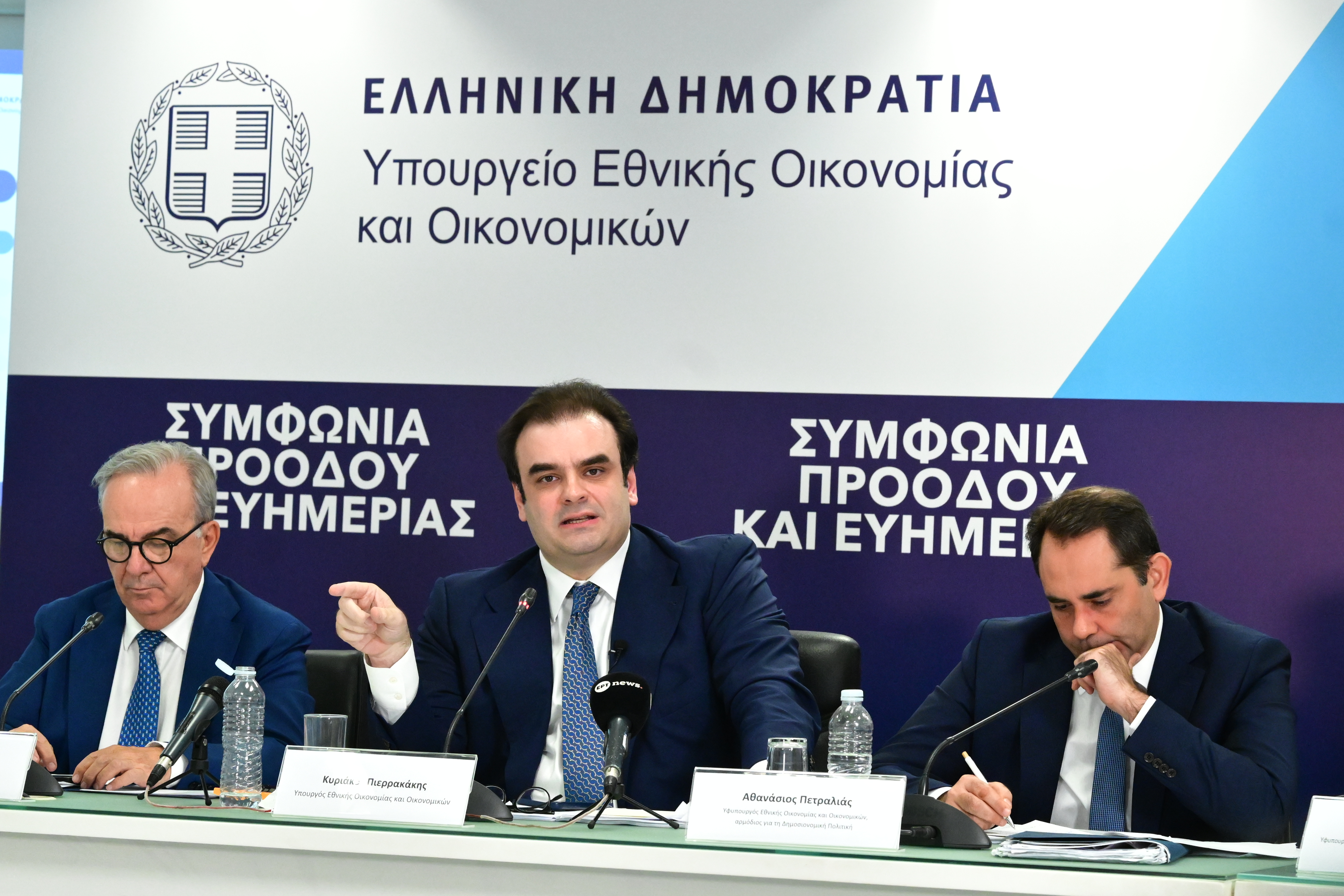
The new investment account for the younger generation was presented as part of the government’s specialization of measures announced at the Thessaloniki International Fair by National Economy and Finance Minister Kyriakos Pierrakakis and Deputy Minister Thanos Petralias.
Under the plan, families would be able to open a special investment account within the first two years after a child’s birth. For every euro deposited by the family, the state would contribute an equal amount, subject to an annual limit.
The initial maximum state contribution would be €1,200 per year.
Unlike a conventional savings account, the money would be invested over the long term, with the aim of allowing the capital to grow until the child reaches adulthood.
How the “1+1” system works
Families would be able to contribute up to €10,000 per year to the account. However, the state’s contribution would remain capped at the applicable annual program limit.
For example:
- A family contributing €1,200 in a year would receive another €1,200 from the state, bringing that year’s total contribution to €2,400.
- A contribution of €600 would be matched by €600 from the state.
- If a parent contributes €2,000, the state would still contribute no more than the €1,200 annual limit.
The state contribution limit would increase by 10% every five years. Starting from €1,200, it would rise to €1,320 in 2032, €1,452 in 2037 and then €1,597.
The government would periodically credit the corresponding state contributions to the accounts.
Family contributions would not have to be made in a single payment. Parents could, for example, set up a monthly payment of €100 to reach the €1,200 annual limit or make occasional payments throughout the year.
The €10,000 annual family contribution ceiling is intended to prevent the account from being used as a vehicle for concealing or transferring large amounts of wealth.
What happens if a family stops contributing?
Families would not be required to contribute every year.
If a family experiences financial difficulties and makes no contribution for a particular year, the account would remain open and the money already accumulated would stay invested.
The family simply would not receive a state contribution for that year because there would be no corresponding family contribution. Payments could resume the following year.
Who can open an account?
Each child would be allowed to have one special investment account.
At least one of the child’s two parents would have to be a tax resident of Greece to open the account.
The program would not be subject to income or wealth criteria. Eligibility would therefore not depend on the family’s income or assets.
The account would normally remain locked until the child turns 18.
Early withdrawals would be permitted only in specific circumstances, including the death of a parent, the death of the child or a serious health problem requiring surgery, provided the condition is certified by a public hospital.
After the child turns 18, the accumulated amount would be transferred to a standard deposit account in the child’s name, allowing the young adult to use the money.
Investment returns would be tax-free
Another key feature of the program would be the tax treatment of investment returns.
Income earned by the child through the account would be exempt from income tax. This would include, among other things, the 15% tax on interest, as well as taxes that could arise from capital gains or dividends.
The intention is for investment returns to be reinvested over the 18-year period without being reduced by these taxes.
Where would the money be invested?
The “savings pot” would not simply be a bank deposit.
The money would have to be invested in approved financial products, including mutual funds, stocks, corporate bonds traded on an organized market and government bonds.
Investments would be made exclusively through organized markets in Greece and the European Union, while investments in third countries would be excluded.
Families would be able to choose products with different investment profiles, and therefore different levels of risk and potential return.
There would be no single predetermined or guaranteed return for all participants.
Parents would also be able to transfer the account free of charge to another approved investment product or provider without the child losing their rights under the program.
To make products easier to compare, providers would use a common disclosure format and a standardized total expense ratio, known as TER. A common calculation methodology would apply regardless of the provider.
Banks and investment firms could offer the accounts
The accounts could be offered by banks, insurance companies and investment services firms operating in Greece.
Providers would need specific approval confirming that their products meet the program’s requirements, in cooperation, where necessary, with the Hellenic Capital Market Commission and the Bank of Greece.
The government expects the first investment products to become available in early 2027.
Because accounts can be opened during the first two years of a child’s life, children born in 2025 and 2026 could join the program when it begins.
How much could a child have at 18?
The government’s financial team provided an example based on a child born in 2026 whose investment account is opened in 2027.
The parent would contribute:
- €1,200 per year from 2027 through 2031;
- €1,320 per year from 2032 through 2036;
- €1,452 per year from 2037 through 2041;
- €1,597 per year from 2042 through 2044.
The state would contribute exactly the same amounts.
By the time the child reaches adulthood, the total capital deposited into the account would therefore reach €49,304. The parent would have contributed €24,652, with another €24,652 coming from the state.
That means the family’s contributions would effectively be doubled by the government match before any investment returns are taken into account.
The final value would then depend on the performance of the chosen investment product.
Under the government’s example, an average annual return of 3% would result in approximately €64,109 accumulated by 2044. With an average annual return of 5%, the final capital would be approximately €77,062.
In the second scenario, the child would have more than €77,000 at adulthood, while the family’s total contributions over the program would have been €24,652.
The figures are illustrative scenarios based on hypothetical returns and are not guaranteed. The final result would depend on the investment product, market fluctuations, costs and the family’s investment choices.
Program could cost the state €500 million annually
The program’s cost to the government budget would gradually increase as new generations of children join.
Assuming approximately one-third of children born each year participate, about 23,000 newborns would join the program annually.
During the first year, approximately 56,000 children could be covered because the program would initially apply to children born in both 2025 and 2026.
The estimated fiscal cost would be about €55 million in the first year, increasing by approximately €27 million each year thereafter.
Over the longer term, the annual cost is expected to approach approximately €500 million by 2040.
From education to starting a business
The government’s economic team sees the measure as having both a social and a development dimension.
On the social side, the goal is for young people to enter adulthood with capital they can use for education, starting a business, housing or starting a family.
The program is also intended to encourage a culture of long-term saving and investment among Greek families from an early age.
There is a broader economic objective as well. Since a significant share of the funds could be invested in stocks and corporate bonds, the government expects the program to create a new pool of savings over time, part of which could flow into the real economy and provide businesses with access to capital.
The initiative is also linked to the European Savings and Investments Union, which seeks to channel a greater share of European savings toward productive investment, an objective Pierrakakis has repeatedly highlighted in his role as president of the Eurogroup.