 Μake us preferred on Google
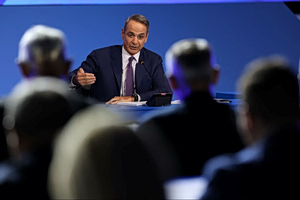
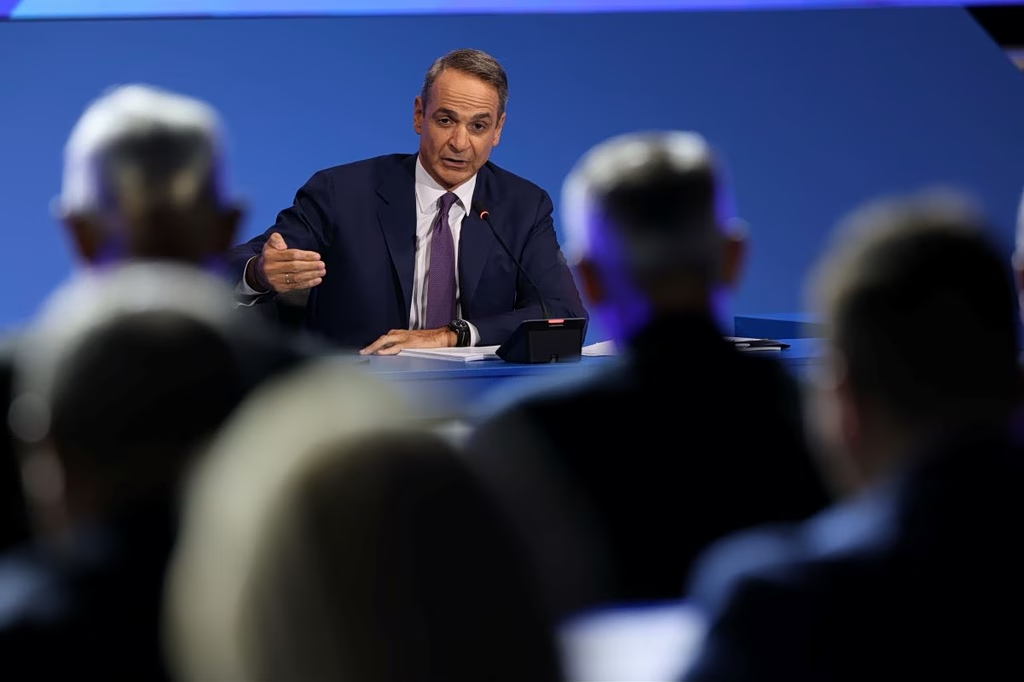
 Prime Minister Kyriakos Mitsotakis set out an ambitious goal for energy costs during the 90th Thessaloniki International Fair, pledging to reduce them by 30% over the next three years. However, the commitment will have to be tested in practice at a difficult time, as the energy market once again faces severe turbulence, natural gas prices remain high and wholesale electricity prices have begun to return to levels that are testing the market’s resilience.
The prime minister pointed to a combination of measures, ranging from lower regulated charges and increased use of renewable energy sources to electricity interconnections and stronger competition. The key question, however, is precisely how this policy mix can translate into 30% lower costs for households or businesses. Mitsotakis said the specific measures would be presented by the political leadership of the Environment and Energy Ministry on Tuesday.
PPC and competition on the front line
There is, however, a considerable distance between the target of reducing costs by 30% and delivering genuine relief through electricity bills. Public Power Corporation, or PPC, featured prominently in the government’s argument, with its new fixed-rate tariff, priced at 11.5 cents per kilowatt-hour with a low fixed fee, presented as one of the first examples of efforts to lower charges.
The promotion of this particular tariff reflects the expectation that it will act as a catalyst for competition. The government is effectively calling on other suppliers to respond with similar products so that falling prices are not limited to a single commercial offering. The question, of course, is whether the market will follow. Competition among suppliers is essential, but it cannot offset the effects of expensive fuel, high wholesale prices or the other charges incorporated into electricity bills.
How much will the cut in Public Service Obligation charges save consumers?
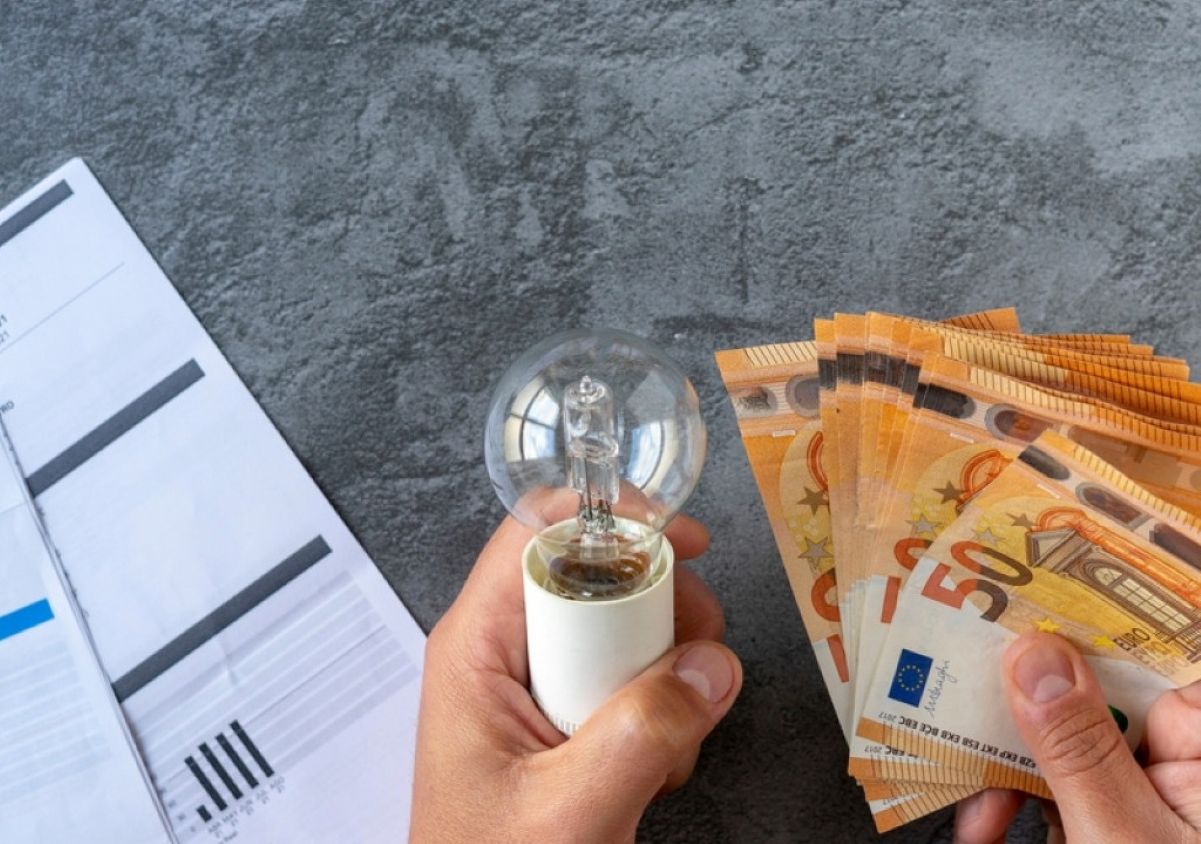
The prime minister also included the individual charges that make up the final electricity bill in the equation for achieving the 30% reduction. Government-imposed levies on all electricity bills, known as Public Service Obligation (PSO) charges, are among the first areas targeted, with a 50% reduction announced for residential customers from Jan. 1, 2027.
The picture becomes less impressive, however, when the announcement is translated into euros. The current PSO charge is approximately €0.0069 per kilowatt-hour for the first PSO consumption bracket, covering up to 1,600 kWh per four-month period. Following the 50% reduction, it will fall to €0.00345. For a household consuming 300 kWh per month, the monthly charge will consequently fall from approximately €2.07 to €1.04. In other words, the actual monthly saving will be about €1.
PSO charges finance the cost of supplying electricity to islands that are not connected to the mainland grid and rely on oil-fired power stations, where generation costs are several times higher than those on the mainland. The difference is covered through the electricity bills of consumers across the country, enabling an island resident to pay the same electricity price as someone living on the mainland.
As more islands are connected to the mainland grid, the need to operate expensive oil-fired units declines, reducing PSO costs. The interconnections linking Crete and the Cyclades are the first to alter this equation, with estimated savings of approximately €509 million in PSO costs in 2026. The figure is expected to rise to €523 million in 2027, €536 million in 2028, €547 million in 2029 and €630 million in 2030.
However, consumers have not yet seen these benefits reflected in their bills because of the accumulated deficit in the dedicated PSO account. Part of that shortfall is expected to be covered by the state budget, making it possible to reduce charges from 2027.
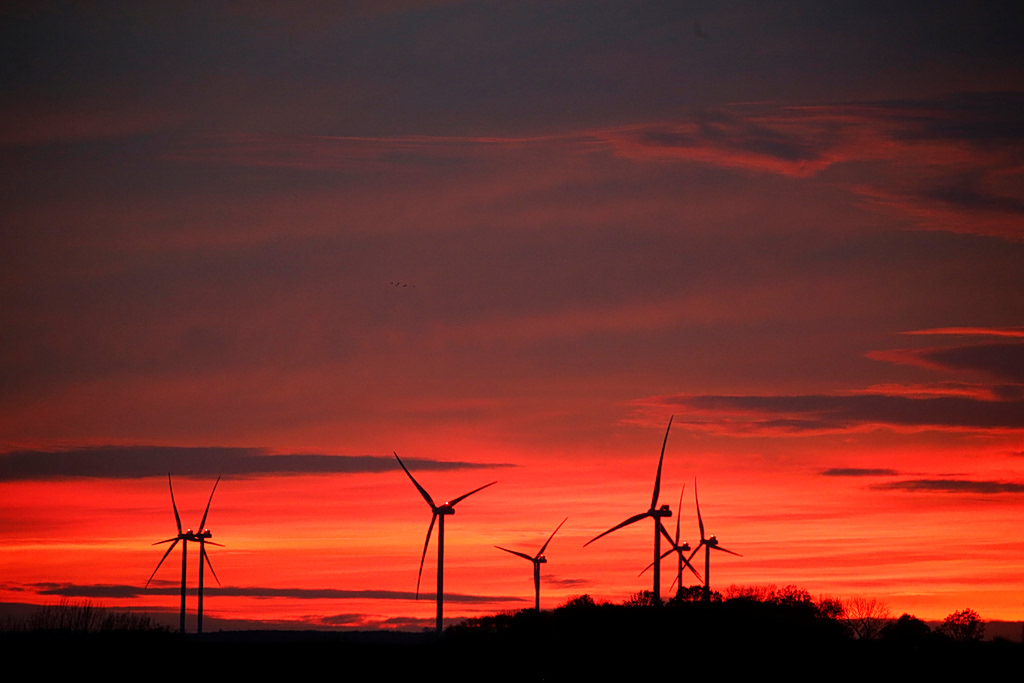
For the first time, wind and solar energy surpassed fossil fuels in the EU’s electricity mix in 2025, with solar output growing over 20% and renewables now supplying nearly half of the bloc’s power.
Municipal fees to be collected separately
A second category of charges will also cease to appear on electricity bills. Beginning in 2028, municipal fees will be removed from energy providers’ bills and collected directly by municipalities.
Although the change will reduce the amount shown on electricity bills, it does not mean the fees are being abolished or that citizens’ overall costs will automatically fall. In other words, part of the financial burden will simply take a different route to reach the same coffers.
As for industry, the first measure has already been implemented. Since July 1, 2026, PSO charges for energy-intensive businesses have been cut by 50%. The government has said it will continue examining measures to reduce industrial energy costs, with the prime minister linking any further action to available fiscal space and the possibilities offered by the European framework. He provided no additional details.
Renewables as a counterweight to expensive natural gas
Mitsotakis directly linked lower energy costs to the further penetration of renewable energy sources into the energy mix. The greater the share of cheaper domestically produced energy, the lower the country’s dependence on more expensive generating units and imported fuels.
The Greek energy market does not operate in a vacuum. As long as natural gas remains the marginal fuel that determines wholesale electricity prices, international disruptions will continue to affect the domestic market.
Gas prices at Europe’s TTF trading hub have remained above €70 per megawatt-hour in recent days. The market is closely monitoring geopolitical developments and Europe’s ability to meet demand ahead of the winter. Analysts are not ruling out an adverse scenario that could push wholesale gas prices as high as €110 per megawatt-hour.
For his part, the prime minister kept all possibilities open, stressing that the government is prepared to address every scenario. In any event, the pledge to deliver a 30% reduction will be tested precisely in the area over which the government has the least control: the fuel price that continues to have a decisive influence on both the European and Greek energy systems.
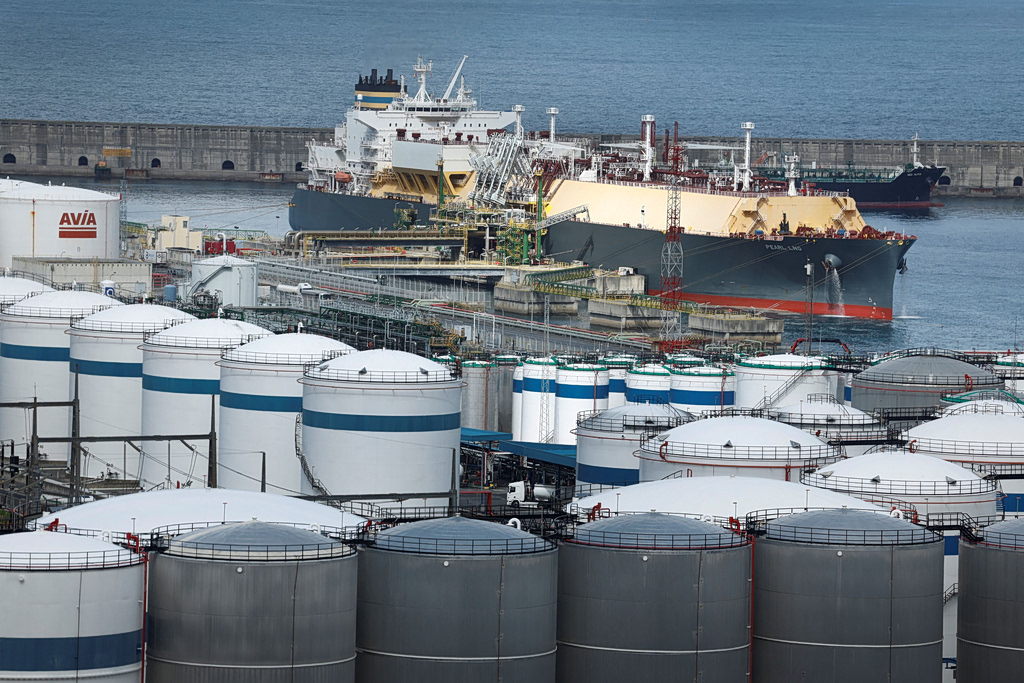
Maltese flagged liquid natural gas tanker Pearl LNG sits alongside gas storage facilities, following arrival from the US port of Ingleside, at Bilbao port, northern Spain, March 27, 2026. REUTERS/Vincent West
Heat pumps, solar water heaters and batteries included in the package
The prime minister’s energy package also includes a new program to replace outdated heating and cooling systems, which is intended to benefit approximately 100,000 recipients.
The program will focus on technologies such as heat pumps and solar water heaters, with the goal of reducing consumption and, consequently, household energy costs. It is expected to be among the first measures to draw on up to €1.5 billion in additional fiscal space for 2026-2028 associated with the European escape clause.
Subsidies for energy-storage systems may also form part of the plan, with batteries intended to support self-consumption and reduce energy costs.
Cyprus and Egypt in the government’s energy strategy
Mitsotakis also included international electricity interconnections in the government’s strategic energy plans. Regarding the Greece-Cyprus interconnection, he expressed optimism that work to lay the undersea cable could resume within the next few months.
He cited the French investment group Meridiam’s interest in participating in the project as a positive development. He also sent a clear message to Ankara that Turkey has no legitimate authority to prevent the project from proceeding. Athens, he said, is coordinating with the French side to address any circumstances that may arise as the project advances.
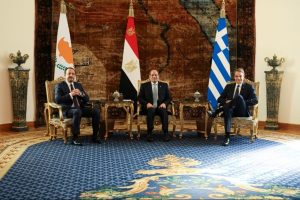
Mitsotakis’ forthcoming visit to Egypt on Tuesday also falls within this framework. He is scheduled to meet Egyptian President Abdel Fattah el-Sisi.
Speaking about the meeting during Sunday’s press conference at the Thessaloniki International Fair, the prime minister described the relationship between Greece and Egypt as “strategic,” with geopolitical, military and energy dimensions.
In that context, he also referred to GREGY, the planned Greece-Egypt electricity interconnection. He described it as an “extremely critical and important project” and noted that it is co-financed by the European Union.
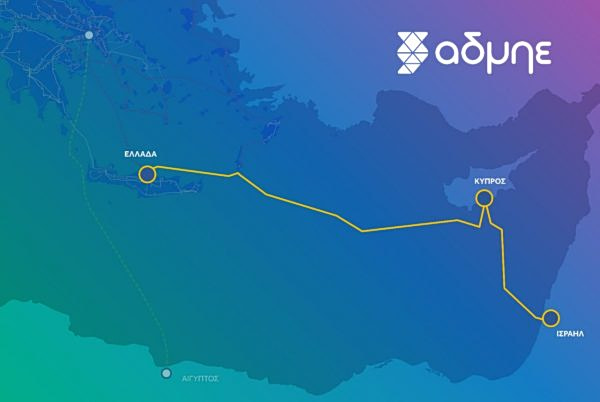
Source: OT.gr