 Μake us preferred on Google
 The Great Sea Interconnector (GSI) has taken another step toward implementation after Greece’s Independent Power Transmission Operator (IPTO or DEDDIE) submitted an investment request to the energy regulators of Cyprus and Israel for the project’s Cyprus-Israel section, setting in motion a process for determining how the cross-border investment costs will be allocated.
The filing follows completion of an updated cost-benefit analysis and a proposal for cross-border cost allocation, while it comes about a week after French investment group Meridiam agreed to become the majority shareholder in the GSI company for the Greece-Cyprus section. The developments are intended to give renewed momentum to a project that has faced financing, regulatory and geopolitical hurdles.
Under EU rules governing Projects of Common Interest, an investment request is submitted when a project has reached sufficient maturity and is expected to be ready to enter construction within 36 months. The request is accompanied by a project-specific cost-benefit analysis, a business plan assessing financial viability and, where applicable, a proposal for allocating costs between countries. The relevant national regulators then have up to 6 months to reach a coordinated decision on the allocation of investment costs and their treatment in tariffs.
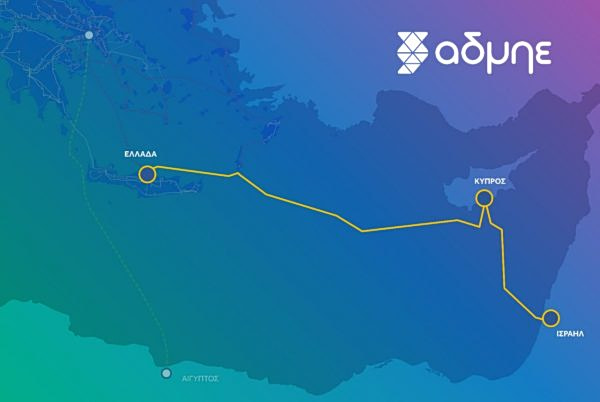
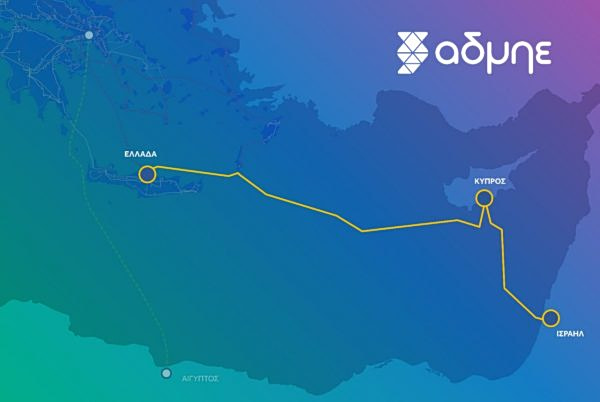
The Cyprus-Israel section is the second branch of the wider GSI, which is designed to connect Israel and Cyprus with the European electricity transmission system through Greece. The European Union has classified the Greece-Cyprus-Israel cluster as a Project of Common Interest.
IPTO said the cost-benefit study was prepared by Exergia in cooperation with the National Technical University of Athens (Polytechnic) and involved consultation with the energy ministries and transmission-system authorities of Cyprus and Israel. The study found that the link would contribute to security of supply, renewable-energy integration and greater integration between the eastern Mediterranean electricity markets and the European grid.
The Cyprus-Israel section is planned as an approximately 324-kilometer subsea connection between Kofinou in Cyprus and Hadera in Israel. It is designed as a 500-kilovolt high-voltage direct-current system with an initial transmission capacity of 1,000 megawatts and the ability to transmit electricity in both directions.
The investment request is particularly significant for Cyprus, which remains the only EU member state without an electricity interconnection with another EU country. The Greece-Cyprus section is therefore intended to end the island’s electricity isolation, while the eventual Cyprus-Israel link would extend the system farther into the eastern Mediterranean. International media reported in May that Cyprus regarded the wider project as important for energy security and for enabling the island to make greater use of renewable electricity, although concerns over rising costs had prompted a reassessment of the project’s financing needs.
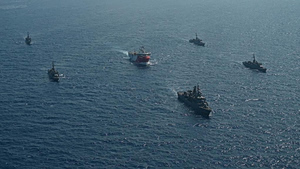
The GSI has faced delays and political uncertainty, particularly over its cost and the geopolitical environment in the eastern Mediterranean. To Vima has previously reported that Turkish objections and the presence of Turkish naval vessels near survey operations have added to the project’s difficulties. The cable is planned to cross waters where Turkey puts forth unilateral maritime claims outside the framework of UNCLOS, making the project not only an energy infrastructure undertaking but also one with significant strategic implications.
The next major milestone is a joint decision by the Cyprus and Israeli regulators on cross-border cost allocation. Once that process is completed, IPTO expects the project to proceed toward a final investment decision, which would open the way for financing arrangements and construction.
IPTO is also seeking additional investors for the Cyprus-Israel section, following Meridiam’s entry into the Greece-Cyprus segment. The operator’s strategy is aimed at creating a broader investment structure capable of supporting the full Greece-Cyprus-Israel interconnection as it moves from regulatory preparation toward construction.