 Μake us preferred on Google
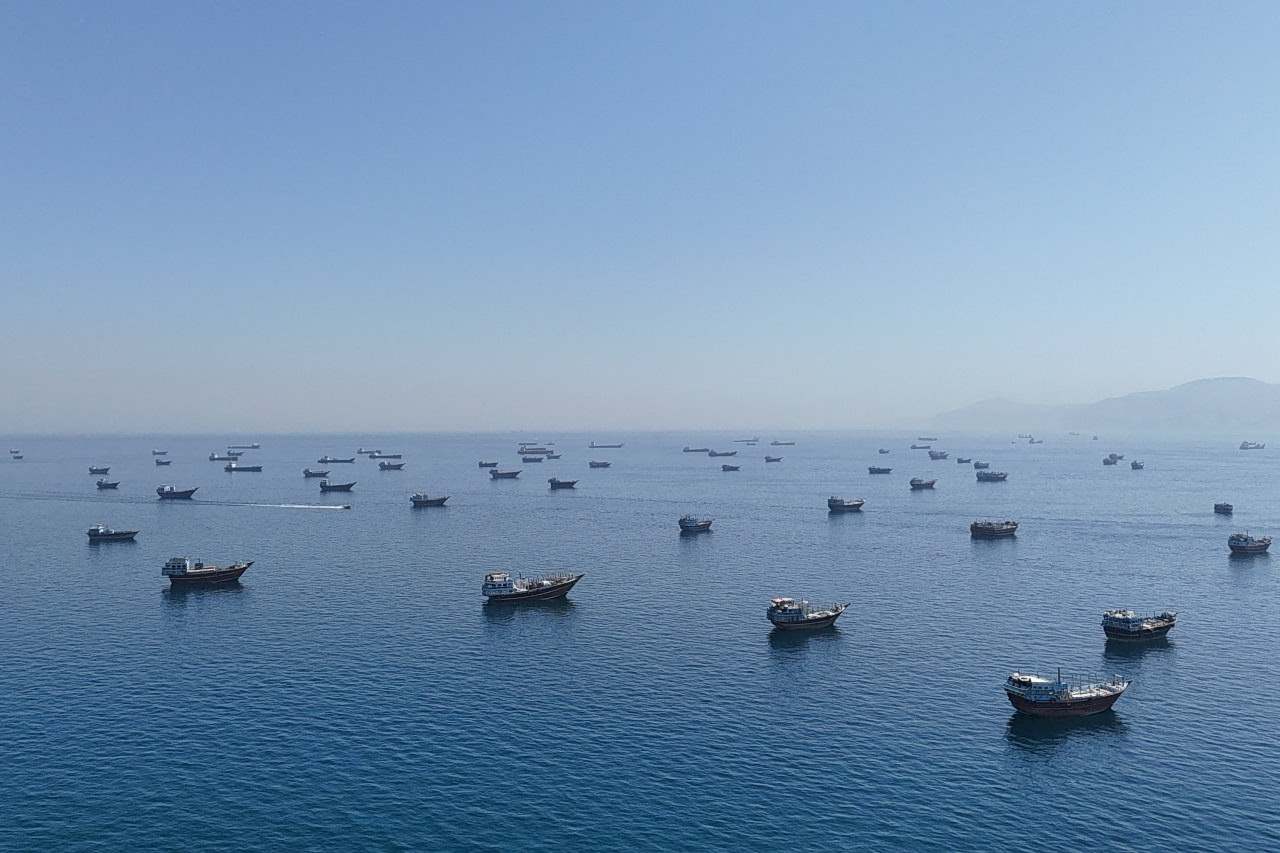
 Traffic through the strait, which before the war averaged around 130 vessels each day, has collapsed to an average of 15 every day in August, according to ship trackers, under Iranian attacks and a U.S. blockade on Iran’s ports.
Both sides have tried to impose new routes through the international strait: Iran close to its shoreline and the U.S. through a channel that hugs the Omani coast—where most attacks have taken place.
Here’s what else has changed since the U.S. and Israel went to war with Iran.
Oil has gone up, but not to a record
Dire predictions that the closure of the strait would catapult oil prices above $150 a barrel haven’t come to pass. Oil prices are hovering above $80 a barrel; gasoline prices are now around $4 a gallon, up from $2.98 before the war. Why the mismatch between expectation and reality? The forecasts failed to account for other ways to get oil out of the Persian Gulf, or how much China would curtail its oil imports.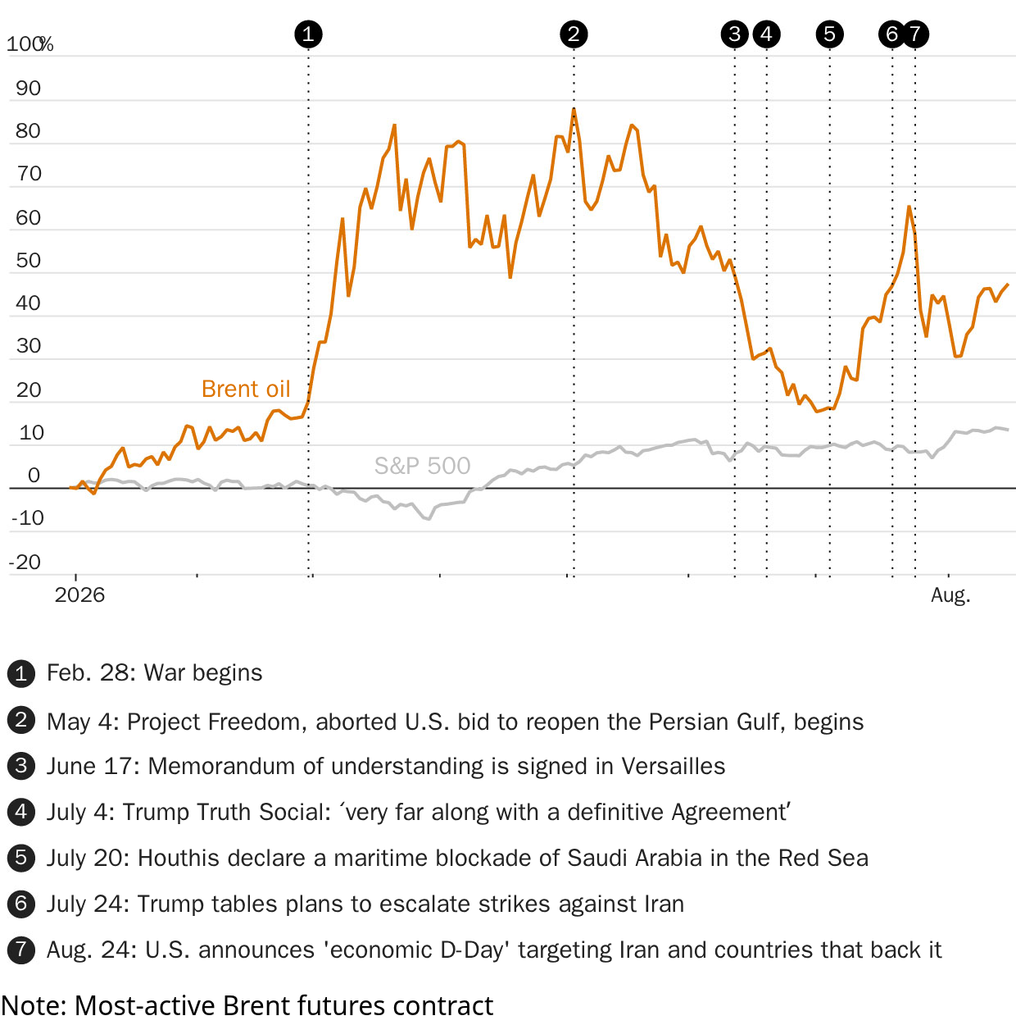
Still, the world has rapidly burned through its oil reserves. In the U.S., crude-oil inventories in the Strategic Petroleum Reserve have fallen to their lowest level since the 1980s.
Shipping oil takes longer and costs more
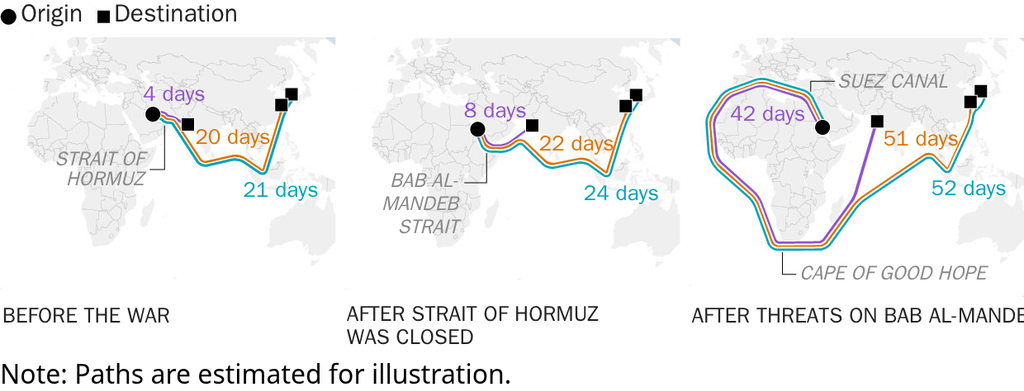
Sailing an oil supertanker from the Persian Gulf to China now costs around more than $500,000 a day, according to maritime data provider Clarksons Research; that is more than double the rate before Iran began attacking the strait. The increase has been driven by sharply higher expenses, including higher insurance costs, and a decline in the number of shippers willing to make the sometimes dangerous voyages.
The routes are also longer. After the strait closed, Houthi militants, backed by Iran, announced a blockade of Saudi Arabia in the Red Sea, forcing some shippers to reroute via the Suez Canal—adding around 30 days to the journey to Asia.
New routes have emerged to get oil out of the Gulf
Gulf energy producers such as the United Arab Emirates, Kuwait and Iraq are pouring billions of dollars into new oil pipelines, part of a redrawing of the region’s logistics map, as trade shifts toward trucking, rail and new ports.
Iran’s military capabilities have been eroded
The U.S. struck more than 13,000 targets in Iran before the April 8 ceasefire and destroyed most of the country’s navy. The fleet of fast attack boats Tehran uses to control the Strait of Hormuz hasn’t been wiped out, however, and Iran continues to fire on commercial ships with drones and missiles.
President Trump said this week that all mines had been removed and or detonated from within the international waters of the Strait of Hormuz. “Iran has been notified that any ship or boat placing new mines will be immediately and systematically destroyed,” he wrote on his Truth Social network.
In early June, Trump told NBC that Iran’s military had been “totally destroyed.” He claimed that Iran had few missiles left. Iran is thought to have hidden many of its munitions underground, making it difficult to estimate what it has left, and it has used the ceasefire to move a lot of its equipment around.
U.S. officials have noted that the ballistic missiles Iran is now using seem faster and able to maneuver as they streak toward the earth. Their observations appear to describe a military that is adapting, not crumbling.
Iran has adopted a more aggressive posture
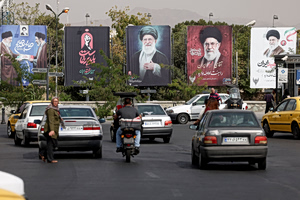
Since the death of his father and predecessor in the opening strike of the war, Iran’s Supreme Leader Mojtaba Khamenei has positioned his forces for a bigger fight . The aim is to tighten the military chain of command, turn an ideological militia into a neighborhood-based intelligence agency and emphasize an offensive approach.
The Islamic Revolutionary Guard Corps, which protects the regime, has laid the groundwork with allied militias to step up attacks if needed, sending advisers to Iraq, Yemen and Lebanon to discuss plans.
Iran’s ability to make a nuclear weapon has been set back
Most damage to the regime’s core nuclear facilities was done during the U.S.-Israeli strikes in June 2025. Trump has threatened to attack underground facilities where Iran could revive its nuclear program, and he has talked about seizing Iran’s enriched uranium stockpile. The U.S. has attempted neither so far.
Estimates vary on how much Iran’s ability to make a nuclear bomb has been set back, from several months to several years.
Talks over Iran’s nuclear program are now stalled, and reaching an agreement over opening the Strait of Hormuz has become the more immediate issue.
Iran’s economy has suffered a body blow
Consumer prices in Iran are up over 80% from last year, while the International Monetary Fund expects the Iranian economy to shrink 5.4% this year. But shifting the economic burden onto households enables the regime to endure and resist pressure to make concessions.
Under the U.S. blockade, Iran’s shipments of crude and condensate fell to roughly 280,000 barrels a day in May, from over 2.2 million in February. Exports recovered under a deal to reopen the strait, but dipped again after the agreement fell apart.
U.S. bases in the Gulf are now a target as much as a shield
Extensive damage done to the sole U.S. naval base in the Middle East (in Bahrain)—along with hits to at least 20 U.S. sites across the region, including military installations and diplomatic facilities—made the U.S. re-evaluate its entire footprint in the region, The Wall Street Journal reported . Before the war, some military officials warned that bases in the Gulf were exposed. A proposal to move installations farther west was floated in Trump’s first term but wasn’t acted upon.
The war’s cost has mounted
Defense Secretary Pete Hegseth estimated the latest cost of the Iran war at $37.5 billion in July before the most recent bout of strikes in August. Earlier in the war, when Hegseth was questioned over the cost of the conflict by lawmakers, he replied by asking them how much they would pay to ensure Iran doesn’t get a nuclear bomb.
Inflation’s decline has reversed
Higher oil, gas, fertilizer and transport prices have weighed on growth, hurting energy-importing economies in Europe and Asia the most. The IMF now expects global inflation to rise to 4.7% this year from 4.1% in 2025, interrupting a descent that had been under way since 2024.
The shock has given monetary policymakers another reason to move cautiously on interest rates.
New economic weapons have come into play
The world’s chokepoints have transformed into potential theaters of conflict—the war has demonstrated that controlling them conveys enormous power in the form of political and economic leverage.
Raw materials are more expensive
Helium, which is essential for semiconductor manufacturing for the artificial-intelligence industry and MRI machines, saw prices surge after disruptions in Qatar, a major producer of the gas. The conflict fueled sulfuric-acid prices, a chemical crucial for food, metal, paper, computer chips and clean water.
Supplies of naphtha, a raw material for plastics, solvents and paints, also came under pressure, producing one of the more curious side effects of the war: Japanese snack maker Calbee said it plans to switch to black-and-white packaging for some of its most popular potato chips because of naphtha shortages.
Countries have forged new alliances
U.S. allies Turkey, Saudi Arabia and Pakistan signed a collective defense pact in early August as the war has raised questions about the reliability of the American security umbrella.
U.S. rivals have benefited
Russia earned $12.7 billion a month at the height of the war thanks to higher oil prices and a temporary waiver on U.S. oil sanctions, according to European Union officials. The waiver ended in June.
Support for the war among U.S. voters has slipped
Approval for the war among registered voters surveyed has fallen from 50% at the end of February when the conflict began, to 43% support for military action in mid-July as the fighting flared, according to polling by Fox News.
Deaths have slowed as the conflict has worn into a standoff
The war has killed more than 3,600 people in Iran, according to Human Rights Activists News Agency, most if not all before the April 8 temporary ceasefire.
Some 18 U.S. servicemembers died as a result of Iranian drone and missile attacks on U.S. bases and military mishaps with hundreds more injured. Across Arab Gulf countries, retaliatory attacks by Iranian authorities and allied armed groups left 28 civilians dead and hundreds more injured up to June 3, according to Amnesty International.
Graphics sources: Institute for the Study of War and the American Enterprise Institute’s Critical Threats Project, The Washington Institute for Near East Policy, Armed Conflict Location & Event Data, staff reports (strikes) ; MarineTraffic (traffic); FactSet (S&P, oil prices), Clarksons Research (shipping routes)
Write to Ashley Cai at ashley.cai@wsj.com , Omar Abdel-Baqui at omar.abdel-baqui@wsj.com , Rebecca Feng at rebecca.feng@wsj.com and Georgi Kantchev at georgi.kantchev@wsj.com